The quiet hum of the space economy has turned into a roar. Over the past few weeks, a wave of newly launched space-focused exchange-traded funds has captured the attention of retail and institutional investors alike, all seemingly betting on the same catalyst: the long-awaited initial public offering of SpaceX. After years of speculation, Elon Musk’s aerospace juggernaut is finally signaling that an IPO could land as soon as 2026, and Wall Street is scrambling to get a piece of the launchpad.
To put that in perspective, until this year, investors who wanted pure exposure to the space economy rather than the broader aerospace and defense sector had exactly one option: the Procure Space ETF, which launched back in 2019 under the ticker UFO. Now, that lonely fund has been joined by six newcomers, each offering a slightly different spin on the space theme.
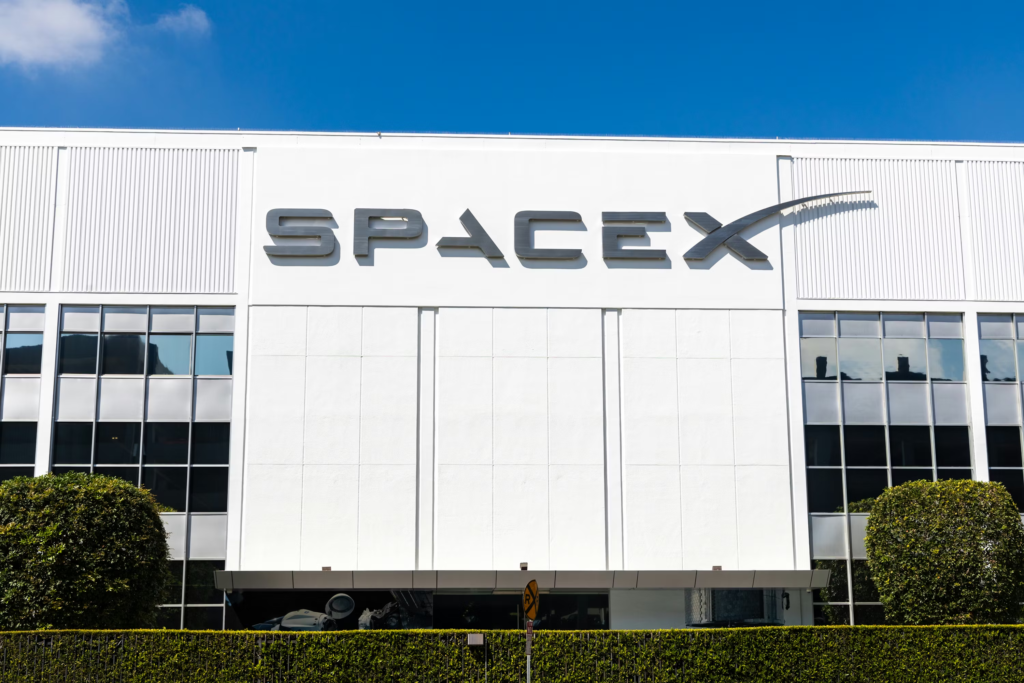
Looking back, it is easy to see why asset managers hesitated for so long. Space was exciting but speculative, filled with headline-grabbing rocket launches but few profitable public companies. But the tone shifted dramatically once SpaceX began quietly signaling to the market that it would forge ahead with its IPO plans. Suddenly, the possibility of owning a piece of Musk’s empire became tangible, and ETF issuers raced to build baskets of space-related stocks that could serve as a proxy for SpaceX itself.
Bryan Armour, an ETF analyst at Morningstar, offered a grounded perspective on the frenzy. He said, “We tend to see this happen whenever something new and shiny appears on the scene.” That cautious observation is worth holding onto, because beneath the excitement lies a more complicated reality. Many of these new funds hold overlapping positions in a relatively small pool of publicly traded space companies.
The most recent additions to the lineup include the VanEck Space ETF, trading under the ticker WARP, and the Corgi Space and Satellite Communications ETF, which debuted only a day apart in early May. Together, they have already drawn in $13.6 million in assets. Nick Frasse, a product manager at VanEck, explained the timing behind his firm’s decision. He said, “We’d been monitoring this for a while but it is only in the last few months that we have felt there was an inflection point; that there would be enough diverse but pure-play companies for this kind of thematic ETF to work.” Frasse added that SpaceX would likely bring other companies along with it into the space economy. He went on to say, “While some investors in these funds may just want to be sure of getting into SpaceX when it goes public, we’re focused on what it means for the sector. I think everyone is seeing the writing on the wall, that this is a big growth story.”
Yet focusing entirely on SpaceX misses a broader trend already underway. Even without the IPO, stocks like Rocket Lab and AST SpaceMobile have been on remarkable runs, gaining 393 percent and 258 percent respectively over the last twelve months. Those are not speculative penny stocks anymore; they are real companies with revenue, contracts, and growing operational footprints. Andrew Chanin, CEO of Procure, which runs the original UFO ETF, reflected on how far the sector has come. He noted that UFO was once labeled the worst ETF launch of the year by Morningstar back in 2019. Today, Morningstar data shows the ETF has posted a 49 percent year-to-date return and a one-year gain of 133.6 percent. Chanin offered a memorable analogy, saying, “We’ve been saying since the start that the space economy is misunderstood; it’s really a tollbooth on the AI superhighway.” He believes the sector will benefit enormously as companies find satellites and even potentially orbiting data centers vital in the next stage of the communications revolution.