Last week, mind-melding occurred briefly and for a split second on the internet when two seemingly unrelated corners of celebrity culture collided. Khloe Kardashian and Michael B. Jordan were trending together, but not due to a new movie, or an appearance, but a fake picture. The image that was shared on a parody X account of the pair was a collage of what appeared to be Jordan walking hand-in-hand with a blonde woman, and it was evident it was a dinner date. The rumours spread within hours, causing fans to be thrilled, bewildered, or even suspicious.
The aesthetics of the image were what made it convincing at a glance. The image resembled those of traditional paparazzi photos, the kind that have instigated a thousand tabloid headlines. But if one would have examined it more closely the inconsistencies began to be noted. The woman’s features was blurred and changed as she was in different frames. The light intensity of Jordan’s arm didn’t match the light intensity of the background wall. As soon as digital forensics enthusiasts and just about everyone who scrolled through it had scanned the document, the conclusion was obvious: it was an almost certain product of artificial intelligence or heavily manipulated with editing software.
The original post attempted to have it both ways. The caption, which included the emoticons and photos of Kardashian and Jordan side-by-side, read: “Still not confirmed if they’re in a relationship.” A hallmark of viral misinformation is its intentional ambiguity. The creator does not outright lie but encourages speculation and leaves things out to be inferred by the viewer. In this scenario, it was whether or not a reality television star and a famous dramatic actor were secretly dating.
This was a great reflection of where we as digital consumers are. Tired of reading that limited amount of text, some users were taken aback by the image right away. “This is no joke, let me know if they’re just friends because my jaw is on the floor right now,” said one. Some people saw through the ruse and laughed. Another person commented, “This feels like a very… ummm… AI thing Lol.” A third user put things succinctly by adding a joke to the mix: “Michael B. Jordan can’t even eat in peace without Twitter making it a relationship announcement.” Another just responded saying, “I know this is an AI.” That’s a short, dismissive comment that might be the most telling one. It reveals that more and more individuals don’t wait for fact checkers or official statements. They believe what they see; they have become more familiar with AI artefacts.
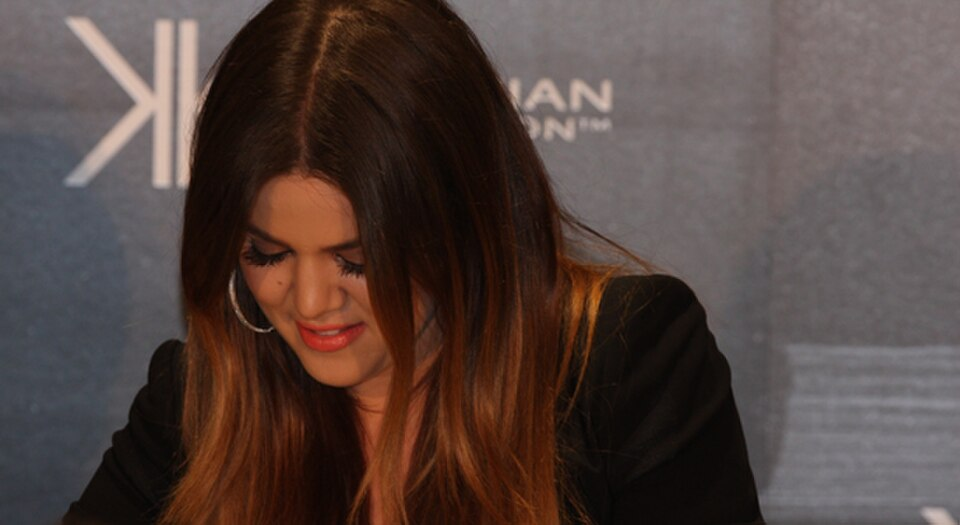
Both Khloe Kardashian and Michael B. Jordan have yet to comment on the photograph or the rumors surrounding it. That is a teaching moment. As Kardashian has long struggled with some of the internet’s most ridiculous rumors posted on everything from Instagram to Twitter, it’s sometimes the best policy to keep her mouth shut. It would give the fake image a proper response. The calculations are similar for Jordan. After his highly publicised relationship with model Lori Harvey, the actor has largely kept his dating life out of the headlines. Even if he denies it, he has to admit the rumour, which is what the original hoax would like.
The interesting feature of this story is not the rumour, but the story of the media environment it shows. The prospect of AI-generated images isn’t just about the future anymore. They exist now and they always have been. The technology is now so sophisticated that anyone with a mild aptitude can create a fake that can deceive thousands of people before anyone can check it out. More importantly, these images are not intended to be accurate on the platforms they are shared on. They are engagement-type designs. A shocking fake photo of two famous people gets more clicks, replies and shares than the mundane statement that nothing is going on.
Here’s also a wider cultural level. Of course there have been rumors for the celebrities as far as dating goes. Before the internet was invented, tabloids have been matching up random famous individuals together. However, those previous rumours took work. A story was to be commissioned, a source had to be made up and a printer had to do thousands and thousands of prints. Anyone can now create a convincing fake in a matter of minutes and then put it out into the wild for free. It has become very easy to get in front of people with misinformation.
Public is adapting, but not evenly. Others have grown very adept at identifying AI tells: odd hands, lighting that doesn’t seem to line up, weird double exposure of clothes. Others remain vulnerable. It’s not just about celebrity gossip. If a fake photo of a dinner can go viral around the globe what else can a similar photo do? Misinformation attacks, financial fraud, and impersonation attacks rely on the same technology.