As AI reshapes the creative industry, Ifah Pantitanonta argues the real work isn’t production, it’s translation, trust, and judgment.
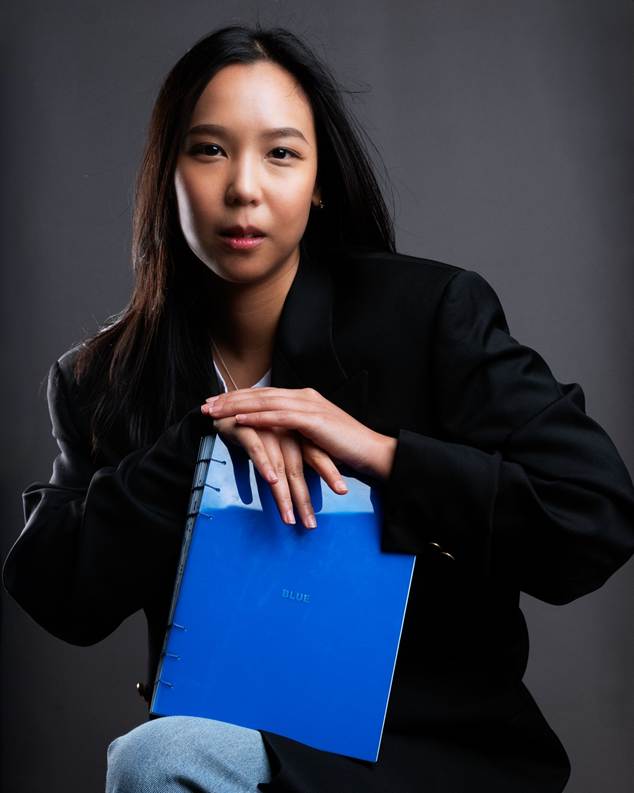
New York City is many things: relentless, diverse, unforgiving. For a creative mind, this environment offers more than just a backdrop. It provides a constant stream of inspiration that demands a high level of precision. And for Ifah Pantitanonta, it’s also a constant masterclass in visual communication and strategic thinking.
Originally from Bangkok, Thailand, Ifah Pantitanonta moved to New York City to challenge her creative boundaries. She now sits at the intersection of design, marketing, strategy, and technology. Her journey represents a bridge between two vibrant worlds. Today, she leads creative direction at a Vision AI startup, where she translates complex Vision AI into narratives that business leaders can actually understand.
In her early career, Ifah Pantitanonta worked across hospitality startups and small agencies. These fast-paced environments taught her that design must do more than look good. It must solve problems. It must drive adoption. Most importantly, it must build trust in an era where technology often feels cold and inaccessible.
As we look toward the next five years, the creative industry stands at a major crossroads. Artificial intelligence is no longer a distant concept. It is a present reality that reshapes how we produce, consume, and value creative work. Ifah Pantitanonta sees this shift not as a threat but as the ultimate catalyst for the designer’s evolution. She envisions a future where the role of the creator shifts from producing pixels to orchestrating intelligence.
The Evolution of the Creative Strategist
In the current landscape, many fear that AI will replace the need for human designers. Ifah Pantitanonta offers a different perspective. The question was never whether AI would change the role. It’s already changing it. The question is how a creative strategist chooses to use it.
For her, AI isn’t a replacement for judgment. It’s a tool for expanding it. Where the work used to be constrained by time and resources, AI now allows a creative strategist to go further, deeper into research, broader in exploration, faster in iteration. The intelligence that shapes the direction, the solution, and the execution still belongs to the person asking the right questions.
Strategic design has long been undervalued, often reduced to aesthetic outcomes, when its real function lies in communication, decision-making, and business impact. That misconception is harder to sustain in a world where the strategic function of design is being tested against real outcomes. Over the next five years, Ifah expects the creative strategists who thrive to be the ones who leverage these tools not to hand off the thinking, but to sharpen it.
Vision AI and the Future of Human Understanding
Ifah Pantitanonta works daily with Vision AI, a field that allows computers to see and interpret the understanding of visual data, such as imagery, photos, and videos. It’s technology that sits quietly behind some of the most consequential decisions in industries like healthcare, manufacturing, and enterprise software.
Vision AI is an intelligence layer of technology that becomes a feature, a capability integrated into products and workflows. The innovation lies in the application. And right now, there are still humans behind every training model, ensuring the data being trained on is accurate and meaningful. But as the world inputs more data, models train and learn more, and the range of what becomes possible expands significantly.
For Ifah, the role of design in this space is to make that expanding capability feel accessible and trustworthy. The technology itself can be extraordinary, but if the people who need to use it can’t understand what it’s doing or why it matters, it fails in practice. That’s the gap she works in. Taking something that lives in research papers and engineering documentation and turning it into a visual narrative that a business leader, a clinician, or an enterprise team can actually act on.
Her GDUSA award-winning healthcare AI exhibition work demonstrated this by focusing on how a doctor or researcher actually interacts with the data. She made a complex system feel reliable and approachable. It wasn’t just about how it looked. It was about building enough clarity and trust that someone in a high-stakes environment could feel confident making a decision based on what they were seeing. As Vision AI becomes more embedded in how industries operate, the translation work becomes the work.
The Next Five Years: A Roadmap for Creative Professionals
To thrive in this new era, Ifah Pantitanonta identifies five key shifts for creative professionals. These are not just technical skills, they are changes in mindset that allow a designer to stay relevant in a landscape increasingly shaped by artificial intelligence.
First, embrace the tools, but bring the soul. AI will continue to advance, and the outputs will get more refined. But a tool, no matter how sophisticated, doesn’t have a point of view. It doesn’t understand the business goal, the audience, or why the story matters. That still requires a human. The designers who thrive won’t be the ones who resist these tools or blindly defer to them. They’ll be the ones who direct them with intention and give the work meaning.
Second, learn how the machine thinks. Embracing AI isn’t enough if you don’t understand how it works. As these systems advance, particularly in how they interpret natural language, the ability to clearly articulate a problem or a creative direction becomes a critical skill. You don’t need to be an engineer. But you need to understand the logic well enough to prompt effectively, spot the limitations, and know when the output needs a human correction. That fluency is what separates someone who uses AI from someone who leverages it.
Third, as technology advances, the physical and experiential become more valuable, not less. We’re already seeing it, brands investing in community, in lifestyle, in real-world presence. When everything can be generated digitally, the moments that feel genuinely human stand out. Experiential design isn’t a niche anymore. It’s where brands prove they exist beyond a screen. For designers, that means thinking beyond the interface, about how a brand lives in the world, how people gather around it, and what it feels like to be part of it.
Fourth, an ethical strategy will become a core requirement. As AI becomes more capable, the designer becomes more responsible, not just for how something looks, but for what it communicates, what it obscures, and who it serves. Designers will act as the moral compass for AI integration, asking the questions that engineering and business teams don’t always think to ask: Is this honest? Is this fair? Does this build understanding or exploit it? That kind of ethical thinking isn’t soft. It’s strategic. Trust will be the most fragile and valuable commodity in an AI-saturated world. Designers who build with transparency and integrity will lead the most resilient companies.
Fifth, the ability to collaborate across functions will reach its peak importance. The designer of the future sits at the center of the organization, linking engineering, sales, and strategy. Not as a service provider, but as someone who understands the full picture and can translate it all. That cross-functional fluency is what makes a creative strategist irreplaceable. It’s the one thing automation can’t replicate.
The Impact of AI on the New York Creative Scene
New York City has always been a hub for innovation, but the next five years will see a dramatic shift in its creative economy. Ifah expects the city to become a global center for responsible AI in design. While Silicon Valley builds the tools, New York will define how we use them to communicate and build brands. The city’s history in advertising, media, and culture makes it the perfect environment for the future of AI-driven storytelling.
What makes working in New York during this transition unique is the sheer concentration of talent and perspective. New York doesn’t resist change. It consumes it and turns it into something new. Ifah believes the local design community will lead the way in showing that AI can be a tool for creative liberation rather than a source of displacement.
A machine can analyze the foot-traffic patterns in Times Square, but it cannot feel the particular kind of human energy that comes from a city where everyone is chasing something. That emotional resonance is what Ifah aims to bring to her work, using technology to enhance the human experience, never to flatten it.
Translating the Complex for a Global Audience
As a designer who moved from Bangkok to New York, Ifah understands the nuances of global communication. AI will lower the barriers to cross-cultural design, and tools that adapt visual aesthetics for different regions and audiences are already emerging. But Ifah makes an important distinction: adapted is not the same as resonant.
What actually works is when a brand’s core values meet a genuine understanding of the culture, beliefs, and people it’s speaking to. That requires real research, real extraction of what matters, and a thoughtful execution that integrates into the culture rather than sitting on top of it. What doesn’t work is something vague that never quite moves anyone, because it was built on an assumption rather than understanding.
In the future, AI could help brands go deeper into that research, processing cultural nuance at a scale that wasn’t previously possible. But the strategic thinking that determines what to do with those insights still has to be human. Her work across independent projects and industries reflects this. Regardless of size or sector, every brand deserves a narrative that people can actually feel. AI will provide better tools to build it, but not the judgment to know what it should say.
The Strategic Value of In-House Design
In-house design is often misunderstood as a support role. But when you’re embedded within a company, your work moves with the direction of the organization, with the goals, the strategy, the north star. Design isn’t applied on top of that thinking. It’s part of how that thinking gets realized across every touchpoint and function.
For Ifah, design is art in function. Not art for its own sake, but work that people engage with for a purpose, to feel something, to understand something, to make a decision. That requires thinking holistically about the business, the audience, and the outcome all at once.
This is where in-house design has a distinct advantage in an AI world. An external agency starts from scratch with every engagement. An in-house designer working with AI builds something over time where the tools absorb the company’s context, constraints, language, and goals. That accumulated intelligence, directed by someone who understands the strategic picture, produces work that is more precise, more informed, and more directly tied to real business impact. It’s not just faster. It’s smarter.
A Vision of Integration and Harmony
Ultimately, Ifah Pantitanonta sees a future defined by integration. She does not see a world divided between humans and machines. Instead, she sees a harmonious system where technology amplifies human creativity. The next five years will be a period of intense learning and adaptation. It will be a time of trial and error as we find the right balance.
For Ifah, the beauty of this journey lies in the fact that it happens in New York City. The city provides the perfect environment for this kind of high-stakes innovation. The diversity of its people ensures that the AI we build will be tested against a wide range of perspectives. The constant energy of the streets ensures that we never become complacent.
Ifah Pantitanonta remains committed to her role as a bridge. She will continue to translate the complex into the clear. She will continue to use design as a strategic discipline to drive business
value. And most importantly, she will continue to find beauty in the intersection of technology and the human spirit.
Five-Year Outlook: Key Milestones
Looking ahead, Ifah points to three shifts that will define the creative landscape in the next five years.
First, the distinction between “Designer” and “Strategist” disappears. As AI handles more of the production work, the ability to think critically about business value, audience, and communication becomes the core of the role. Every creative professional will need to operate at a strategic level to stay relevant.
Second, “Graphic Design” is redefined. As the tools themselves become smarter, integrating AI into the very software designers use daily, technical proficiency becomes the baseline, not the differentiator. What defines the value of visual work going forward is the impact it creates. The measure of design shifts from execution to outcome.
Third, the “Cross-Functional Creative” becomes the enabler of organizational strategy. Rather than sitting within one department, this role connects design thinking across business, technology, and culture. By using it as a framework for problem-solving that spans the whole organization. As AI handles more of the production, this connective function becomes increasingly visible and valuable.
The future of design is undoubtedly digital, but its purpose remains analog. We design to connect, to inform, and to inspire other humans. Ifah’s journey from Bangkok to the heart of New York’s tech scene is a reminder that the human story is the most powerful force in the world. Artificial intelligence is a magnificent tool, but it lacks a story of its own. It requires a designer to give it direction, purpose, and a soul. Over the next five years, Ifah Pantitanonta will continue to be one of the voices shaping that future. She will continue to push the boundaries of what is possible. Her vision is one of optimism and clarity. In a world of increasing complexity, she reminds us that the best design is always the one that makes us feel more connected to the world around us. The world will keep changing, technology will keep evolving, but the mission stays the same: to find clarity in complexity and make it mean something. And she will always focus on what matters most.
Ifah Pantitanonta is a New York-based Creative Strategist and Designer originally from Bangkok. As Lead Creative Marketing Designer and Operations at Vision AI Technology Startup, she translates complex Vision AI technology into clear strategic narratives. Her work bridges the gap between advanced tech and human understanding, positioning design as a vital business enabler. A recipient of the 2026 GDUSA Digital Design Award, Ifah integrates design thinking with marketing strategy to drive impact. She excels in visual storytelling and UX/UI design, helping enterprise environments build trust through intentional, human-centered narratives that simplify complexity and deliver measurable business value.