Hollywood actor Ryan Phillippe took a walk down memory lane as he spoke about partying until dawn with his ex-wife Reese Witherspoon after they both celebrated major victories at the 2006 Oscars. Their marriage ended after a few months. The 52-year-old actor recently appeared on Live with Kelly and Mark, and revisited the extraordinary night. He explained how Reese, 50, won Best Actress for Walk the Line. The former couple attended the ceremony in Los Angeles before celebrating into the early hours, although their marriage subsequently broke down, with Reese filing for divorce later that year.
Speaking about the ceremony, Ryan said, “It was a wild night altogether because my wife at the time, Reese Witherspoon, also won Best Actress.”
Ryan revealed the evening also gave him an unexpected opportunity to meet one of his Hollywood heroes, Morgan Freeman, 89, who presented the night’s final award. He further mentioned, “Morgan Freeman was the presenter of the Best Picture and I had never met Morgan Freeman so I fanned out on stage at the Oscars. I’m like, ‘I’ve always wanted to meet you, sir’, and this is while the producer is accepting the award. Kind of a funny moment.”
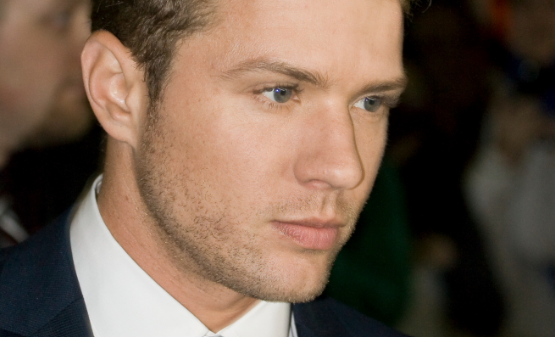
The celebrations continued long after the ceremony ended, with Ryan remembering how the cast and their guests stayed out until the following morning.
There is something almost cinematic about the way Phillippe tells this story now. He was not simply a plus-one that night. He was there as a nominee himself, having earned recognition for his work in Crash, which took home Best Picture. So the evening carried a double weight for him. His film won the biggest prize of the night, and his wife won the most coveted acting award, all within the same ceremony. Few couples in Hollywood history have shared a night quite like that one. The fact that their marriage unraveled so soon afterward only adds to the poignancy of the memory. It is the kind of story that reminds you how quickly circumstances can shift, even at the very peak of professional success.
Phillippe’s willingness to revisit that chapter with fondness rather than regret is telling. Many celebrities avoid discussing past relationships altogether, wary of opening old wounds or inviting fresh speculation. He chose instead to focus on the joy of the moment, the thrill of meeting Morgan Freeman, and the simple pleasure of staying out until sunrise with people he cared about. There is no resentment in his voice, no attempt to settle scores or rewrite history. That kind of grace is not always easy to muster, especially when a marriage ends in divorce and the details of your private life become fodder for public consumption. Yet Phillippe seems to have made peace with it all, and his willingness to laugh about fanned-out moments at the Oscars suggests a man who has moved on without erasing the past.
What makes the story resonate beyond Hollywood is the universal experience it touches on. Most people have had at least one night when everything seemed to align, when personal and professional triumphs converged and the future felt limitless. And most people also know what it is like to look back on such a night years later, from a completely different vantage point, with a mixture of nostalgia and quiet acceptance. The Oscars simply magnify that experience because the stakes are so public. Instead of a promotion and a family celebration, you get a televised victory and a global audience. Instead of a quiet divorce, you get tabloid headlines and years of speculation. Phillippe and Witherspoon lived through all of that, and they have both gone on to build successful careers and families since. That they can now speak about their shared history with warmth rather than bitterness is a testament to something that does not get discussed often enough in celebrity culture: the possibility of moving forward without pretending the past never happened.
Whether such a night would feel the same today is an open question. In 2006, social media was still in its infancy. There were no live tweets from the ceremony, no Instagram stories from the after-parties, no endless stream of commentary from strangers dissecting every glance between a couple. The celebration Phillippe describes, staying out until the following morning with the cast and their guests, belonged to a world that has largely disappeared. Today’s stars navigate a far more exposed landscape, where every moment is documented and every expression analyzed. Some of the spontaneity that made that night feel wild has been replaced by a kind of permanent performance. That is not necessarily worse, but it is different, and it makes stories like Phillippe’s feel like artifacts from another era.
The larger point is that memory does not require perfection to be worth keeping. Phillippe and Witherspoon did not stay married. Their relationship did not survive the pressures that came with fame, ambition and the ordinary difficulties of two people trying to build lives together. But the night they shared at the Oscars was real, and it mattered to both of them in ways that no divorce decree could undo. Phillippe’s decision to talk about it now, with humor and affection, suggests that he understands something many people take years to learn. A good memory is not invalidated by what came after. It simply exists, alongside everything else, as part of a life that was lived fully in that moment. For anyone who has ever looked back on a happy time that did not last, that is a lesson worth holding onto.