The invitation of leading cryptocurrency investors to his private island sends both spectacle and scrutiny when Donald Trump invites them to his home. This weekend, his fancy resort Mar-a-Lago hosts an exclusive party in his own meme cryptocurrency, although the currency itself is having trouble finding value in a volatile market.
The occasion will be the finale of the second Trump-themed competition that revolves around his own digital currency, which is the so-called $ TRUMP. The assumption is uncomplicated yet revelatory of contemporary crypto culture. The biggest token holders are granted the opportunity to have a face-to-face encounter with the former president. Almost 300 of the most significant investors have received an invitation, a smaller core group assured a more personalized reception, with a champagne toast and direct access to Trump himself. The event has been characterized by Trump as the most exclusive crypto and business conference in the world and as such, serves as a reward as well as a mark of power.
But the time of the gala complicates things. The price of the Trump coin, the $TRUMP coin, has drastically decreased, losing about 96 percent of its value since the boom of interest that followed the release of the coin. To most of the smaller investors who joined the market when it was at its peak, the market has suffered huge losses. The narrative of a fast rise and a fast fall of a cryptocurrency has been a common theme in the industry, where the hype can result in quick profits, and then the downfall would come in a short time. Discussing crypto, I have been keen to observe how excitement usually overwhelms caution particularly when a famous personality is concerned. This seems to be no different.
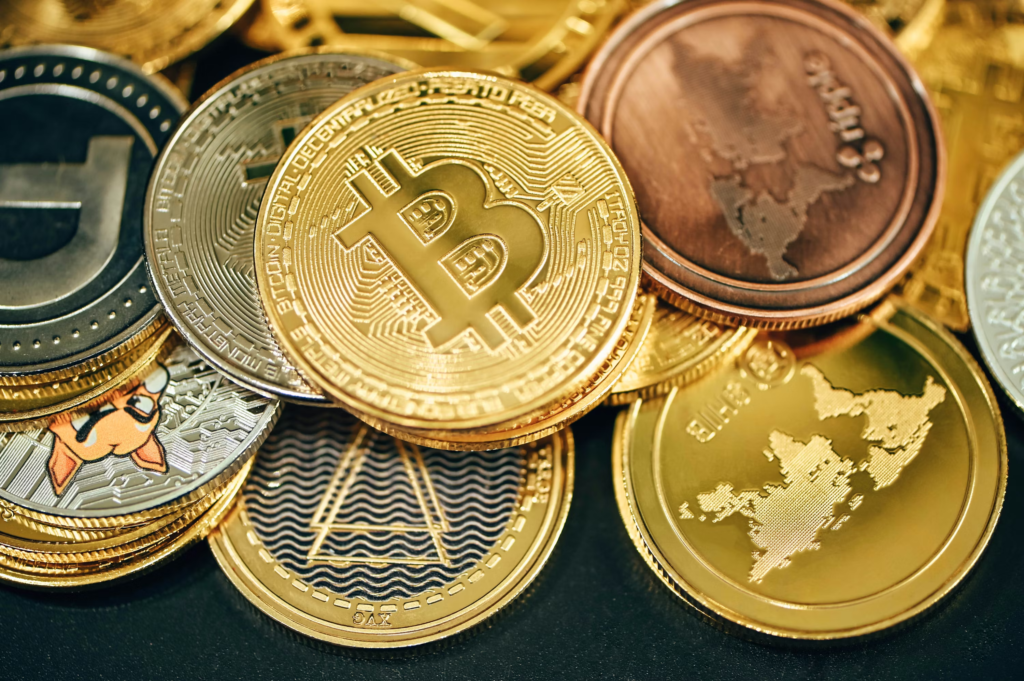
Although the individual investor is experiencing massive losses, the overall financial scenario surrounding the crypto projects of Trump portrays a much different situation. According to reports, the Trump family and related entities have made huge earnings by launching numerous digital asset projects. The magnitude of such incomes, which is said to surpass a billion dollars, draws a sharp contrast between the fortunes of the participants in retail and those that are placed at the core of the ecosystem. Much of this revenue can be directly attributed to the activity of meme coins, a phenomenon that can be described as the commercialization of the previously fringe part of the crypto market.
Political influence and financial interest have been mixed, attracting the attention of both the ethical experts and political watchers. Critics suggest that the duality of Trump as a policymaker and beneficiary of crypto-currencies project is a situation that hardly has modern analogs. There has also been concern regarding the possibility of conflicts of interest, especially with the regulatory environment of digital assets still developing in the United States. Such debates are not mere hypothetical ones. They address larger issues concerning transparency, governance, and the limits between state office and business.
These concerns have however been opposed by the Trump administration. White House spokesperson Anna Kelly told Reuters that the assets of President Trump are in a trust controlled by his children and that he is only acting on the best interests of the American people. This is a commonplace defence, structural distinctions at the expense of more profound enquiries into influence and perception.
Also highlighted in events such as the Mar-a-Lago gala is how cryptocurrency has now transcended financial innovation towards branding and community-building. Trump is capitalizing on an investment-access model to tie ownership of a digital token to exclusive real-world experiences. It is a strategy that has been successful in some quarters of the digital economy, especially among audiences that are attracted to status-based rewards. Meanwhile, it brings up the question of sustainability. The desirability of such experiences can start to change when the underlying asset depreciates.
The crypto-related activities of Trump are not the first to raise a debate. An equally competitive event last year and a high profile conference organized by his sons connected to their business World Liberty Financial attracted both the political and business worlds. These conferences have continually brought the movers and shakers of Washington and Wall Street and continue to reinforce the idea that Trump crypto projects are at the crossroads of power and capital.
In the bigger picture, the trend of the $TRUMP coin to gain and decline is indicative of a bigger trend in the cryptocurrency market. By definition, meme coins are extremely narrative-dependent, visible, and interacting with communities, as opposed to utility. Social momentum can be as important in their value as economic fundamentals. Once that momentum is lost, the downward spiral can be very rapid and unforgiving. This provides a difficult environment to investors, particularly new entrants to the space, as it is not always easy to know when an opportunity or risk is at hand.
And a deeper cultural layer is at work. The fact that celebrity, politics, and finance are becoming one digital thing underscores how the lines between these worlds are becoming even more difficult to delineate. The 2020 Trump coin can be viewed as an instrument of this convergence in many ways. It captures a time when influence becomes commodifiable in more direct terms and, in many cases, it is able to be circumvented without going through established systems and protections.
The mood will be probably a celebratory and exclusive one as the guests flock Mar-a-Lago. To the attendees, it is a tangible payoff of their investment. To an outsider in that circle, though, the incident begs a more critical approach. The difference between the depreciation of the token and the still profitable nature of those who actually make the tokens brings up the issue of fairness and responsibility.