The escalating competition to control artificial intelligence has assumed a more geopolitical angle, with the United States making its fears about safeguarding its most treasured digital resources. In a step that indicates increasing worry among policy makers, the U.S. State Department has been reported to order its diplomatic missions across the world to sensitize people on what it characterizes as constant endeavors by some Chinese firms to steal and copy American AI technologies. The focal point of these issues is the Chinese startup DeepSeek that the U.S. authorities think might be engaged in the efforts to use the advanced American models to develop itself.
The American officials have been advised to approach the foreign governments directly on the matter according to a diplomatic cable advanced to the embassies and consulates. The message focuses on worries about opponents extraction and distillation of U.S. A.I. models, which indicates a concerted effort to establish a global consensus on what Washington perceives as a major and escalating danger. The cable language is urgent, which indicates how the issue is being taken seriously in the U.S. government.
The very idea of distillation, around which these accusations revolve, is not necessarily criminal. Technically, it means training smaller and more efficient AI systems with the outputs of bigger and more advanced models. This approach has been a widespread trend in the AI market, particularly as firms aim to minimize the cost of computations without compromising on performance. But U.S. officials claim that using such techniques without obtaining permission to proprietary systems encroaches into the domain of intellectual property abuse.
Such concerns are not new. Previous pronouncements by the White House have reflected the same allegations but the internal cable is a more organized and much broader diplomatic endeavor. The most interesting aspect of this development is the international nature of the directive. Instead of relying on bilateral channels to discuss the matter, the State Department seems to be promoting a more extensive coalition strategy, hoping to influence the creation of international norms related to AI security and intellectual property protection.
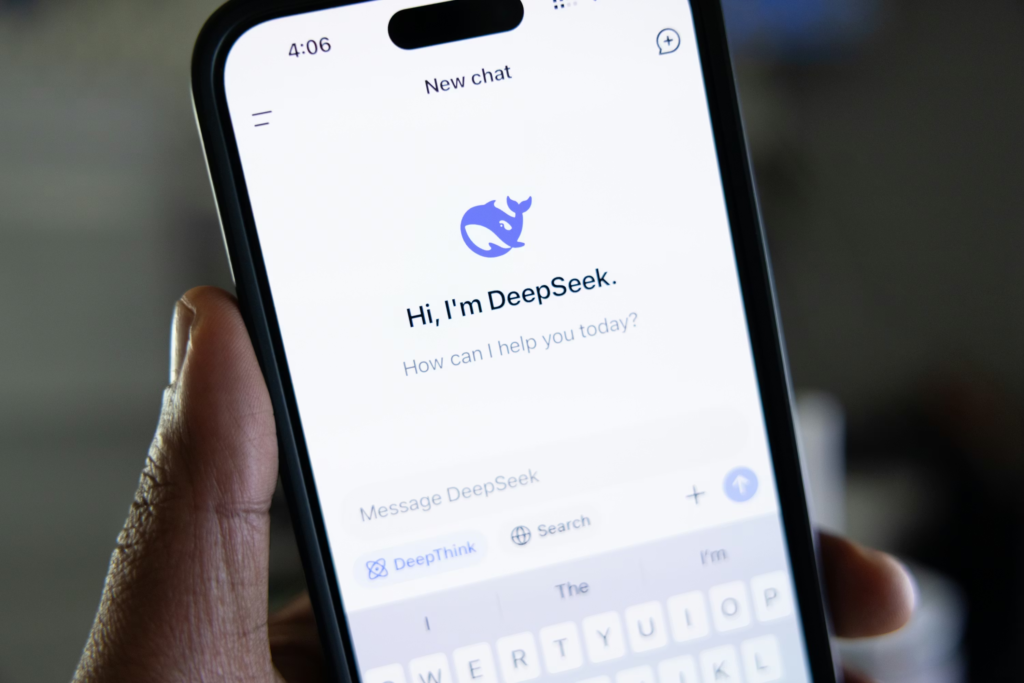
China on its part has strongly denied these accusations. Chinese Embassy representatives have refuted the allegations saying that the Chinese companies act within the framework of the law and ethics. This reaction reflects the tension between the two countries at large, where technological progress has been greatly connected with national security and economic rivalry. Since trade wars, to semiconductor bans, AI has become a part of an ever-expanding list of disputed areas.
To further complicate the storyline, OpenAI had already sounded alarm bells among U.S. lawmakers about the possibility of DeepSeek trying to reproduce its models. The firm, which specializes in creating advanced conversational AI systems, was allegedly concerned that its innovations might be reverse-engineered or indirectly used to train rival systems in other countries. Such allegations have been very hard to prove publicly but have helped create an atmosphere of distrust and increased suspicion.
The situation throws light on a complicated reality as far as the industry is concerned. The development of AI is based on openness, collective research, and continuous enhancement. Numerous inventions have been made in the past through cross-border cooperation. However, with the ever-increasing commercial and strategic value of AI, firms and the government are increasingly protecting their innovations. This change brings about a fine line between encouraging innovation and protecting intellectual property.
And there is a practical aspect to it as well. The very nature of implementing intellectual property rights in artificial intelligence is difficult. In contrast to more traditional types of theft, where tangible items or well-established assets are stolen, AI-related issues are frequently abstract, pertaining to processes, data streams, and model actions. It is not always easy to tell that a given system has been inappropriately distilled out of another, and proving the latter may be even more challenging.
When talking to the representatives of the industry, one encounters a common theme: the boundary between inspiration and imitation is becoming more and more unclear. Developers constantly extend the current concepts and develop them, adjusting to the current situation and transforming them. The question is then where to line the border between acceptable innovation and an unauthorized copying. It is not only a legal, but also an ethical matter that defines the way in which the further generation of AI technologies will be created and distributed.
To most observers, the recent move by the U.S. government can be seen as a step towards an even wider trend of what may be called AI diplomacy. Through its active outreach to the allies and partners with the issue, Washington seems to be preparing the groundwork of international standards that would regulate the use and protection of AI systems. The question of whether such efforts will, or will not, give rise to concrete agreements or will be more of a symbolic exercise is yet to be determined.
Meanwhile, the level of skepticism remains. According to critics, claims of intellectual property theft are sometimes hard to disentangle with more general geopolitical rivalry. Amidst the context in which technological leadership has such a huge economic and strategic implication, the discourse of security and equality can very easily be intertwined with national interests.
What is evident is that artificial intelligence is no longer a research or a business industry. It has now become the hub of international power, where the issues of trust, ownership and collaboration are being renegotiated all the time. The case of DeepSeek and other Chinese companies is a subset of a bigger narrative on how countries work their way through this fast changing environment.
The result will probably be a combination of diplomacy, technological protection and industry standards as the scenario unfolds. On both sides, there are valid concerns and the reality might turn out to be somewhere in the middle. Even as United States wants to safeguard its inventions, China still wants to have the right to compete and innovate in the global markets.