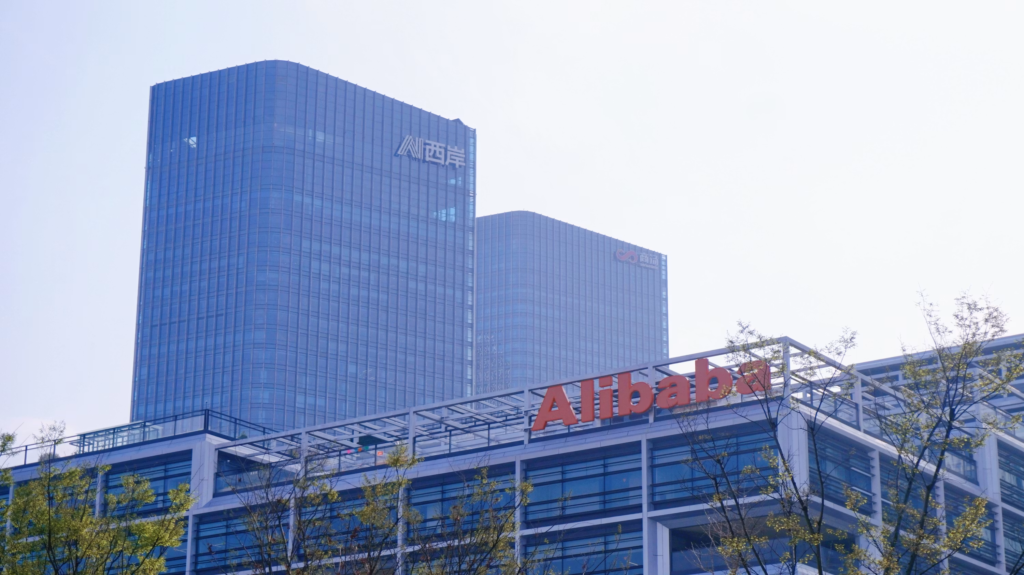
China’s tech giant Alibaba is making a major move to change its artificial intelligence strategy, marking a paradigm shift among big tech firms in open-source AI development. In contrast, the company will introduce a revenue-sharing component on its next-generation open-source AI model Qwen, which it plans to launch for large-scale users. It’s a strategic move that aligns with the broader industry dynamics, as Chinese AI companies have established themselves as a contender to the global market with their open-source solutions, and are now transitioning towards sustainable business models.
The upcoming Qwen3.8-Max will also demand from major users a share of their commercial revenue, and that would be a strategy Alibaba plans to use, sources close to the source said. Alibaba has traditionally sold developers the right to use its models when running on its own cloud computing platform, but a majority of its open-source models are free for customers to use in their own data centers. The move is a strategic one designed to tap into the value of businesses that create successful commercial products based on its AI technology.
The strategy would follow one taken by Chinese AI firm Moonshot last month, which announced a license agreement for its flagship Kimi K3 model. There are also terms in Moonshot’s license to the effect that if any partner distributes the model commercially for more than twenty million dollars annually, he or she must enter into a commercial agreement, and that revenue sharing could be up to a third. The advent of these clauses from the Chinese AI developers is also an indicator of a maturing AI industry, where cost-saving practices like the loss-leader model will no longer suffice and need to be replaced with sustainable revenue streams.
AI has seen significant changes in the last few years and Chinese AI companies have been developing open-source AI models that are increasingly powerful than those of the OpenAI or Anthropic. This has called into question the idea of technological dominance in artificial intelligence and questioned the ways in which these companies will generate revenue from their investments. The revenue sharing model is a practical one that means that it keeps the sharing going while making way for value to be realized with large commercial deployments.
This is a strategy that resonates with the tech industry’s norms, according to Paddy Srinivasan, the CEO of cloud computing firm DigitalOcean. Open weight model labs are those that you collaborate with and pay for to ensure you’re optimizing your deployment. It is a “tried and tested open-source ‘freemium’ model,” Srinivasan says, explaining what you’ll get for paying for early access for the next version of the model. The way the Chinese AI companies are going about doing things puts them within a more familiar Silicon Valley framework, where the users are given software for free initially, but the companies are able to charge for extensive commercial applications and further services.
The price dynamics paint a picture of how the Chinese models are competing in the international market. With its lower pricing, Kimi K3 is believed to be around 1/3 the price of Anthropic’s equivalent Fable model on input/output tokens, which could be an appealing choice for businesses looking to cut costs when it comes to AI solutions. This approach has already enabled Chinese companies to quickly gain market share, especially those with small budgets who want to explore AI but are reluctant to make significant initial investments.
Dan Fu, vice president of kernels at Together AI, points to the value proposition not just being about the models themselves. At the application layer, he says, “there is value out there with how you put it to use, how you actually get the models and the tokens to do something useful. This view shows that it is the optimization, efficient use of tokens and the application development that is really the key to success and where service providers can stand out on top of any model they are using.
This dynamic environment is further complicated by the geopolitical aspect. The White House has also claimed that Moonshot stole the technology from Anthropic, something that Chinese authorities have denied. As commercial agreements among U.S. and Chinese companies begin to take shape, these conflicts make it difficult to determine the landscape for technology alliances across the border. The future holds challenges for both commercial and regulatory factors.
These commercial agreements are already being put into practice as shown by ChinaSoft International, a leading Chinese IT services company that disclosed in a regulatory filing that it has a revenue sharing agreement with Moonshot. That’s because the established companies can’t seem to get enough of these deals.
In the meantime, AI ecosystem is growing beyond China. A startup based in San Francisco, Thinking Machines Lab, created by OpenAI’s former Chief Technology Officer Mira Murati, just announced its first open-source model and is expected to be releasing more potent models in the future. Fireworks AI’s Lincoln Qiao, CEO and co-founder of Silicon Valley, said he was hopeful for “strong open source U.S. models,” and that he doesn’t see a “fundamental barrier” to the development of those models. This implies that there will be a greater competition in the open-source AI market worldwide.
But this shift from the research lab into the marketplace brings up the big issues of what the future of open source AI will look like. Will revenue-sharing changes pose challenges for smaller developers and startups hoping to grow their apps? What will be the balance between accessibility and commercialisation and will this impact innovation and adoption rates? What will the geopolitical context be in determining cross-border collaborations and revenue sharing between AI companies?
The new business models reflect a new industry-wide understanding that developing and maintaining the latest in AI requires significant research and computation costs. Although open source solutions have helped spur innovation and democratize access to AI capabilities, sustainable development must still be sustainable economically. One possible balance between openness and commercialization in the Chinese model is through revenue sharing with model creators.