One number will be a key focus as Wall Street awaits Tesla’s earnings Wednesday, and it is free cash flow. The electric vehicle leader is now in negative free cash flow for the first time in more than two years, and the timing is critical that it is now, given what has transpired over the last few years.If the company can’t get back into the black, it means a major change in the company’s financial trajectory, and its ship will be well in its way into a financial emergency.
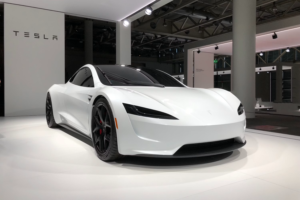
The expected cash burn is as part of Tesla‘s big push to increase investments in what Musk terms “physical AI” businesses, a broad category that includes all of the company’s autonomous driving projects, self-driving taxis and humanoid robots. The move marks a dramatic shift from Tesla’s roots as an innovative automaker to a much bigger company, and is a risky proposition for the company’s finances. The company expects to invest $25 billion in capital spending just this year, with new vehicle platform investments and increased manufacturing capacity at the forefront of the company’s list of projects. These spending are quickly outstripping the cash flow of Tesla’s main automotive and energy business, leaving investors to wonder when — and if — these massive investments will start to pay off.
Shareholders have become very nervous as Tesla’s spending has increased and the tangible results have not yet materialized. In recent weeks, Morgan Stanley analysts remarked that the company was shifting towards a focus on proving the spending is real capital investment and not simply a cost, after the companies’ capital expenditures rose more than double and free cash flow was negative. The sentiment reflects a key challenge for the company: its market value, which has long defied industry norms, relies heavily on future revenue streams driven by artificial intelligence, which have yet to show significant impact in the tangible sense.
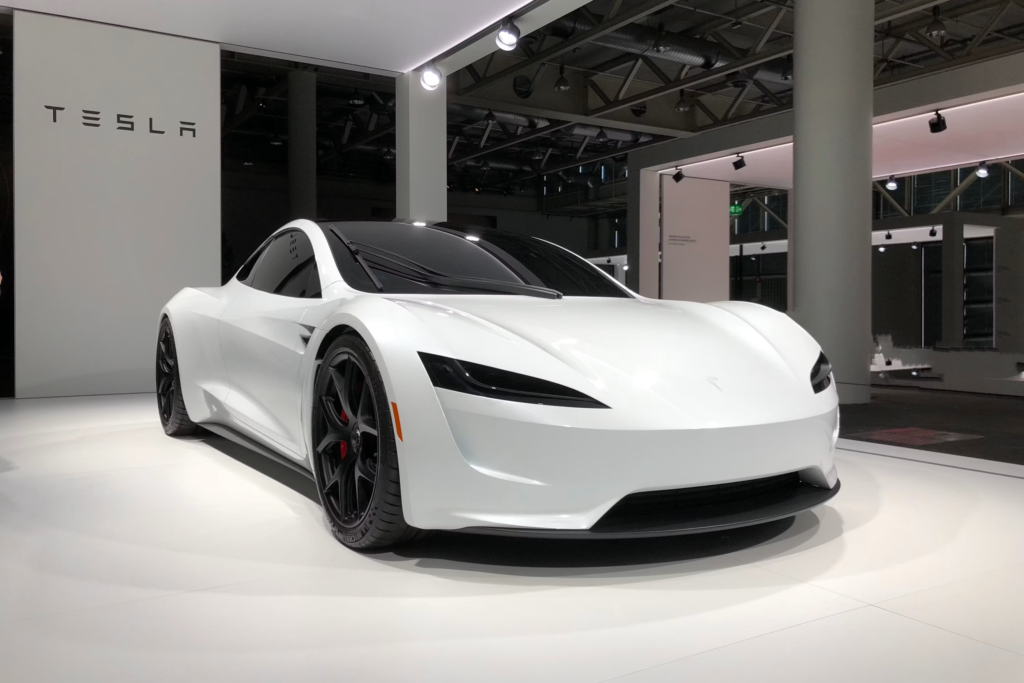
One of the most obvious of the disconnects between aspiration and reality is the Tesla robotaxi service. The company introduced its stand-alone ride-hailing in Austin, Texas in April last year, and Musk boldly said he believed robotaxis would be operating for 50% of Americans by the end of 2025. That was an exceedingly optimistic period. As of January, Tesla lowered its sights to seven more cities, with plans to roll it out in the first half of 2026. For now, however, the robotaxi service is available only in four cities—Austin, Dallas, Houston and Miami. The gradual rollout has been a source of frustration for investors who entered bitcoin’s market with the expectation of an all-American rollout fast.
The slow pace of deployment of the robotaxi service underscores the general obstacles to Tesla’s autonomous driving goals. “Full Self-Driving” is a feature that Tesla markets as a high-end option, but has been under development for years, and even with its name still requires driver input. This has created a stark divide between what Tesla promises and what its technology can actually achieve, one the investor has been hard pressed to ignore. Musk has a history of setting ambitious deadlines without delivering results and the limited scale of the robotaxi service is a reminder that even the most sophisticated AI capabilities have clear limits when it comes to actual applications.
In advance of the earnings call, the top vote-getter from an individual retail investor on Tesla’s investor relations site gets right to the point of investor angst: “What is holding back Tesla from achieving these short-term objectives as they’ve outlined? The question, which was selected by Tesla’s own shareholder base, is a symptom of investors’ increased impatience with the company’s execution. Interestingly, 9 out of the top 10 most voted questions on the site focus on Tesla’s AI-driven wagers, such as robotaxis, Optimus humanoid robots, and Full Self-Driving. Yet another retail investor inquired outright: “Why have the number of robotaxi vehicles failed to grow? When will Cybercab commence customer rides? The questions are starkly different from the day before, when investors were cheering the idea of Musk’s Elon vision and now are asking what he’s doing about it and asking him for his accountability.
The Optimus humanoid robot program is also an important gamble on AI, with potentially huge rewards but also considerable risk. Humanoid robots could be the biggest source of revenue for Tesla, surpassing the company’s car business altogether, according to Musk. As with the robotaxi, however, Optimus remains in a sort of “demo period,” with no obvious possibility of commercialization on a large scale. The humanoid robotics market is so technologically difficult, and Tesla is not alone in this pursuit—companies such as Boston Dynamics are a major threat, and aggressive Chinese robotics companies are in the game, too. The company’s ability to actually produce and deploy humanoid robots at competitive prices is yet to be proven.
Elon’s main business, however, is under pressure on many fronts. The industry is seeing reduced EV demand after years of growth and competition has increased significantly, especially from the Chinese market where the number of electric vehicles is steadily rising and becoming more sophisticated and affordable. Tesla’s lineup is getting older as compared to its competitors’ offerings and the Cybertruck has had production problems and quality control issues that have reduced market impact. Its energy business, which encompasses solar panels and battery storage, is a growing source of revenue, albeit a much smaller one than its automotive business.
This year, Tesla plans to spend $25 billion on capital equipment, a huge gamble on the future, but also a considerable financial risk. Failure of the company’s AI ventures to deliver the results they had hoped for, or if the process is a lot longer than anticipated will prove to be a painful adjustment for Tesla. It’s already an extremely bullish company on the prospects of AI – it’s hard to be disappointed at this point. The era of electric cars, a revolution that Tesla helped usher in, is now in its maturing stage and the company has to deal with a more crowded and competitive market, and at the same time invest in its most ambitious and uncertain operations.