When a relationship that spanned nearly a decade and a half becomes the subject of a public post-mortem, the words chosen to define it carry an immense weight. Recently, Megan Fox found herself at the center of a media storm not because of a new film or a red carpet appearance, but because of a podcast interview given by her former husband, Brian Austin Green. During a candid conversation on the ‘I Do, Part 2’ podcast, Green opened up about the foundations of their marriage, stating that their connection was primarily driven by physical attraction. For the ‘Transformers’ star, this framing of their history has reportedly landed as a profound and painful reduction of a complex life shared together, leaving her feeling deeply objectified and heartbroken.
When one considers the timeline of their relationship, it is difficult to comprehend how such a significant period could be boiled down to a single, surface-level trait. Green and Fox first crossed paths on the set of the sitcom ‘Hope & Faith’ in 2004, a meeting that sparked a connection that would lead to a decade-long marriage and the raising of three young sons. To suggest that a partnership that weathered the storms of Hollywood, parenthood, and the shifting tides of fame was merely a superficial arrangement seems, to many observers, to be a harsh oversimplification. Fox’s reported devastation stems not just from the comment itself but from the public erasure of the emotional labor, challenges, and deep history they shared. In her view, to have those years reduced to a fleeting desire diminishes the reality of the family they built together and the life they curated behind closed doors.
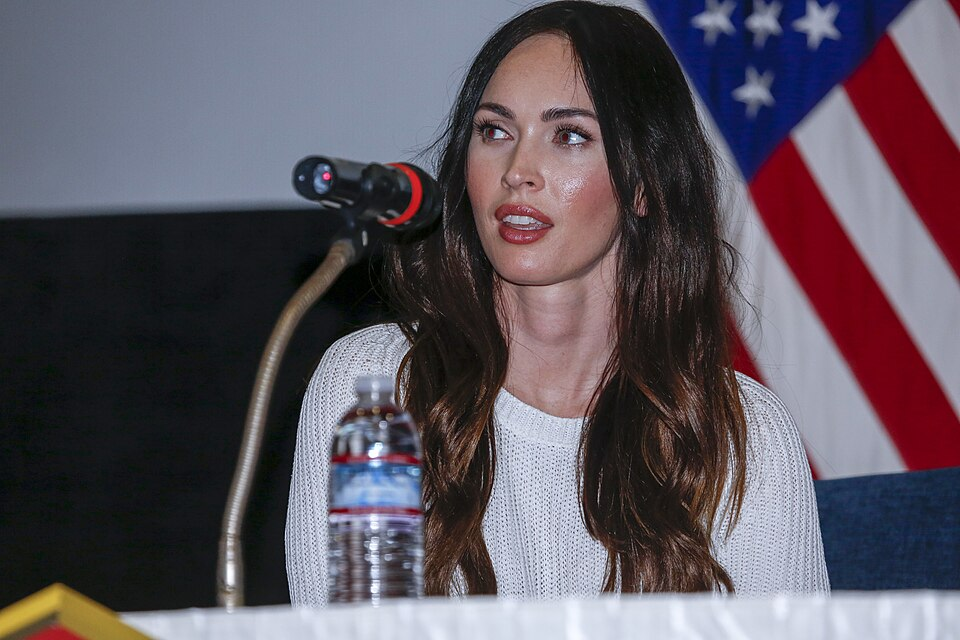
Green, who is now in a relationship with dancer Sharna Burgess, shared his reflections as part of his ongoing journey through therapy and self-discovery. He acknowledged that his approach to the relationship was fundamentally flawed, noting that he “led with physical attraction.” He elaborated on the lessons he has learned, emphasizing that leading with friendship first is paramount to a healthy emotional life. He spoke about the therapy he underwent to understand his own contributions to the relationship’s dynamics, suggesting that he now realizes the foundation he built was not sustainable. While his tone seemed introspective and aimed at self-improvement, the implication regarding the nature of his prior relationship did not land well with his ex-wife.
From Fox’s perspective, the issue is not about disputing Green’s personal growth but rather about the collateral damage of his public narrative. Reports suggest that she felt “shocked” and “devastated” by his remarks, questioning how he could disregard the profound complexity of their shared history. To her, the comments painted their marriage as shallow, a narrative that she feels is not only unfair but deeply misogynistic in its framing. The public discourse around this event highlights a crucial issue often faced by women in the spotlight: the tendency to be defined by their perceived role in a man’s life, rather than as an active, equal partner in a shared story.
It is necessary to look back at the public arc of their relationship to understand the gravity of the situation. Fox and Green were married in 2010, a union that felt like a culmination of a long Hollywood romance. They welcomed three sons—Noah, Bodhi, and Journey—during their time together, creating a core family unit that seemed resilient against the pressures of celebrity culture. When Fox filed for divorce in November 2020, it marked the end of an era. The subsequent years have seen both individuals moving on publicly; Fox entered a highly publicized relationship with rapper Machine Gun Kelly, with whom she shares a daughter, Sage Blade. Meanwhile, Green found stability with Burgess, with whom he also shares a son.
The situation underscores the inherent difficulty of navigating a post-divorce landscape when you are a public figure. For Fox, the need to process these comments is compounded by the feeling that her legacy in that relationship is being rewritten. She feels that Green’s framing negates the emotional investment she made and the family she nurtured. When a partner looks back and asserts that the relationship lacked a foundational friendship, it can feel like an invalidation of the love and time that was given. The idea that she gave “important years of her life” to a partnership that is now being defined as largely superficial is a bitter pill to swallow, especially when the world is watching.
The emotional impact of such public statements cannot be understated. For Fox, the comments reportedly left her feeling “dirty” and “objectified,” suggesting that the fallout is not just about ego but about a fundamental violation of how she views herself. In an era where discussions about women’s autonomy and the male gaze are prevalent, Green’s remarks inadvertently tapped into a larger societal issue. By defining the relationship’s foundation on physical desire, he risked reducing her entire presence in his life—her intellect, her support as a partner, and her role as a mother—to an object of vanity. This is a narrative that many women can relate to in a broader sense, where their contributions are overshadowed by their physical presence.
However, as with all public spats, the situation is nuanced. On one side, you have Green’s perspective as a man who is trying to correct the course of his emotional habits. He is openly admitting fault and acknowledging that he was not emotionally intelligent enough to build a relationship on a more solid foundation. His willingness to accept blame through therapy is often seen as a positive step for men trying to break cycles of toxic behavior. On the other side, you have Fox’s perspective, which is that of a partner feeling retrospectively dismissed and reduced. Her frustration lies in the fact that his personal revelation came at the expense of her narrative, painting her as a symbol of his past mistakes rather than a person who shared a life with him.
In the court of public opinion, reactions are varied. Some applaud Green for his honesty and willingness to undergo therapy to understand his failings. These voices believe that his admission of a misguided approach demonstrates significant growth. Others side with Fox, arguing that a 15-year relationship cannot be so carelessly categorized and that Green’s public confession, while good for his own personal narrative, was deeply disrespectful to the mother of his children. The discussion has highlighted how people project their own experiences with love and partnership onto the celebrities they follow. Some might see Green’s words as a cautionary tale against shallow dating, while others see it as a prime example of how men can center their own growth at the expense of the women in their past.
There is a certain tragedy in the realization that a chapter so significant to one person can be viewed so differently by the other. In her reported reaction, Fox seems to be mourning not just the relationship, but the way it is now being remembered. The hope for many going through a divorce is that the positive memories and the foundation of the partnership are respected, even if the love fades. For Green, the retrospective is a learning experience; for Fox, it is a violation. She hoped that Green, with his newfound emotional insight, might have applied a greater degree of sensitivity and context to his words, recognizing that the story of their marriage belongs to two people, not just one.