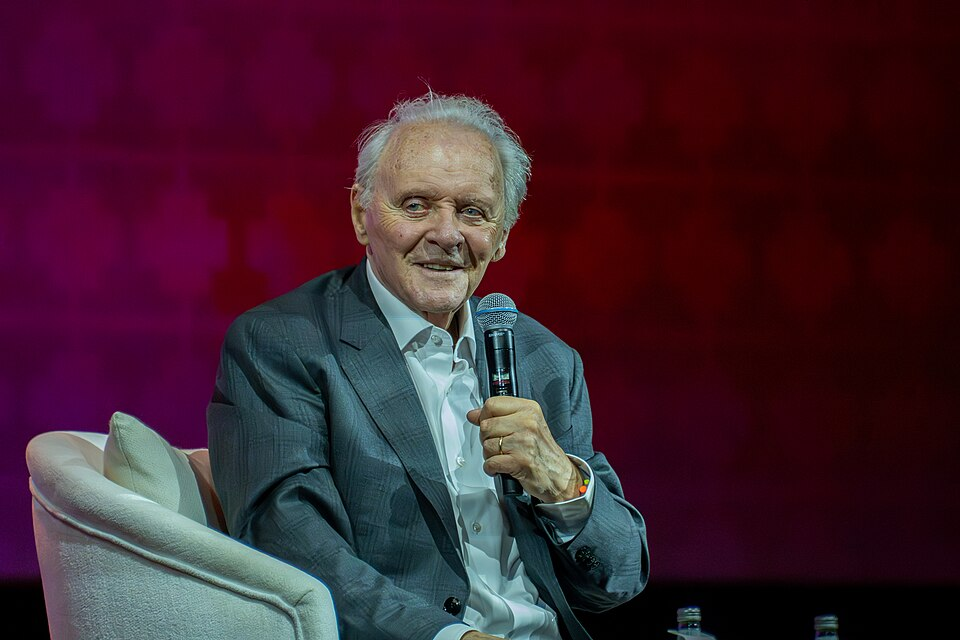
Actor Anthony Hopkins has paid a heartfelt tribute to acclaimed composer George Fenton, remembering him not only for his remarkable contribution to film and documentary music but also for the warmth, generosity and encouragement he offered as a friend. Following Fenton’s death at the age of 76, Hopkins reflected on the personal influence the composer had on him, particularly at a time when he lacked confidence in his own musical abilities.
Hopkins shared his tribute on Instagram alongside a photograph of Fenton. Rather than focusing solely on Fenton’s long and distinguished career, the actor chose to highlight the personal bond they shared. His words described a friendship built on encouragement and mutual respect, with Hopkins recalling how Fenton offered support without making him feel inexperienced or inadequate.
“George possessed an extraordinary musical gift, but what I will remember just as deeply was his generosity. He could have spoken to me as the accomplished composer he was. Instead, he spoke to me as a friend. He encouraged rather than instructed,” Hopkins wrote in the caption.
The distinction Hopkins made between encouragement and instruction appears to capture the quality he valued most in Fenton. Despite being an accomplished composer with decades of experience, Fenton approached Hopkins as a friend rather than simply as an expert passing on advice. For Hopkins, that attitude had a lasting impact, particularly because confidence can often be as important as technical ability when someone is developing a creative skill.
Hopkins continued his tribute by recalling how Fenton helped him believe in his own music at a time when he struggled to do so himself. “He gave me confidence when I had very little of my own. I have never forgotten that kindness, and I never will. George, my dear friend, thank you for believing in the music before I had the courage to believe in it myself. Rest in Peace, my dear friend.George Fenton. October 19, 1949 – October 5, 2026.”
The tribute offers a more personal perspective on Fenton’s legacy. While his professional achievements established him as one of the respected composers of his generation, Hopkins’ recollection focuses on qualities that cannot easily be measured through awards or credits. His generosity, patience and ability to encourage others were clearly important parts of the relationship the two men shared.
George Fenton had an extensive career in film and television music and worked with a number of prominent directors throughout his professional life. His collaborations included filmmakers such as Richard Attenborough, Nora Ephron, Alastair Fothergill, Stephen Frears, Nicholas Hytner, Ken Loach, Andy Tennant, Neil Jordan and Terry Gilliam. Working across different genres and styles, Fenton developed a reputation for creating music that could strengthen the emotional character of a production without overwhelming the story.
Among his best-known film scores were those for Gandhi, Cry Freedom, Dangerous Liaisons, Groundhog Day, The Fisher King, Dangerous Beauty, You’ve Got Mail, Sweet Home Alabama and Hitch. The range of these projects reflected the breadth of his musical career. He worked on historical dramas, romantic films, comedies and other productions, adapting his approach to the distinctive tone and demands of each story.
Fenton’s work was not limited to conventional feature films. He also became closely associated with major natural history documentaries, particularly through his work on productions connected with broadcaster and naturalist David Attenborough. His scores for documentaries including Planet Earth, Frozen Planet and Wild Isles helped demonstrate how music can contribute to the atmosphere and emotional impact of factual storytelling.
Nature documentaries often depend on a careful balance between visual spectacle, narration and music. Fenton’s contribution to this format became an important part of his career, allowing his compositions to accompany some of the most ambitious wildlife and environmental programming. His work helped give these productions a distinctive emotional dimension while allowing the imagery and storytelling to remain central.
Over the course of his career, Fenton received five Academy Award nominations and was recognised by several major organisations across the music and entertainment industries. His honours included Ivor Novello, BAFTA, Golden Globe, Emmy and BMI Awards, as well as a Classic BRIT. He was also among the relatively small number of songwriters and composers to be made a Fellow of the Ivors Academy, formerly known as BASCA.
These achievements provide a measure of Fenton’s professional standing, but Hopkins’ tribute suggests that his influence extended beyond the work that received public recognition. For someone as accomplished as Fenton, his willingness to encourage another artist rather than simply instruct them appears to have been particularly meaningful. It is a reminder that creative relationships are often shaped as much by personal generosity as by professional achievement.