Meta is taking another step toward making artificial intelligence part of everyday life with Muse Charm, a compact handheld device designed to bring the company’s Muse AI assistant beyond the smartphone. Unveiled by CEO Mark Zuckerberg at Meta Connect, the pocket-sized gadget reflects a broader change in the company’s strategy as it shifts attention from the metaverse toward what Zuckerberg calls “personal superintelligence.”
The launch is notable because Meta has spent years trying to reduce its dependence on the technology platforms controlled by Apple and Google. Rather than requiring users to open an app on an iPhone or Android phone, Muse Charm gives users a more direct way to interact with Meta’s AI system. A simple tap on the device can connect users with Muse, creating a dedicated route to the assistant without relying on traditional smartphone applications.
The small device also represents a different approach to consumer AI hardware. Instead of attempting to replace the smartphone entirely, Muse Charm appears designed to work as an additional personal companion. Its roughly 2-inch screen is small enough to fit comfortably in the hand, while a customizable Muse character provides a visual identity for the AI assistant. The device includes a built-in 5G modem, allowing it to access Muse without a Wi-Fi connection, although it does not function as a conventional phone and cannot make calls.
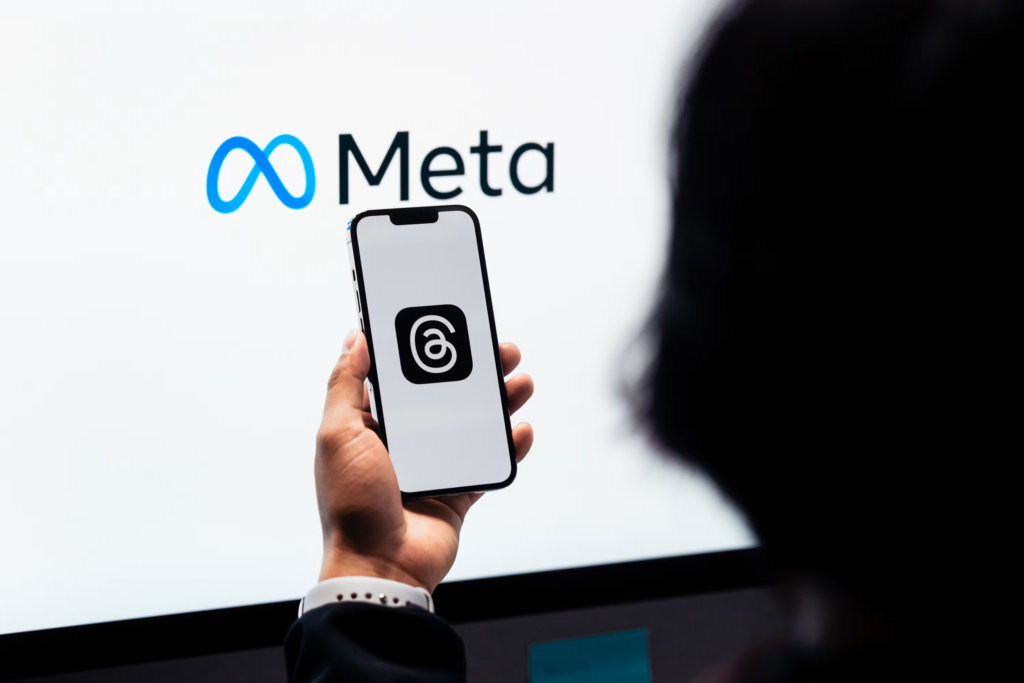
For Zuckerberg, the introduction of Muse Charm is part of a much larger technological ambition. Meta once placed enormous expectations on the metaverse, an immersive digital environment that became central to the company’s strategy after its 2021 name change. That vision required significant investment in virtual and augmented reality hardware and software, but the company’s AI strategy has increasingly become a more immediate priority.
“It is actually quite clear personal superintelligence will not only come first; it will be much bigger and more important,” Zuckerberg said at the company’s annual Meta Connect conference.
“So we have shifted our focus to building the best devices for personal superintelligence,” he said, adding that Muse would also soon be available across Meta’s smart glasses lineup.
The comments underline how Meta now views AI-powered devices as a potentially important computing platform. Instead of treating artificial intelligence simply as another feature inside existing applications, the company is attempting to build hardware specifically around continuous interaction with AI. Muse Charm is one example of that approach, while Meta’s smart glasses represent another.
The timing of the announcement is also significant. Muse has recently attracted millions of downloads, generating considerable attention around the possibility of AI agents performing practical tasks on behalf of users. Unlike conventional chatbots that primarily answer questions, AI agents are increasingly being developed to carry out actions such as organizing information, making bookings and completing other digital tasks.
That shift has attracted strong interest from technology companies and investors because an effective AI agent could change how people interact with online services. Instead of opening several different applications to complete a task, a user could potentially give instructions to one AI assistant and allow it to coordinate the process.
Meta’s decision to put Muse directly into a dedicated device suggests the company wants to establish a closer relationship between consumers and its AI assistant. It also gives Meta greater control over the user experience rather than depending entirely on mobile operating systems controlled by competitors.
However, creating a new category of consumer hardware is difficult. The technology industry has seen several attempts to introduce AI-focused handheld devices, with some struggling to convince consumers that they offer enough value to replace or supplement familiar smartphones. People already carry powerful computers in their pockets, making it difficult for a separate device to justify another purchase.
Muse Charm may attempt to overcome that challenge by positioning itself as something more personal and visually distinctive. Its small screen and customizable character could make the device feel less like conventional electronics and more like a digital companion.
That concept could have particular appeal among younger consumers. Digital products associated with earlier generations, including compact cameras, flip phones and dedicated music players, have experienced renewed interest among some younger users. The appeal is not necessarily based on technical superiority. Instead, smaller and more focused devices can offer a different relationship with technology, particularly for people who are tired of constantly relying on large smartphone screens.
“Muse Charm could find some traction among Gen Z and younger consumers. The combination of AI, fashion and personalization could appeal to younger users, especially if it is affordable and easy to use,” said Linda Sui, founder of Smart Analytics Global, a market research firm.
The device could also appeal to consumers who are interested in AI but do not want to use smart glasses. Wearable technology can raise concerns about appearance, privacy and social acceptance, particularly when cameras and microphones are involved. A handheld device avoids some of those concerns while still providing access to an AI assistant.
“They are appealing to people who might not want to wear glasses or might not trust glasses,” said IDC director Jitesh Ubrani.
The nostalgic element may be another part of the product’s appeal. Ubrani compared the concept with Tamagotchi, the virtual pet phenomenon that became widely popular in the late 1990s. The comparison points to a different way of thinking about AI devices. Rather than presenting artificial intelligence as a purely functional tool, manufacturers can give it a recognizable personality and visual presence.
“Some people might remember Tamagotchi and this might evoke that,” Ubrani said, referring to colorful virtual pets that became a cultural phenomenon in the late 1990s. “They might be able to run a small language model locally. So you can run AI on such a small package.”
The possibility of running some AI capabilities locally could become increasingly important as hardware becomes more powerful and efficient. Local processing can potentially reduce dependence on cloud services for certain functions, although more advanced AI tasks may still require remote computing infrastructure.
For Meta, the larger opportunity extends beyond one small gadget. Muse Charm is part of an expanding hardware strategy that includes smart glasses and other devices designed around artificial intelligence. The company’s objective appears to be creating multiple ways for people to interact with Muse throughout the day, rather than limiting the assistant to a traditional smartphone application.