George Clooney has recalled an unexpectedly funny moment from the first time he watched Good Night, and Good Luck with an audience, describing the Venice screening as one of the most memorable experiences of his career. Speaking at a Masterclass during the Biennale Cinema 2026, the actor and filmmaker reflected on the uncertainty he felt before seeing how audiences would respond to the film, which he had personally invested heavily in making.
Good Night, and Good Luck holds a distinctive place in Clooney’s filmmaking career. Released in 2005, the black and white historical drama explored the confrontation between veteran broadcast journalist Edward R. Murrow and U.S. Senator Joseph McCarthy during a period of intense political tension in the United States. Clooney directed the film and also appeared in it, while David Strathairn played Murrow. The cast also included Patricia Clarkson, Jeff Daniels, Robert Downey Jr. and Frank Langella.
For Clooney, however, the Venice premiere was not simply another film screening. It was the first opportunity he had to sit among an audience and discover how people would react to a project that had required a significant personal commitment. He recalled feeling proud of the decision to make the film, even revealing that he had mortgaged his house to help finance it.
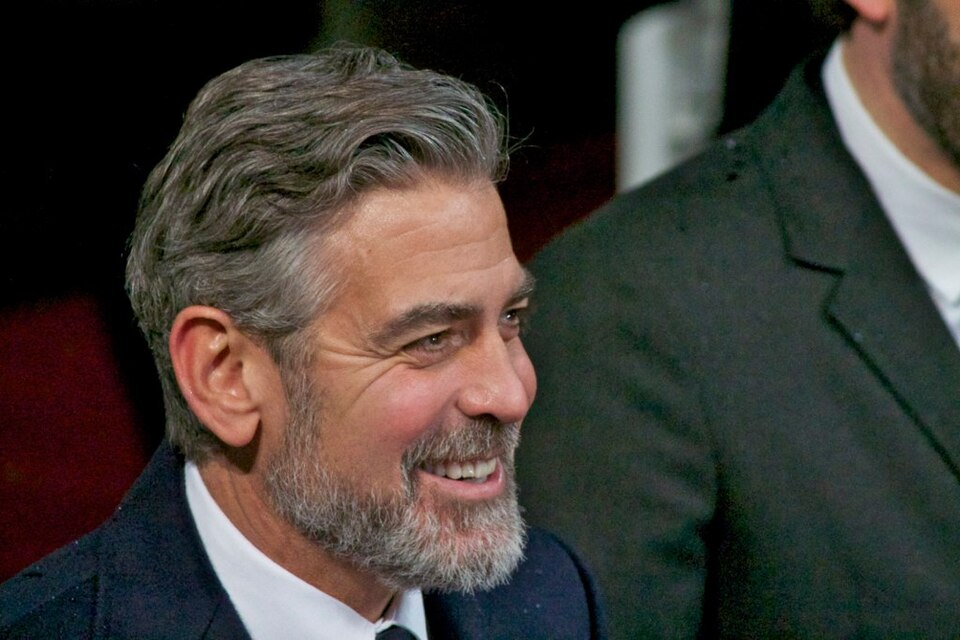
“The first place we screened it was in Venice, and we came here, and I’d never seen it with an audience before, so who the hell knows if anybody gets it,” Clooney said while recalling the experience.
That uncertainty quickly turned into confusion when the screening began. Rather than settling quietly into their seats, members of the audience began shouting as the film started. From Clooney’s perspective, the reaction was difficult to understand. He initially wondered whether something had gone wrong with the film itself or whether the audience was reacting negatively.
“As the film started to screen, all of a sudden everybody in the theater started screaming like, ‘Ah Ah! Ah!’, and Clooney was like, ‘What is going on? What are you screaming about?’ And they just kept screaming, and the film was running; he was like, ‘What’s going on?’.”
The reason for the commotion turned out to be far less dramatic than Clooney had imagined. The audience had not finished taking their seats when the movie began. People were still moving around the theater and trying to find their places, creating a noisy and chaotic atmosphere just as the opening moments of the film were playing on the screen.
Realizing what was happening, Clooney decided that the screening needed to stop. He stood on a chair and called out to the projectionist, asking for the movie to be switched off and restarted so that the audience could properly settle down. The request was eventually accepted, but restarting the screening was considerably more complicated than it would be today.
At the time, films were still being shown on traditional reels rather than through the digital projection systems that have become standard in modern cinemas. Restarting the movie therefore required the film to be physically respun and prepared again. According to Clooney’s recollection, the process took approximately 20 minutes.
The delay could easily have disrupted the atmosphere of the evening. Instead, Clooney believes the unexpected interruption ultimately helped create a stronger connection between the audience and the film. Once everyone was seated and the screening began again, the theater was able to give the movie its full attention.
“But it was extraordinary because it made everyone focus on the film,” Clooney recalled.
The incident also gave the screening an unusual sense of anticipation. Rather than beginning smoothly and quietly, the evening was interrupted almost immediately, forcing the filmmakers and audience to pause before starting again. In retrospect, Clooney viewed that disruption as part of what made the experience special.
“And so by the time the movie started again, it was really, it made it an incredibly special night. One of the greatest nights of my life, you know, it was really amazing.”
The memory offers an interesting glimpse into the unpredictable nature of film premieres. A filmmaker can spend months or years working on a project, carefully shaping its performances, editing, cinematography and tone, but the experience of finally presenting it to an audience remains impossible to completely control. Even a carefully planned premiere can produce moments that no one expects.
For Clooney, Good Night, and Good Luck was particularly personal because of the financial and creative risks attached to the project. The film focused on a significant period in American journalism and examined the relationship between the media, political authority and public accountability. Its restrained black and white visual style and emphasis on dialogue gave it a serious, period-specific atmosphere that depended heavily on the audience’s attention.
The decision to make the film also reflected Clooney’s growing role behind the camera. By directing the project, he was responsible not only for his own performance but also for establishing the film’s overall visual language and dramatic rhythm. His decision to personally invest in the production demonstrated how strongly he believed in the story.
The Venice screening therefore became more than an ordinary premiere. It represented a moment when a deeply personal filmmaking project was finally placed in front of an audience without Clooney knowing how it would be received. The initial shouting and confusion might have appeared disastrous in the moment, but the eventual restart transformed the disruption into a memorable part of the evening.
Good Night, and Good Luck remains notable for its portrayal of Edward R. Murrow’s conflict with Senator Joseph McCarthy, whose anti-communist investigations became one of the defining political controversies of the period. David Strathairn’s performance as Murrow was central to the film, while Clooney, Patricia Clarkson, Jeff Daniels, Robert Downey Jr. and Frank Langella contributed to an ensemble cast built around the newsroom and the wider political environment.