Demi Moore has spent decades navigating Hollywood, but some of the most meaningful lessons in her life have come from a much more personal role: being a mother. The actress has often spoken about the importance of family, and her three daughters, Rumer, Scout and Tallulah Willis, have played a central role in shaping how she understands love, acceptance and personal growth. In a recent conversation, Moore reflected on how motherhood has changed her perspective and taught her to appreciate the importance of allowing children to become their own people.
Moore discussed her experiences as a mother while speaking with Ali Larter at Step Up’s 2026 Annual Inspiration Awards in Los Angeles on September 25. Rather than describing motherhood simply as a responsibility, Moore presented it as an ongoing learning experience. Her reflections suggested that the relationship between a parent and an adult child can continue to evolve long after the years of active parenting have passed.
One of the most important lessons Moore says she learned from her daughters is acceptance. Looking back on motherhood, she explained that this understanding began very early in her experience as a parent. “The greatest gift that they have given me is a foundation of love,” Moore said during the conversation.
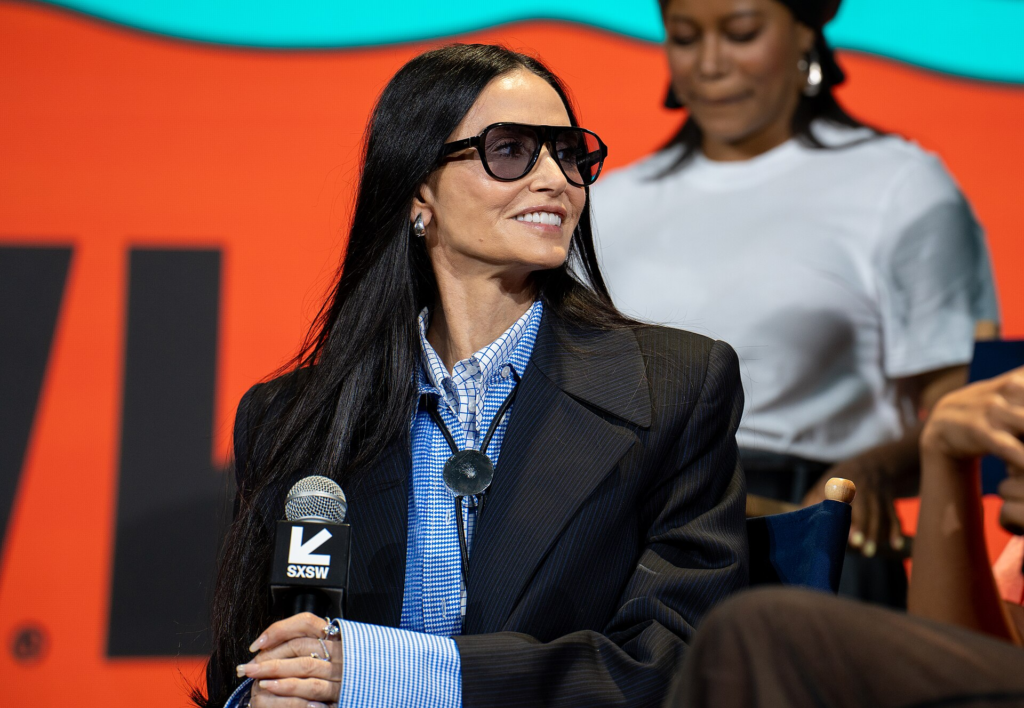
For Moore, acceptance appears to mean more than simply loving her children unconditionally. It also involves recognising that each child has a separate personality, identity and path in life. Parents naturally want to protect their children and may sometimes imagine what they believe would be the right direction for them. As children grow older, however, that instinct can give way to the understanding that they need the freedom to make their own choices.
That perspective has particular significance when viewed alongside Moore’s own upbringing. The actress has previously spoken openly about difficult experiences during her childhood and explored aspects of her early life in her memoir, Inside Out. Those experiences have contributed to the way she has spoken about relationships, resilience and family over the years.
Her daughters have grown up in circumstances very different from Moore’s childhood, but they have also experienced the unusual pressures that can come with being part of a famous family. Rumer, Scout and Tallulah have each developed their own identities as adults, making Moore’s role as a mother different from what it was when they were young.
Moore has described her daughters as teachers rather than viewing the relationship as one where only the parent provides guidance. “They’re our greatest teachers,” she said. The statement captures a broader shift that can happen as children become adults. Parenting may begin with teaching children how to navigate the world, but over time, parents can also learn from the perspectives and experiences their children bring into the relationship.
The relationship between Moore and her daughters has occasionally been discussed publicly from their side as well. Tallulah Willis, in particular, has spoken about her mother and the strength she associated with her. During a 2019 appearance on Red Table Talk, Tallulah described Moore in memorable terms, saying, “I don’t think my mom was raised, she was forged.”
Tallulah’s description reflected the way she viewed her mother’s resilience after a life marked by both professional success and personal challenges. It also illustrated that the lessons within a family do not necessarily move in one direction. While Moore has guided her daughters through different stages of their lives, her daughters have also developed their own understanding of her experiences and character.
As Rumer, Scout and Tallulah have entered adulthood, Moore has had to embrace another aspect of motherhood: knowing when to step back. This can be one of the more complicated parts of parenting. Protecting a child is often an instinctive response, but allowing an adult child to make independent decisions requires a different kind of trust.
Moore previously spoke about this philosophy during a 2024 appearance on The Jennifer Hudson Show. She explained that she sees her responsibility as giving her children the freedom to discover who they are rather than attempting to control every part of their lives. “For me, I feel like my job is just to love my children and to give them the room to be who they are,” she said.
That approach reflects a form of parenting that places independence alongside affection. Giving children space does not necessarily mean becoming distant. Instead, it can mean remaining available while recognising that they must experience life for themselves. Mistakes, disappointments and difficult decisions can all become part of the process through which a person develops confidence and a clearer sense of identity.
For a parent, that transition can be emotionally complicated. The desire to prevent a child from experiencing pain does not disappear simply because the child becomes an adult. What changes is how that concern is expressed. Instead of making decisions on behalf of their children, parents may eventually find themselves offering support, perspective and reassurance when it is needed.
Moore’s relationship with her daughters appears to have developed along those lines. Rumer, Scout and Tallulah are no longer children who rely on their mother for everyday decisions. They are adults with individual interests, experiences and identities. Moore can therefore occupy a different place in their lives, one that is less about directing their choices and more about maintaining a strong emotional connection.