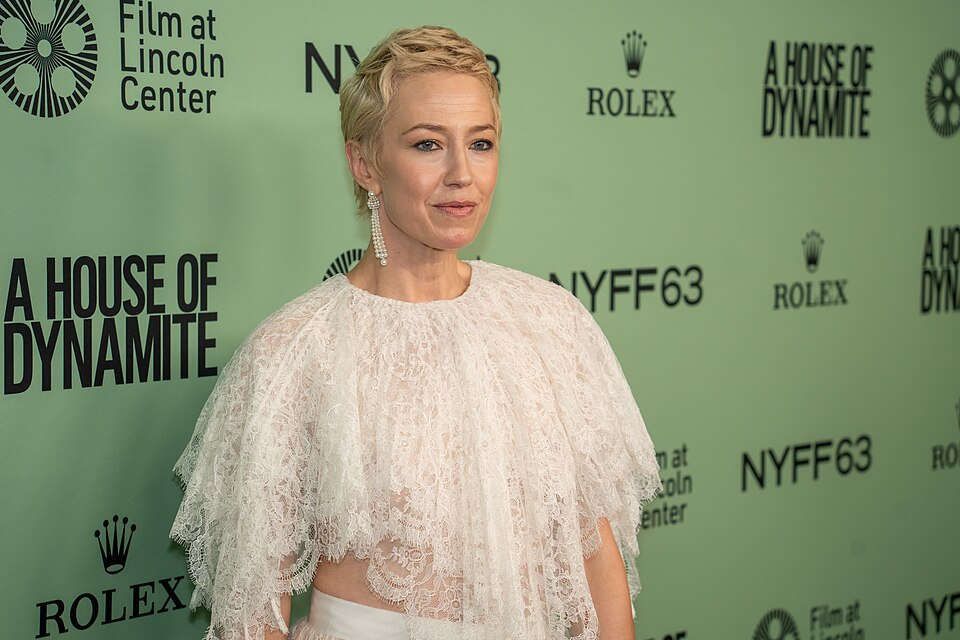
Carrie Coon is set to become the first recipient of the Luminary Award in the acting category at the Vancouver International Film Festival 2026, marking a new recognition for performers whose work has made a significant contribution to the art of cinema. The award is being introduced by the festival to honour excellence, dedication and creative achievement in the moving image, with Coon selected as its inaugural acting honouree.
The award adds another notable moment to Coon’s growing career, which has included work across film and television and performances in projects that have attracted both critical attention and a wide international audience. The actor is also scheduled to participate in an extended conversation during the festival, giving audiences an opportunity to hear her discuss her approach to performance, her career and the creative experiences behind her work.
Coon’s appearance at the Vancouver International Film Festival will also coincide with a screening of her upcoming film The Liberation. The combination of the award, the conversation and the film screening is expected to make her one of the prominent figures at this year’s festival, which begins on October 1 in Vancouver.
The 2026 edition of the Vancouver International Film Festival is bringing together filmmakers, actors, producers, craftspeople, programmers and other professionals from across the film industry. Along with screenings, the festival programme includes discussions, panels, masterclasses and other events designed to explore the creative and technical processes behind filmmaking.
The introduction of the Luminary Awards is one of the notable additions to this year’s programme. While Coon will receive the acting award, the festival is also recognising achievements in other major areas of filmmaking. Markus Schleinzer is being honoured for directing excellence, while Leah Nelson will receive recognition for screenwriting.
The range of awards reflects the collaborative nature of filmmaking, where a finished movie depends on the work of performers as well as writers, directors, editors, designers, composers, producers and numerous other specialists. By creating separate recognitions for different creative disciplines, the festival is placing attention on the people whose contributions often remain behind the scenes for audiences.
The festival’s VIFF Talks programme will provide another major platform for conversations about filmmaking. The series begins on October 3 with editor Matthew Hannam, whose recent credits include Babygirl and White Noise. Hannam is expected to discuss his collaborative approach to editing and the way editors work with directors and other members of a production team to shape a film.
Editing is often described as one of the hidden stages of filmmaking because audiences generally experience the finished sequence rather than the decisions that created it. Hannam’s career offers an opportunity to examine that process in greater detail. He began working as an assistant editor in Winnipeg and later collaborated with Canadian filmmakers, including Guy Maddin. His experience illustrates how technical skills and creative judgment can develop together over the course of a career.
Another VIFF Talks session will examine the unusual journey of the independently produced film Obsession. Producer Haley Johnson will discuss the film’s production and the circumstances surrounding its success. The conversation is scheduled for October 4 and will explore how the project was made on a limited budget before attracting major commercial attention.
The film’s subsequent trajectory is particularly significant because its Toronto premiere was followed by a studio bidding war. Such developments highlight the unpredictable nature of independent filmmaking. Projects made outside the traditional studio system can sometimes attract substantial attention when audiences and industry figures respond strongly to the finished work.
For filmmakers and producers, stories of independent productions finding large audiences can also provide insight into the changing relationship between smaller productions and major studios. Financial limitations can influence creative decisions from the earliest stages of production, while unexpected success can dramatically change how a film is positioned and distributed.
Production design will be the focus of another VIFF Talks event on October 5. Production designers Brandon Tonner-Connolly and Matt Hyland will discuss their collaboration on Jane Schoenbrun’s Teenage Sex and Death at Camp Miasma. Their session will explore the process of constructing the film’s surreal and immersive visual environment.
Production design plays a crucial role in establishing the physical and emotional atmosphere of a film. Sets, locations, props, colours, textures and spatial arrangements can all influence how viewers understand a story. In films with highly stylised worlds, that work becomes particularly important because the visual environment can function almost like another character.
The VIFF Talks programme will conclude on October 7 with a session featuring Mark Mothersbaugh, the co-founder of DEVO and a composer known for his work on several films directed by Wes Anderson. His credits include Rushmore, The Royal Tenenbaums and The Life Aquatic with Steve Zissou.
Mothersbaugh’s participation brings attention to another essential part of filmmaking: music. A film score can influence pacing, atmosphere and emotional response, sometimes communicating elements of a story that dialogue does not explicitly explain. His career also demonstrates the connections between music and cinema, particularly through long-term collaborations between composers and directors.
The festival will additionally present its Composer Filmmaker Accelerator, an initiative intended to connect emerging composers with filmmakers. Through mentorship and practical collaboration, the programme aims to give participants experience in developing music alongside moving-image projects.