DeepSeek has officially launched its V4 Pro artificial intelligence model, positioning the new system as a more powerful and premium option within its growing lineup. The Chinese AI company is charging substantially more for V4 Pro than its V4 Flash model, with the highest difference reaching 14 times the price for output tokens. The move signals that DeepSeek is increasingly willing to place a premium on advanced AI capabilities as it competes for attention in an increasingly crowded global market.
The newly released DeepSeek V4-Pro-0813 is priced at $1.32 per million input tokens and $3.96 per million output tokens. These prices represent a significant increase compared with V4 Flash, which is priced at approximately $0.14 per million input tokens and $0.28 per million output tokens. In practical terms, developers using V4 Pro can expect to pay around nine times more for processing incoming information and about 14 times more for generated output.
The pricing strategy reflects the different roles the two models are expected to play. V4 Flash is designed to provide a faster and more economical option, making it suitable for applications where developers need to handle large volumes of AI requests without significantly increasing operating costs. V4 Pro, meanwhile, is being presented as the company’s higher-end model, with stronger reasoning and greater ability to handle complex tasks.
DeepSeek has highlighted improvements in V4 Pro’s ability to work with AI agents. Agentic AI systems are designed to do more than simply respond to individual prompts. They can plan tasks, use external tools, work through multiple steps and make decisions based on changing information. These capabilities are becoming increasingly important as businesses experiment with AI systems that can perform research, coding, data analysis and other workflows with less human intervention.
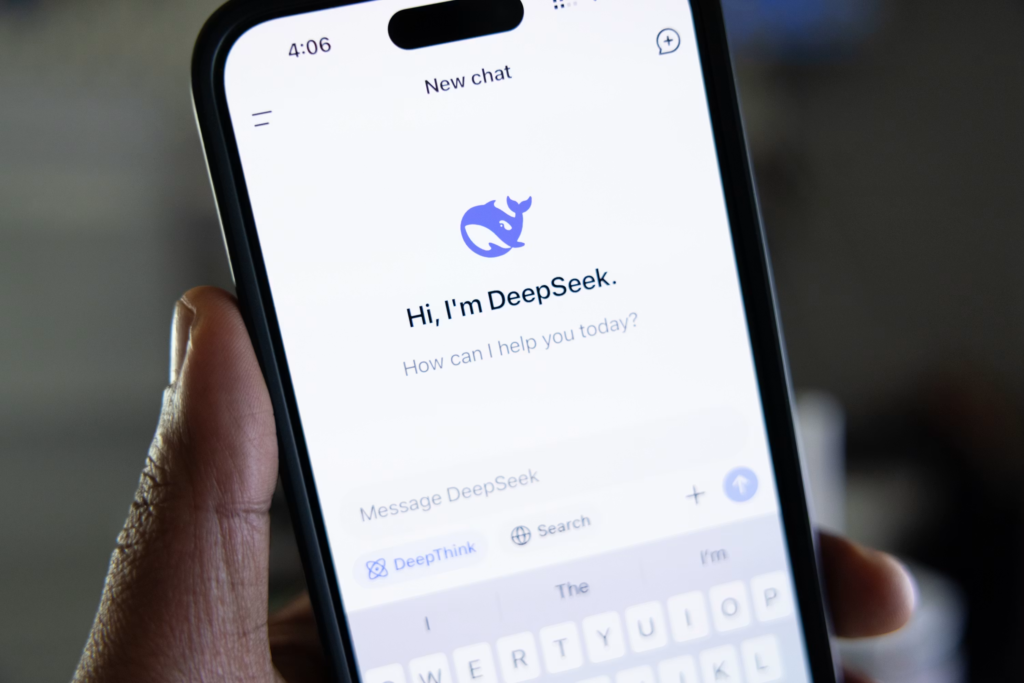
The new model is available through DeepSeek’s application programming interface, as well as through the company’s app and web products. This gives both developers and ordinary users access to the upgraded system, although the higher API prices could become an important consideration for businesses building applications around the model.
DeepSeek has also adjusted its broader API pricing strategy for its V4 models. The company is introducing peak and off-peak pricing, a system that can make AI services more expensive during periods of heavy demand and cheaper at other times. For developers operating AI applications at scale, these pricing changes could influence when and how frequently they use the company’s most capable models.
The decision to charge significantly more for V4 Pro is particularly interesting because the model’s development history has not followed the most straightforward path. When V4 Flash was released, it reportedly performed better than an earlier preview version of V4 Pro across several independent evaluations. That result was notable because the Pro model was expected to represent the more capable version of the technology.
The situation also offered a glimpse into how quickly AI models can evolve during development. A preview model can become outdated surprisingly fast when researchers continue refining training methods, reasoning capabilities and system architecture. The difference between the earlier V4 Pro preview and the official V4 Pro release therefore suggests that DeepSeek made meaningful improvements before putting the final model into the market.
Independent testing now indicates that the official V4 Pro has moved considerably ahead of V4 Flash in several areas. One widely followed AI evaluation placed the reasoning version of V4 Pro at 53 on its Intelligence Index, compared with a score of 40 for V4 Flash. Such benchmark results do not capture every aspect of real-world performance, but they provide a useful indication of how different models perform across standardized tasks.
The evaluation considers several areas of AI performance, including agent-based tasks, tool use, software development, scientific reasoning and the ability to work with long stretches of context. These capabilities are becoming more valuable as AI systems move beyond simple question-and-answer applications. A model that can understand a large amount of information, use tools effectively and complete complicated sequences of tasks can potentially provide greater value to businesses than a model focused primarily on quick responses.
For DeepSeek, the V4 Pro launch also comes at an important moment in the company’s development. The startup attracted international attention after the release of its R1 reasoning model in early 2025. R1 became one of the most closely watched developments in the AI industry and sparked renewed debate over how much computing power and financial investment are actually required to build competitive AI systems.
DeepSeek’s rise was particularly significant because it challenged assumptions surrounding the cost of advanced AI development. Its progress encouraged investors, technology companies and researchers to reconsider the gap between leading Chinese and American AI developers. The company’s emergence also intensified discussions about computing resources, chip availability, model efficiency and the economics of large-scale artificial intelligence.
Since that early surge in attention, however, DeepSeek has faced stronger competition from other Chinese AI companies. Firms such as Moonshot AI, Zhipu AI, MiniMax, Alibaba and ByteDance have continued releasing and improving their own models. The rapid pace of development across China’s AI sector means that maintaining an early advantage is becoming increasingly difficult.