Chinese artificial intelligence startup DeepSeek has officially launched its V4 Pro model, marking another major step in the company’s effort to strengthen its position in an increasingly competitive AI market. The August 13 release comes as DeepSeek expands its workforce, increases computing capacity and explores new fundraising opportunities, while facing growing competition from several other Chinese technology companies.
The new model, identified as V4-Pro-0813, is designed to deliver stronger capabilities for AI agents, a rapidly developing area of artificial intelligence in which systems can perform multi-step tasks with greater independence. DeepSeek said the model is available through its application programming interface, or API, as well as its mobile application and web platforms. The company has also announced changes to the pricing of its API services for V4 Pro and V4 Flash, including different rates during peak and off-peak periods.
The official launch is particularly significant because DeepSeek’s lower-cost V4 Flash model had produced surprisingly strong results in several independent tests. In some evaluations, Flash performed better than an April preview version of the more advanced V4 Pro. That outcome attracted attention because the Pro model is intended to be DeepSeek’s more capable offering. The difference between the preview and the final release also suggests that the company may have made substantial improvements to its technology during the development period.
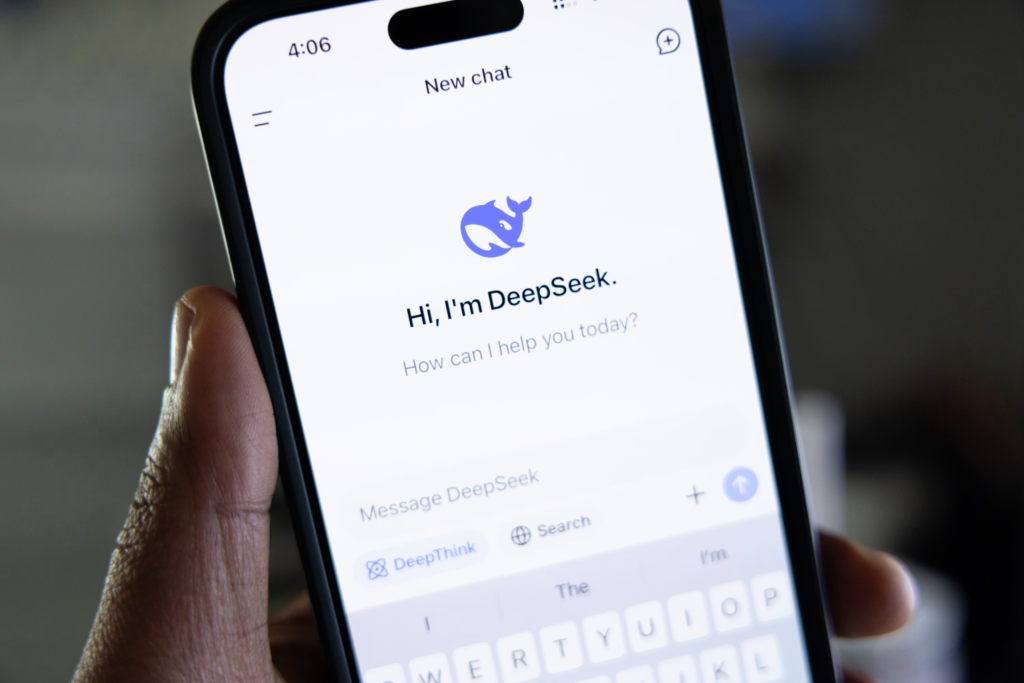
For users and businesses following the AI industry, this development highlights how quickly model performance can change. A preview version can offer only a partial picture of what a company ultimately delivers. DeepSeek’s latest release therefore provides a clearer indication of where the company believes its technology is heading, particularly in areas involving autonomous or semi-autonomous AI agents.
DeepSeek first became a major name in the global technology industry after the release of its R1 model in early 2025. The model attracted widespread attention and triggered fresh debate about the cost of developing powerful artificial intelligence systems. Its emergence challenged the assumption that leading AI performance necessarily required the enormous levels of spending associated with some major US-based technology companies.
That moment also changed the conversation around China’s AI industry. DeepSeek demonstrated that a relatively young company could attract international attention with an advanced AI model while operating in an environment shaped by restrictions on access to certain advanced computing technologies. The company’s rise quickly made it one of the most closely observed AI startups in China.
However, maintaining that momentum has become more difficult. Several domestic competitors have continued releasing increasingly sophisticated AI systems, putting pressure on DeepSeek to keep improving its models. Companies such as Moonshot AI, Zhipu AI, MiniMax, Alibaba and ByteDance have all become important participants in China’s rapidly developing AI sector.
The growing competition means that DeepSeek is no longer competing simply for attention. It is also facing the more difficult challenge of building a sustainable business around its technology. The AI industry requires significant financial resources, particularly as companies seek access to advanced computing hardware, large data centres and highly skilled researchers and engineers.
DeepSeek’s approach to financing has also evolved. The company had historically operated without relying heavily on outside investment, but that strategy appears to be changing as the cost of AI development increases. The company reportedly raised about $7.4 billion in its first outside financing round in June. It was subsequently reported to be preparing another fundraising round that could value the company at approximately $74 billion.
Such figures demonstrate how dramatically investor expectations around artificial intelligence have changed. Companies developing foundation models need substantial infrastructure even before they begin generating significant revenue. Training and operating large AI systems can require extensive computing resources, while continued improvement depends on engineers, researchers, specialised hardware and increasingly sophisticated data-centre infrastructure.
DeepSeek is also expanding its workforce. The company has indicated that it plans to at least double staffing across several areas, including data-centre operations and AI-agent development. Hiring at this scale reflects the broader shift in the AI industry from simply producing impressive models to building the infrastructure and products needed to support them at commercial scale.
One of the most interesting parts of DeepSeek’s expansion strategy is its reported work on chip design. The company has increased private hiring of engineers with expertise in semiconductor development as it explores the possibility of creating its own AI chips. If successful, such an effort could eventually help DeepSeek reduce its dependence on external suppliers.
The chip initiative is important because computing hardware has become one of the most strategically important parts of the AI industry. Companies developing advanced models need large quantities of high-performance processors, and access to those processors can be influenced by supply constraints, export restrictions and geopolitical tensions. Developing alternative hardware capabilities could therefore give an AI company greater control over an important part of its technology infrastructure.
For DeepSeek, however, building AI chips would be a major undertaking in its own right. Designing a competitive processor requires specialised engineering expertise, significant investment and access to a broader semiconductor ecosystem. It is therefore unlikely to be a quick solution to the company’s computing requirements. Instead, it represents a longer-term attempt to strengthen technological independence.
The V4 Pro launch also comes at a time when AI companies are increasingly focused on agents rather than conventional chatbots. AI agents are intended to handle sequences of tasks, make decisions based on changing information and interact with software tools with less direct human intervention. Improving these capabilities could make AI systems more useful for programming, research, business operations and other complex workflows.