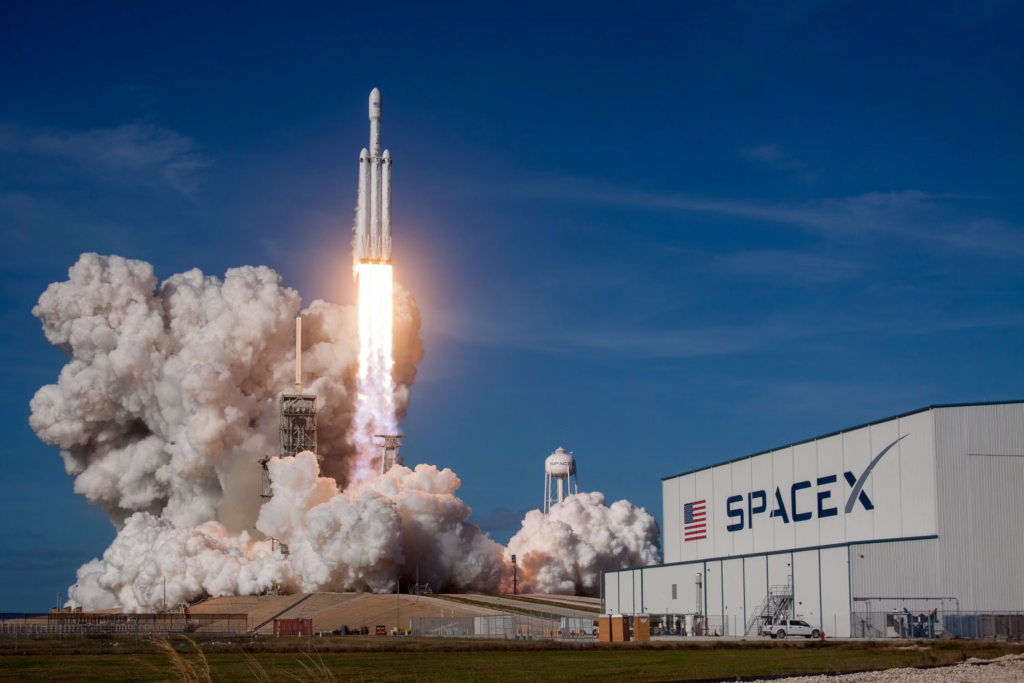
When SpaceX hosts its inaugural earnings call as a publicly traded company this Tuesday, Wall Street analysts will likely be zeroed in on the financial performance of its Starlink satellite network and the capital expenditure required for its ambitious AI infrastructure projects. But if the company’s newly launched online question portal is any indication, the retail investors who now hold a significant stake in the rocket manufacturer have a remarkably different set of priorities. The platform, which allows shareholders to submit and upvote questions ahead of the call, has become something of a digital town square where the serious business of space exploration collides with the playful, sometimes irreverent spirit that has long defined the Musk ecosystem. It is a fascinating window into what happens when a company synonymous with interplanetary ambition opens its doors to millions of everyday investors who are as passionate about the brand’s cultural footprint as they are about its balance sheet.
The most pressing question on the minds of these retail shareholders, at least according to the current ranking system, revolves around visual documentation. There is an intense hunger for more footage of Starship’s Human Landing System, the variant specifically designed to ferry astronauts to the lunar surface under NASA’s Artemis program, which is scheduled to make its historic return to the Moon as early as next year. This is not merely a request for promotional material; it reflects a genuine desire among investors to witness the tangible progress of a vehicle that represents SpaceX’s most significant contribution to humanity’s renewed lunar ambitions. The Artemis program represents a cornerstone of NASA’s strategy, and any delays or successes in Starship’s development have direct implications for SpaceX’s reputation and its long-term contractual relationship with the space agency. By asking for more footage, shareholders are implicitly requesting reassurance that the technical milestones are being met, that the engineering is sound, and that the visual spectacle of the program is being properly documented for posterity.
Beyond the technical and programmatic questions, there is a lighter, almost whimsical side to the shareholder inquiries that has captured widespread attention. SpaceX recently introduced Asteroid, a Shiba Inu mascot celebrated with a thirty-five-dollar plush toy, and investors are now curious whether this adorable figure could evolve into something more substantial. They are asking whether Asteroid could take on a larger role in educational initiatives, children’s charities, and broader outreach efforts. This line of questioning reveals a fascinating intersection of corporate branding and social responsibility, where a plush toy becomes a potential ambassador for STEM education and space advocacy. It suggests that investors see SpaceX not merely as a defense contractor or satellite provider but as a cultural institution capable of inspiring the next generation of scientists and engineers. The mascot, in their view, could be a gateway to demystifying space exploration and making it more accessible to young minds, which in turn could cultivate a future talent pool and a more space-literate public.
The technical questions, however, remain grounded in the hard realities of rocketry. Shareholders are eager to know when the new Starship will begin refueling in orbit, a capability that is absolutely critical for any deep-space mission, including the lunar landings and eventual Mars voyages. Orbital refueling is one of the most complex challenges facing the company, requiring precise docking procedures and the transfer of cryogenic propellants in the microgravity environment. Investors are also asking when SpaceX will successfully catch both the Super Heavy booster and the upper stage of Starship, a recovery method that is central to the company’s strategy of rapid reusability. These are not idle curiosities; they are practical concerns about the operational readiness of the system and the timeline for achieving full reusability, which is the key to driving down launch costs and achieving the economies of scale that SpaceX promises.
Then there is the question that has perhaps garnered the most attention in social media circles: “Can we paint the rocket pink?” This query, while seemingly frivolous, touches upon a deeper conversation about the aesthetics of space hardware and the extent to which SpaceX is willing to embrace the kind of playful branding that has made Tesla a cultural phenomenon. Another shareholder suggested selling sponsorships for individual heat shield tiles, allowing fans to have their names flown into space. These ideas echo the successful campaigns run by NASA, which have allowed the public to submit their names to be carried on various missions. However, the commercial twist suggested here goes a step further, proposing a direct revenue stream from what might otherwise be a purely functional component. It raises interesting questions about the monetization of public interest and the potential for SpaceX to cultivate a deeper emotional connection with its supporters.
The eclectic nature of these questions is partly a consequence of SpaceX’s unique approach to its initial public offering. The company set aside roughly thirty percent of its IPO shares for retail investors, one of the largest individual investor allocations in a major U.S. listing. This decision democratized ownership of the rocket maker to an unprecedented degree, bringing in a wave of shareholders who are not necessarily institutional finance professionals but rather enthusiasts who believe in the mission. They are the same demographic that follows Musk’s every tweet, watches every launch livestream, and has likely purchased a piece of SpaceX merchandise. Their presence on the shareholder roster ensures that the questions posed to management are as diverse and unpredictable as the online community itself.
Interestingly, while the visual and whimsical questions have risen to the top of the popularity rankings, more traditional financial concerns have taken a backseat. Questions about SpaceX’s business outlook and detailed financials were relatively unpopular, suggesting that the average retail investor is less concerned with quarterly margins and more interested in the narrative and the milestones. The few financial questions that did garner some support were forward-looking, focusing on issues such as the timeline for sending orbital AI data centers into space. This indicates a belief that the most significant financial catalysts for SpaceX lie not in its current satellite internet revenue but in its potential to dominate the space-based data infrastructure of the future.
When the company’s AI business could begin paying for itself was languishing at number one hundred and eighty-three on the question list, a position that underscores the gap between Wall Street priorities and Main Street enthusiasm. While analysts would likely rank AI profitability as a top concern, retail investors appear willing to give the company more time to mature its technological capabilities before expecting a return on that specific investment. This patience is a valuable asset for SpaceX, as it suggests that the shareholder base is aligned with the company’s long-term vision and is less prone to panic over short-term earnings fluctuations.
Meanwhile, the specter of a potential merger with Tesla has resurfaced as a topic of interest, particularly following Tesla’s own earnings call. Investors repeatedly pressed Musk about the possibility of combining the two companies, with several questions attracting more than one hundred votes. This persistent curiosity reflects a broader fascination with Musk’s corporate empire and the potential synergies between an electric vehicle manufacturer and a space exploration company. The idea of integrating Tesla’s battery technology and autonomous driving software with SpaceX’s rocket systems is a tantalizing prospect for some, even if it remains a logistical and regulatory nightmare. Musk was typically noncommittal when pressed, but the fact that the question continues to surface suggests that investors are still trying to envision the ultimate shape of his enterprise.
The inclusion of such a wide range of questions, from the technical to the aesthetic to the whimsical, is a testament to the unique culture that has formed around SpaceX. The company has never been a traditional aerospace contractor; it has always been something of a hybrid, combining the seriousness of a national security asset with the boldness of a Silicon Valley startup. By allowing retail investors to voice their queries publicly and rank them for management to see, SpaceX is acknowledging that its shareholder base is not just a passive source of capital but an active community with a stake in the company’s identity.
As the earnings call approaches, there is a palpable sense of anticipation about which questions will actually be addressed. Musk is known for his erratic engagement with such forums, sometimes diving deep into technical details and other times offering curt, dismissive responses. The challenge for management will be to balance the serious business of reporting financial results with the more colorful interests of its newest shareholders. They must demonstrate that they are listening to the community without allowing the conversation to veer too far from the operational realities of running a space company.
Ultimately, this open forum serves as a fascinating case study in shareholder engagement, one that blurs the lines between corporate governance and fan culture. It is difficult to imagine a traditional aerospace company entertaining questions about painting rockets or selling heat shield tile sponsorships, but SpaceX has never been traditional. The company thrives on this kind of unconventional attention, and it has cultivated a brand that invites participation and debate.