The ancient world has always held a particular fascination for Christopher Nolan, a filmmaker known for bending time, warping reality, and challenging audiences to question the very fabric of their existence. Yet, with his latest cinematic venture, ‘The Odyssey,’ Nolan appears to be embarking on his most ambitious journey yet, not just into the realms of myth and legend, but into the very heart of human experience. It was during a press conference in the vibrant, bustling city of Mumbai that Emma Thomas, Nolan’s long-time producer and creative partner, offered the world a tantalizing glimpse into the soul of this colossal project. When pressed to distil the essence of the film into just three words, Thomas’s response was as profound as it was precise: “epic, experiential and human.” These three deceptively simple words, however, carry the weight of a cinematic vision that promises to redefine how we perceive ancient stories in a modern context.
Thomas, who has been the bedrock of Nolan’s productions from the beginning, carefully articulated her reasoning behind each choice of word, offering a masterclass in understanding the filmmaker’s intent. She began by addressing the sheer magnitude of the undertaking. “Epic,” she declared, “has to be the first one.” This was not merely a comment on the film’s budget or its sprawling runtime, but a recognition of the scale at which Nolan operates. For a director who has previously recreated the beaches of Dunkirk and simulated the rotation of a black hole, the world of ‘The Odyssey’ is a canvas that requires a similarly grand brushstroke. Thomas emphasized that “the story is told on the grandest scale,” suggesting that the production is leveraging every tool in the cinematic arsenal, from sweeping vistas to complex practical effects, to ensure that the audience feels the immensity of Odysseus’s ten-year voyage. In an industry often criticized for relying on green screens and digital trickery, Nolan’s commitment to capturing reality in-camera elevates ‘The Odyssey’ to a league of its own, making its ‘epic’ nature a tangible, physical reality rather than just a post-production afterthought.
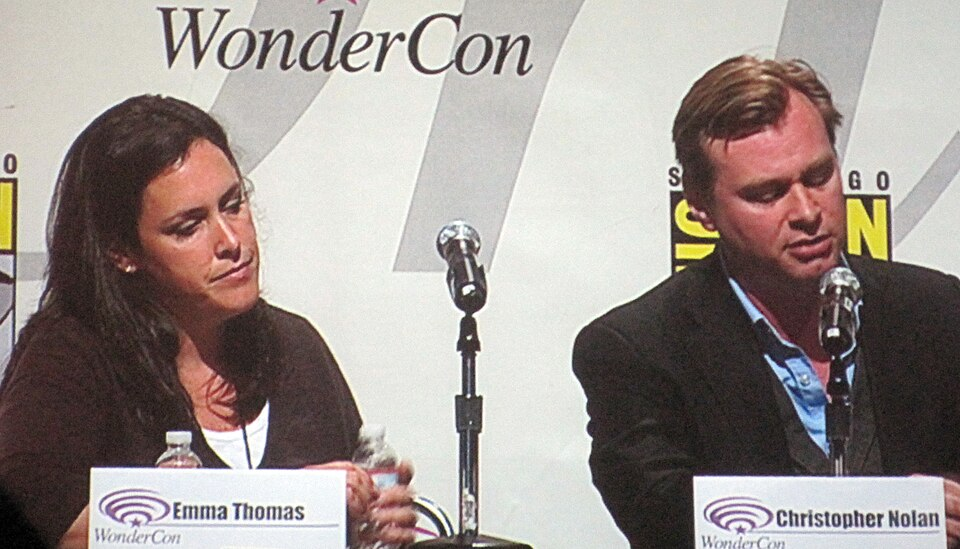
Moving beyond the visual spectacle, Thomas chose “experiential” as her second descriptor, a term that perfectly encapsulates Nolan’s philosophy of immersive filmmaking. She elaborated that the film is “a big experience,” one that “sort of really makes you feel like you’re in it with the characters.” This is where Nolan’s true genius often lies—not just in telling a story, but in constructing a sensory environment that envelops the viewer. One can imagine the terrifying roar of the Cyclops’s cave, the hypnotic lure of the Sirens, or the treacherous churning of the sea, all rendered with such visceral precision that the boundaries between the screen and the audience blur. This commitment to ‘experiential’ storytelling is reminiscent of Nolan’s work with IMAX cameras and his meticulous sound design, techniques that transform a passive viewing into an active engagement. In the context of ancient Greece, this approach serves as a bridge across millennia, allowing a modern audience in Mumbai, Mumbai, or Manhattan to feel the salt spray on their faces and the fear in their hearts as if they were rowing alongside Odysseus’s crew. It suggests that the film is less of a history lesson and more of a time machine, transporting viewers to the heart of the myth.
However, it was Thomas’s third and final word, “human,” that she identified as the most crucial, the anchor that prevents the epic scale from becoming cold or detached. This is a vital distinction, as historical and mythological epics often risk prioritizing grandeur over emotional resonance. Thomas emphasized that “ultimately what really distinguishes this story for me is the fact that it makes us identify and realise that we have more in common with these people from the past and with our fellow human beings.” This is a profound observation about the enduring power of Homer’s narrative. At its core, ‘The Odyssey’ is not just about monsters, gods, and impossible journeys; it is about the longing for home, the struggle for survival, the fragility of loyalty, and the enduring power of love. By grounding the colossal adventure in these relatable human experiences, Nolan ensures that the film resonates on a deeply personal level. The “human” element serves as a counterbalance to the fantastical, reminding us that despite the centuries that separate us from Odysseus, his fears, hopes, and desires are remarkably similar to our own.
The press conference in Mumbai, which saw Thomas and Nolan joined by actors Matt Damon and Tom Holland, was a testament to the global appeal of this timeless tale. The choice of Mumbai as a promotional stop underscores the universality of the story and its ability to transcend cultural boundaries. In a country rich with its own mythological epics like the Ramayana and the Mahabharata, the themes of exile, duty, and the quest for righteousness found in ‘The Odyssey’ resonate deeply. Nolan’s presence in the city, coupled with Thomas’s insightful commentary, suggested a filmmaker who is not only confident in his vision but also eager to connect with audiences across the world. The reaction in Mumbai, buzzing with excitement, highlighted the filmmaker’s ability to transform a 3,000-year-old Greek poem into a contemporary cultural event that feels urgent and relevant.
The dynamic between Nolan and Thomas is one of the most successful and enduring collaborations in modern cinema. While Nolan is often celebrated for his complex narratives and intellectual rigor, Thomas provides a grounding force, focusing on the emotional and logistical aspects that bring his grand visions to life. Her description of ‘The Odyssey’ offers a glimpse into this collaborative synergy. While Nolan might be engrossed in the mechanics of time loops or the physics of parallel dimensions, Thomas ensures that the heart remains intact. This is evident in her focus on the “human” aspect, a reminder that for all his technical mastery, Nolan’s films are ultimately about people grappling with extraordinary circumstances. The strength of their partnership, built on mutual respect and a shared understanding of storytelling, allows them to push boundaries without losing sight of the core emotional journey. This is why ‘The Odyssey’ under their stewardship will likely avoid the pitfalls of soulless spectacle and instead deliver a story that is as moving as it is visually stunning.