When Michelle Turner sat down in her Virginia Beach home to build a mental health platform for foster children, she had no formal business training, no MBA, and no experience navigating the high-stakes world of venture capital. What she did have was a powerful tool at her fingertips that would transform her vision into a functioning company within months. Turner is not building an artificial intelligence company, but her journey from concept to CEO relied deeply on the very technology that is now reshaping the American economy and forcing policymakers to reconsider long-held assumptions about growth, employment, and economic opportunity.
Here Now Health, the company Turner founded in January 2025, now employs sixteen people and is certified in three states to provide Medicaid-funded mental health counseling for children entering the foster system. The gap in care that her company addresses came from personal experience as a foster parent, a perspective that gave her unique insight into a systemic problem but offered little preparation for the realities of startup culture. That is where AI entered the picture.
Working from her home office, Turner used AI tools to teach herself the fundamentals of launching a business, develop a comprehensive business plan, and refine her pitch to early-stage investors. The technology became her mentor, advisor, and teacher rolled into one. She described the experience as being enrolled in a master’s level course every day, learning from the AI as though it were a seasoned startup advisor guiding her through unfamiliar territory. For a first-time founder and sole female entrepreneur raising venture capital, the odds were stacked against her by conventional standards. She lacked the credentials that investors typically look for, the pedigree of an elite business school, and the network that often proves essential in securing funding. Yet the AI tools she relied on helped bridge that gap, providing the knowledge and confidence she needed to make her case effectively.
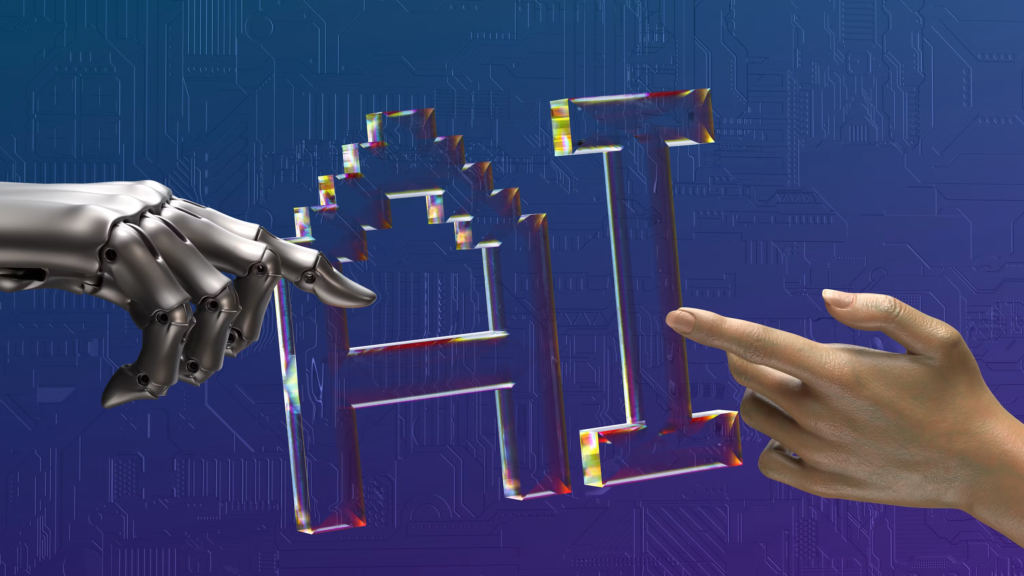
The rapid emergence and proliferation of AI has become one of the defining features of the current economic landscape, capturing the attention of Federal Reserve officials who are wrestling with its potential to reshape productivity, growth, inflation, and labor demand. The technology is so significant that a panel focused solely on AI and its implications for productivity has been established as part of a broader review of the Federal Reserve’s operations. Productivity gains from AI could allow the economy to expand more quickly without triggering inflation, but they also raise concerns about labor displacement as fewer workers become necessary to produce the same output.
Some Federal Reserve officials have already begun discussing the possibility of an AI-driven economy with structurally higher unemployment. Others have pointed to the steady decline in labor’s share of national income, questioning whether increasing returns to capital are an inevitable feature of the AI future. These are not merely academic questions. They touch on fundamental issues of who benefits from technological progress and how the gains from innovation are distributed across society, with profound social and political implications.
The current moment bears some resemblance to an earlier era when companies like Yahoo! and America Online competed to connect people to the internet. Today, different AI models are vying for attention and investment, but the stakes are considerably higher. These tools are not merely helping people shop or search the web. They can perform complex tasks, solve sophisticated problems, and write computer code, capabilities that extend far beyond what earlier technological waves offered.
The investment required to build the data centers that power AI is driving significant economic activity, but it is also pushing up power costs and labor expenses in some regions. The range of possible outcomes from AI is remarkably broad, with scenarios stretching from visions of unprecedented abundance to predictions of mass unemployment. Banks, government agencies, and the military are all exploring how to harness these new tools while simultaneously protecting themselves from potential risks.
Jean Boivin, head of the BlackRock Investment Institute, described markets as confronting dramatically different competing narratives. He framed the situation as a tension between scarcity and abundance, noting that the current moment is defined by scarcity as the AI investment boom drives up costs and demand for capital. Yet the longer-term potential is one of abundance, where AI breakthroughs could generate growth that exceeds historical patterns and moves beyond the two percent world that has characterized much of the modern era.
Somewhere in the middle of these competing narratives sits Turner’s journey from nonprofit manager to chief executive of a growing company. Her experience is not unique. John Bailey, a nonresident senior fellow at the American Enterprise Institute and advisor to one of the firms that invested in Here Now Health, noted that this pattern is becoming increasingly common among small entrepreneurs. Bailey, who helped Turner develop the AI tools she relied on from the outset, observed that things which used to take too much time or cost too much money now have an access price that has fallen close to zero. This is empowering entrepreneurs to scale faster and hire people. These are not AI companies. They are traditional companies trying to deliver services but doing it faster and cheaper than would have been possible before.
The public debate has largely focused on AI’s capacity to disrupt jobs, with rounds of tech industry layoffs attributed to automation and evidence that companies are using the technology to reduce back-office and clerical employment. There is no question that these trends are real and that they will continue to reshape the labor market in significant ways. Yet Turner’s story suggests a more nuanced picture, one in which AI serves as an enabler that allows people without traditional credentials or networks to participate in economic growth and build businesses that create jobs rather than eliminate them.
Bailey said he has become more convinced that the AI economy will not kill jobs so much as transform them. The technology does not just automate tasks. It also creates opportunities for people who would otherwise be locked out of certain industries or roles. The key question is whether the enabling effects will be strong enough to offset the displacement effects, and that answer may vary significantly across different sectors, regions, and demographic groups.
There are legitimate reasons for caution. The rapid pace of change leaves little time for workers to adapt, and the benefits of AI are not guaranteed to flow to everyone equally. The investment boom driving the current wave of AI development is creating winners and losers, and the distributional consequences could be significant. At the same time, stories like Turner’s demonstrate that the technology can democratize access to knowledge and capital in ways that were previously unimaginable.