Enter Jensen Huang and the semiconductor world listens. But on his recent visit to Seoul, Nvidia‘s top dog was emphatic that the next major breakthrough in industry isn’t just about faster chips or larger memory modules; it’s about robotics. Huang made the remarks to reporters right after landing at Gimpo International Airport from a Taiwan flight, saying that robotics will be the country’s defining sector in the near future, thanks to artificial intelligence. Korea is a manufacturing centre in the world, and we can use the robotics technology, the physical AI technology that we create here for the industry,” he explained. So there’s a nice opportunity for us to work together with the semiconductor guys here, too,” he added.
It’s Huang’s second trip to South Korea in seven months, and it seems like it’s all with a plan. The nation is already the world’s leader in chip, electronics, car and ship manufacturing. What Huang envisions in the future is a revolution in automation and what he calls “physical AI”—machines that won’t simply repeat programmed motions, but learn, adapt and optimize production floors in real time. In a country that produces about 20 percent of the world’s memory chips, an efficiency improvement of any magnitude in the plants can mean billions of dollars.
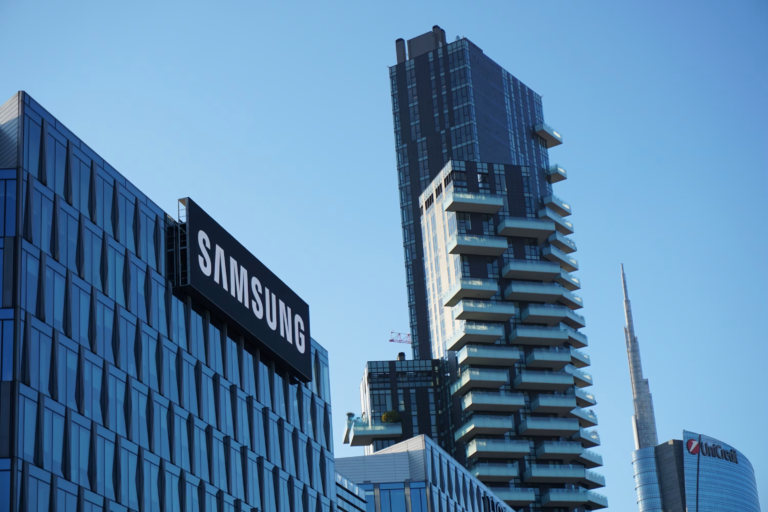
It is the fact that Huang is establishing a network of local partnerships that make his prediction fascinating to consider. On this trip he will meet with Hyundai Motor, LG, SK Hynix, Samsung Electronics and Naver, all of whom are a who’s who of South Korea’s industrial backbone. All of these firms are a part of the robotics puzzle. Hyundai has been working on robotic mobility and factory automation quietly. LG and Samsung are in the business of Consumer electronics and home robotics. SK Hynix and Samsung, of course, are memory behemoths. Naver, which is usually overlooked outside of Korea, has one of the most advanced cloud and AI infrastructure platforms in the region.
Huang appeared to be brimming with excitement about the possibilities. He said when asked if he had brought anything to Korea, “I brought a lot of business for Korea. I have some surprises.” He didn’t say much, but the “a lot of business” and “some surprises” has already led to some speculation in local tech circles. Nvidia might innovate more with custom silicon for robotics controllers, some analysts say. Others think a specialized AI factory partnership, an end-to-end manufacturing solution using Nvidia’s fast computing power and the know-how of local manufacturing.
This was not the whole boardroom and handshaking. The first place Huang visited in Seoul was the accidental, but much-to-be-recommended, of a local PC bang (Internet café) where he got to meet some of the professional e-sports players and the legendary “Faker” himself, Lee Sang-hyeok. Huang’s daughter Madison was in attendance, dressed in the jersey of T1, the legendary Chinese team that Faker plays for in the world of esports. The usually corporate formality of the CEO tours was broken by this human moment. Later that night, Huang sat down for Korean barbecue and drinks with Koo Kwang‑mo of the LG Group, Chey Tae‑won of the SK Group, and founder of Naver, Lee Hae‑jin. During the dinner, Huang is optimistic about the current situation. Nvidia’s partners such as Samsung, SK Hynix, Naver, and Hyundai Motor are all booming, he told the group. “This is just the start of this friends year, they had a very good one here.” The company’s new products would need “high demand” for Nvidia memory chips, he said, which is positive for local memory chip suppliers.
During the dinner, Huang gave out bags of chocolate‑coated corn chips featuring “HBM Chips” on the packaging—playfully referencing the high‑bandwidth memory that SK Hynix makes for Nvidia’s AI accelerators. According to a report, the fans began to shout “HBM!” at that moment. Though a humorous scene, it was a reminder of a serious fact: HBM is one of the most important parts of today’s AI hardware, and South Korea is a key player in that supply chain.
The technical side, meanwhile, Huang says Samsung, SK Hynix and Micron are all qualified to provide HBM4 chips to Nvidia for its Vera Rubin AI platform. He said that all three vendors are in production and all are trying to “catch up with Vera Rubin.” It is an important development for investors and those in the know, as it means the next generation of AI devices is underway and South Korea’s memory makers are playing an active part.
There’s also a more subtle change going on under the radar. South Korea has always been a leader in high-volume, high precision manufacturing for decades. However, the nation has fallen short of innovation in basic software or AI models from time to time. The integration layer between hardware, real-time AI and factory systems is the key focus of Huang’s vision, effectively calling on Korean industry to take charge of the integration. If it works, it could change South Korea from a producer of components to a supplier of fully-fledged AI production systems.