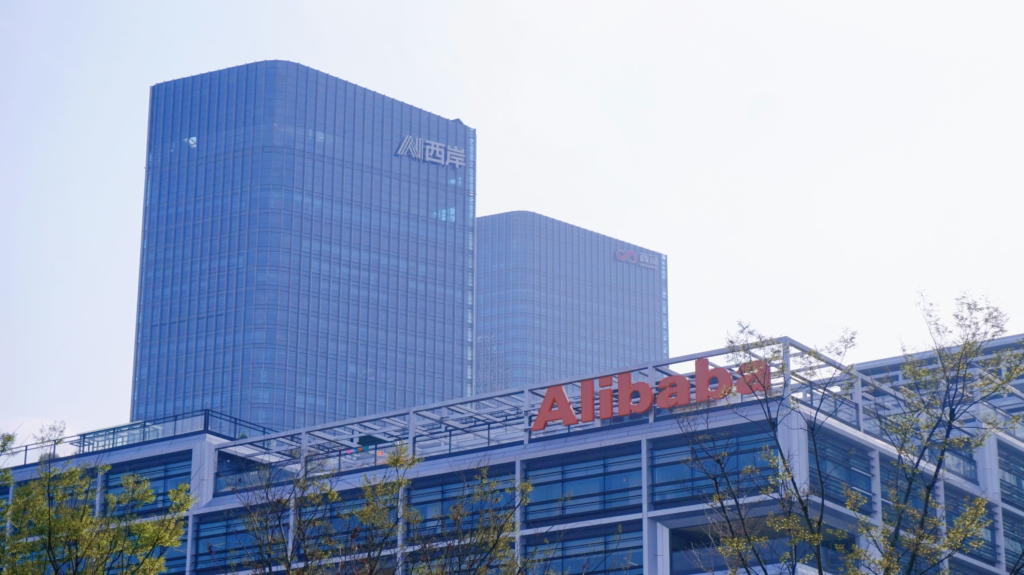
The market listens when a company such as Alibaba is telling it that the returns from AI are already beginning to be realised. And listen it did. Alibaba’s U.S.-listed stock rose seven percent after its executives announced that its plans to invest in artificial intelligence would no longer be a hedge against declining opportunities, but rather a tangible growth opportunity. What they learned from their latest earnings call was simple: the company is now aiming to spend more than the previous 380 billion yuan ($55 billion) in AI investments over the next three years. Investments in infrastructure and capacity have been stepped up, not slowed down, in anticipation of the commercial payoffs of cloud and AI services, early signs of which have prompted leadership to do so.
Alibaba’s overall revenue increased by three percent in the quarter that ended in March – just shy of analysts expectations. The true numbers were in its Cloud Intelligence Group, which grew 38% year on year to generate 41.63 billion yuan, just over six billion dollars. The 36% rise in the previous quarter was the previous quarter’s pace, indicating that demand for AI-related cloud services is gaining real momentum. More significantly, thirty percent of external customer revenues in the cloud division are already generated by AI products. That will likely hit the 50 per cent threshold in about a year and AI will be the main driver of Alibaba’s cloud business from then on.
Eddie Wu, chairman of the company’s chief executive officer, was more than confident on the post-earnings call. He said, “Our ROI on our investments in AI and Cloud and e-commerce business is starting to become more apparent now. The commercialization of our technology investments are beginning to pay off. That’s not the sort of talk executives use when they’re simply hopping on a bandwagon. It implies that internal data is indicating real uptake from businesses that are now incorporating AI into their own processes, spanning from retail to logistics, from enterprise software to the rest.
More interesting is that Alibaba is openly de-prioritizing profits for market share. Clearly, “we are working on growth higher than the market average so we can take bigger market share and solidify our absolute market leadership position – margin is still secondary.” That’s a big statement for a company as large as Alibaba. It’s a wakeup call that management understands the opportunity in AI that they cannot simply walk away from and forgo in the near term.
And the earnings compression is what you see is what you get. The earnings per American Depository Share were only 0.62 yuan, well below the 5.79 yuan estimate of analysts. Heavy investment in AI and cloud infrastructure, as well as fast commerce, which involves deliveries within sixty minutes, had an impact on adjusted EBITA, which fell by eighty-four percent. That margin pressure would be a concern for investors. But the reaction in the market indicates that the investors are willing to settle for lower profits at the present time, provided the payoff in 3 to 5 years seems credible.
Alibaba did not disclose a specific new expenditure target in place of the previous one of 380 billion yuan. However, it was clear that the company would exceed that figure as demand keeps surging. Alibaba Cloud should begin to enjoy a higher margin in the coming 1-2 quarters, as it is a front-loaded investment cycle that will ultimately drive up profitability, rather than stifle it, said Wu.
In addition to infrastructure, Alibaba’s AI is also being integrated into consumer experiences. Its Qwen chatbot is enhanced so that users can shop on Taobao and Tmall by chatting directly with an agent without having to scroll through numerous product listings. While this might be a minor feature update, it’s part of a larger strategic gamble — that eventually, conversational AI will take the place of the old-fashioned navigation bar in e-commerce. If it wins, Alibaba’s AI investments won’t only drive the growth of its cloud margins but also shield its core retail business from emerging more agile rivals.