Another bold move into the fast-growing space technology industry has been taken by Taiwanese electronic giant Foxconn which has made the transition. On May 3, the company announced that it successfully launched its second-generation low-Earth orbit satellites, marking both technical advancement and strategic intent. The satellites were launched into space on a Falcon 9 rocket launched by SpaceX, taking off California.
This is not a usual routine launch. It symbolizes a more radical change in Foxconn, the company that has long been linked to assembling consumer electronics of the world-renowned brands. Over the past few years, the leadership has continued to venture into the high-tech areas like electric vehicles, semiconductors, and recently satellite communications. It feels much like a manufacturing giant taking a step into the orbit when it comes to seeing the boundaries between the industries simply melt away and away.
The PEARL-1A and PEARL-1B satellites have already been launched into their respective low-Earth orbits, a portion of the space that tends to range between approximately 160 and 2,000 kilometers above the Earth. This orbital space has gained inestimable importance owing to its applicability in communication networks, observation of the earth, and the new internet services. Compared to older satellite systems that are much farther apart, LEO satellites have the potential to provide higher-speed data transmission and lower latency, which are critical to next-generation solutions to connectivity.
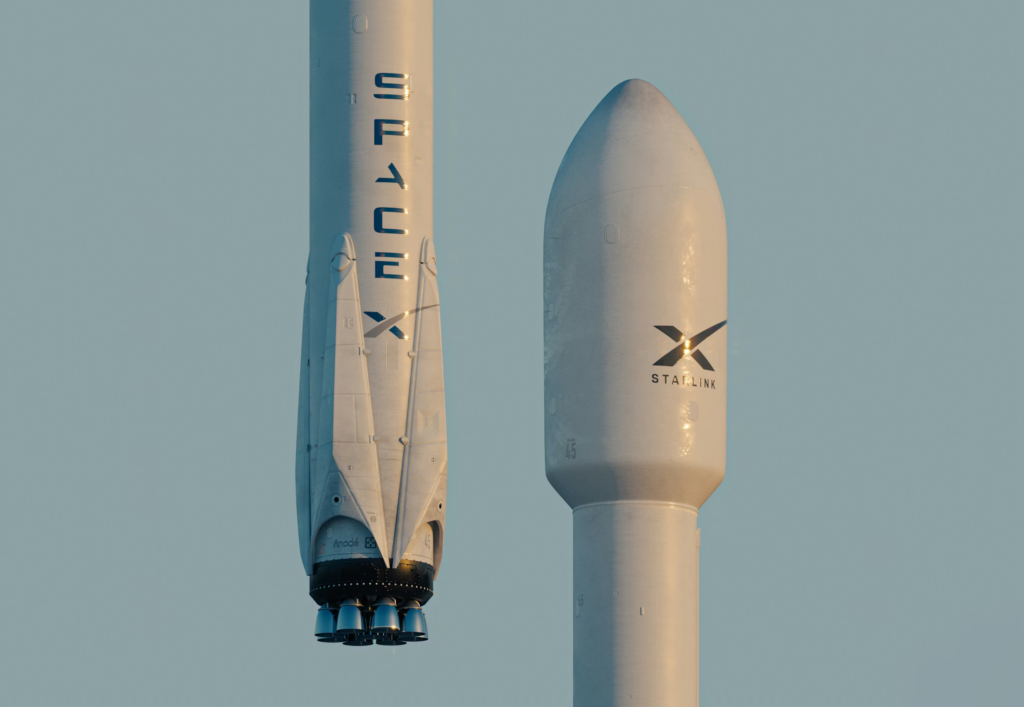
According to Foxconn, these satellites will perform on-orbit missions of about five years. Although the firm has not publicly outlined all the technical functions, such missions normally aim at testing the capability of communication, efficiency of transmission of data, and reliability of the system in the space environment. It is also an opportunity to test hardware performance in the environment that cannot be completely reproduced on the Earth. Some engineers refer to this stage as a stage where theory collides with reality, where even small design choices can make a huge impact once they are exposed to vacuum, radiation, and extreme temperatures.
The interest with this development in particular is that it is a response to a bigger trend in the industry. Firms that previously concentrated on hardware creation, are currently seeking to dominate complete ecosystems, including production and data services. The fact that Foxconn has ventured into satellites implies that it is not only concerned with the creation of devices but also with the creation of the infrastructure that links the devices. In an era more and more dominated by data, having control over the pipelines of communication themselves can be as valuable as the production of the devices themselves.
Also to be taken into consideration is the competitive dimension. The space industry has now been filled with ambitious entrants, ranging in size and type between a startup and one of the well-established aerospace companies. Already companies such as SpaceX have shown the benefits of having reusable rockets that can dramatically lower the cost of launching a satellite into space, and therefore make space more accessible than ever before. Collaborating with SpaceX, Foxconn is in fact capitalizing on this new age of cost efficiency, enabling it to explore and expand without having to shoulder the entire burden of launch infrastructure.
Strategically speaking, the satellite project planned by Foxconn is in line with the requirements of the world in terms of connectivity. Remote areas, maritime, even autonomous vehicles rely on effective communication networks that cannot necessarily be offered by traditional ground-based infrastructure. The constellations of satellite constructions in Low-Earth orbit are increasingly viewed as the solution to these shortcomings. When Foxconn entered this area, it indicates that it is positioning itself to play a role in that future, and may have satellite options that it can integrate with its overall range of technology.
A factor of long-term vision is also in play. The process of having and launching satellites is not a one-day success story; it involves long-term investment, interdisciplinary skills and patience. The fact that Foxconn is already in its second generation of satellites, represents a commitment that is not just about experimentation. It indicates the company is gaining experience with every iteration, improving its designs, and slowly gaining credibility in an area that requires accuracy and durability.
Meanwhile, the relocation also casts doubt on to what extent Foxconn is planning to enter the space industry. Will it continue to specialize in satellite hardware or will it at some point expand to include services like satellite internet or data analytics? The solution will probably lie in the performance of these existing missions and the development of the market in general. Space technology remains a very high risk area where success could lead to monumental rewards, but failure can be a costly affair, both in terms of money and reputation.
The social attitude towards such enterprises is also changing. However, not so long ago the thought of an electronics manufacturing company launching satellites could have been considered to be rather eccentric, even downright absurd. Nowadays, it seems rather a natural thing. The unification of industries has turned out to be one of the distinguishing characteristics of modern innovation when companies are not restricted to their initial spheres of interest anymore. The latest invention of Foxconn just fits perfectly into this story and strengthens the argument that the future of technology will be in the hands of those who will cross traditional boundaries.