The rise of artificial intelligence is no longer simply a narrative of innovation; it is also becoming a determinant of market reward and punishment to business. Recent trends in the technology stocks of the U.S. market show a distinct division as software companies are being subjected to fresh cynicism and chipmakers are enjoying the confidence of optimism related to AI infrastructure demand. This dispute has become more apparent after the most recent earnings announcements of IBM and ServiceNow, which have sparked fresh apprehensions about the extent to which AI might upend the conventional software paradigms.
The response of investors was quick and strong. IBM shares plummeted when the company announced a marked decline in the growth of its first-quarter revenues. Although the company was able to beat the analyst estimates in terms of revenue and profit, the weakness in the software segment was evident. This segment, comprising its Red Hat cloud business, has long been regarded as a pillar of the future strategy of IBM. Its failure, however, no matter how minor, cast doubt on the ability of legacy software firms to adjust to an AI-driven environment. The fall indicated that investors are no longer content with the superficial performance, they are probing deeper into the sources of growth and their sustainability in the context of the speedy technological transformation.
The same can be said about ServiceNow that saw an even sharper drop in its stock price. The company cited delays in deal-making in the Middle East, citing some of the slowdown to constant geopolitical tensions in the region with Iran. Though these kinds of regional shocks are not new, the market reaction showed a larger panic. Even in cases where companies report technically exceeding performance, any drop in momentum is now viewed through the prism of AI disruption. Shareholders seem to be growing more and more concerned about the notion that with the advancement of automation tools and AI platforms, the value proposition of more traditional enterprise software may gradually become obsolete.
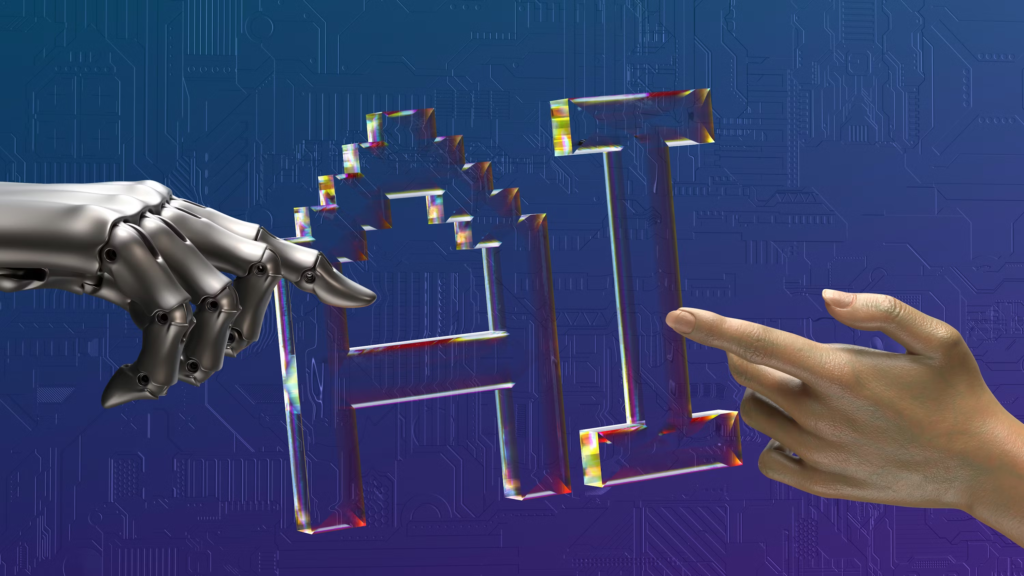
Although it may appear that the ServiceNow and other software stocks may already be valuing some slowdown amidst the extreme selloff, investors are nervous because of the threat of AI disruption and volatility, analysts at J.P.Morgan.
This feeling of discomposure has not been confined to only a few companies. The effect was felt throughout the larger software industry, dragging down the stock of larger companies, including Microsoft, Adobe, CrowdStrike, Intuit, and Datadog. Both of these companies possess good fundamentals and are well-established in the market but are not immune to the changing story. The similarity is the increasing worry that AI tools will squeeze margins, decrease the need of some services, or alter the way companies consider software solutions.
Such apprehensions have been accumulating ever since February, when Anthropic launched a new set of tools, which can automate intricate operations in marketing, data analytics, and other business operations. Such tools have far reaching implications. Enterprise software companies have succeeded in business over the years by providing specialized solutions, which demand high levels of human input and customization. AI, though, poses the risk of simplifying and streamlining most of these processes, which might result in the elimination of several layers of software. Personally, I believe that this transformation is not a very sharp turn but rather a slow process, during which the value of traditional offerings is gradually reduced, not being eliminated in one day.
Unlike the plight of software companies, chipmakers are riding a wave of optimism. The businesses such as Texas Instruments have enjoyed a boost in demand with AI infrastructure. The recent perspective of the company was a good sign that the spending on semiconductors is robust due to the necessity to provide support to the data centers, machine learning systems and high-level computing capabilities. This has added to the belief that chipmakers have been some of the key beneficiaries of the AI boom, providing the much-needed hardware that drives these technologies.
The favorable performance of sector funds indicates the inclination of the market towards semiconductor stocks. Software-based investments have not been doing so well; semiconductor based funds have been performing well. This split emphasizes a bigger picture: investors are becoming more and more interested in companies that have a direct connection to the physical infrastructure of AI as opposed to those whose business model may be derailed by AI. It is a minor yet significant difference, which indicates a change in the perception of value in the technological industry.
The interesting aspect of this moment is the comparison between the short-term performance with long-term potential. Software companies are not necessarily less powerful; they still have a lot of cash flows and a base of loyal customers. The ambiguity of the effect of AI, though, presents a risk that is not to be overlooked by investors. Conversely, chipmakers, despite enjoying the demand at hand, also experience a cyclical pressure and may have their own challenges to cope with in case of adjustments in spending patterns.
In a wider view, the software-hardware gap in the era of AI might not be here to stay. Software companies will certainly change and implement AI into their products and find alternative value creation methods. Meanwhile, the existing chipmaker frenzy may even out as the market reaches maturity. In the meantime, the difference is quite distinct and reminds us of how soon technological changes can transform whole industries.
Another more underlying question is how much of this market response is due to real change as opposed to illusion. Investors tend to look forward, and they price in future events which may or may not occur to the fullest. The disruption can at times be as strong as the fear of disruption itself, and is the cause of decisions and valuation that are not necessarily founded on immediate fundamentals.