
Rita Moreno has spent the better part of eight decades in the entertainment industry, accumulating accolades, memories, and a fan base that stretches across generations. Among the admirers she holds closest to her heart is Michael Jackson, a discovery that clearly still delights her. The veteran actress and dancer recently recounted the moment she learned that the King of Pop had been a devoted follower of her work, and the memory carries a warmth that time has not dulled.
Speaking at the Día de Muertos Gala on October 27, Moreno touched on what she described as one of her most cherished recollections. With characteristic wit, she acknowledged that she does not typically like to boast, but she conceded that her list of admirers includes some genuinely braggable names. Jackson sits at the top of that list. The revelation came during a conversation with the singer himself, when he confessed his admiration in the gentle, high-pitched voice that became one of his signatures.
Moreno recalled the exchange with evident fondness. Jackson told her that he and his dancers had loved all her steps and had incorporated some of them into his own routines. He spoke of admiring her deeply, and he also credited the choreographer Jerome Robbins as an influence. Moreno described herself as flattered to pieces, remembering her incredulous response and his earnest confirmation. It is the kind of moment that most performers would carry with them forever, and Moreno’s retelling suggests she has done exactly that.
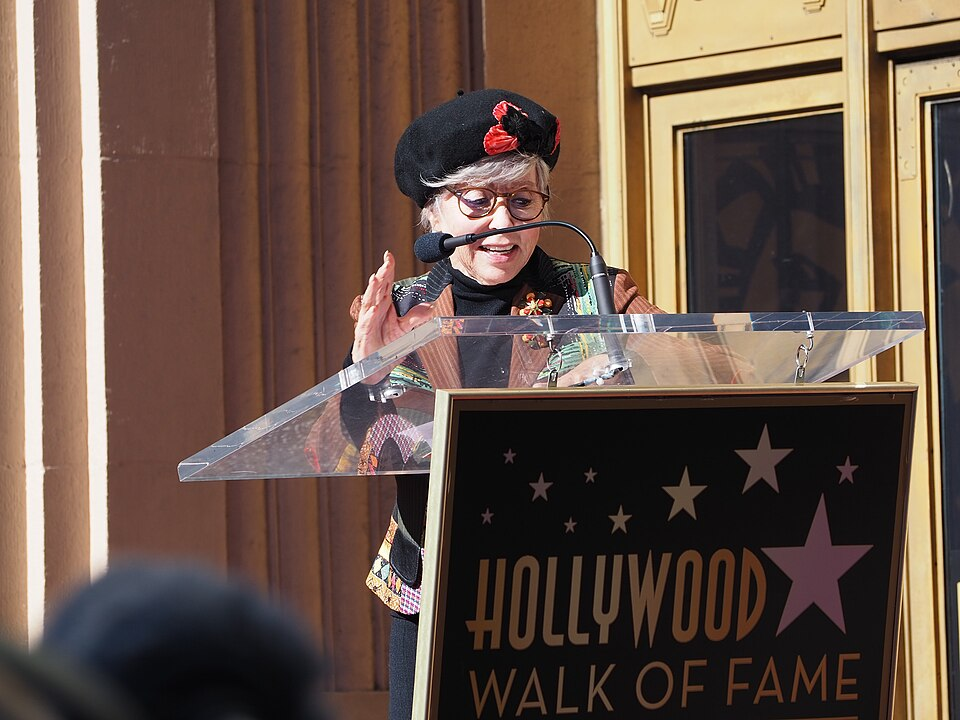
The connection makes sense when you trace the artistic lineage. Moreno’s portrayal of Anita in the 1961 film adaptation of West Side Story became a defining performance, one that showcased her abilities as an actress, singer, and dancer in equal measure. The choreography in that film, rooted in Robbins’ distinctive style, left an imprint on popular culture that extended well beyond its initial release. Jackson’s short films for songs like Bad and Beat It drew visibly from the kinetic, street-influenced movement vocabulary that West Side Story helped popularize. Whether or not specific steps were lifted directly, the aesthetic kinship is difficult to miss, and Jackson himself seemed eager to acknowledge the debt.
There is something poignant about this cross-generational exchange of influence. Moreno, born in Humacao, Puerto Rico, in 1931, began performing at the age of nine and worked steadily through an era when opportunities for Latina performers were painfully limited. She built a career through sheer versatility, refusing to be confined to any single mode of performance. Jackson, born decades later, absorbed the cultural output of that era and transformed it into something entirely his own. The two artists occupy different chapters of American entertainment history, yet the thread connecting them is unmistakable. Influence rarely travels in a straight line, and Moreno’s work became part of the vocabulary that Jackson and his collaborators drew upon.
Moreno’s career achievements are themselves remarkable. She holds EGOT status, having won an Emmy, a Grammy, an Oscar, and a Tony, a distinction shared by only a small handful of performers. Her Oscar came for West Side Story, and she has remained a visible presence in film, television, and theater ever since, including a recent resurgence that introduced her to yet another generation of viewers. The fact that she can still recall a compliment from Michael Jackson with such vivid clarity speaks to how deeply such moments resonate, even for someone who has received nearly every honor her industry can bestow.
What stands out in Moreno’s recollection is the absence of pretense. She does not frame the story as a validation of her legacy or as evidence of her enduring influence, though it is both of those things. She tells it the way a person shares a treasured anecdote, with a mix of amusement and genuine gratitude. That quality has long been part of her appeal. Fame can insulate performers from the everyday emotions that make them relatable, but Moreno has consistently retained an air of accessibility that endears her to audiences.
The story also invites reflection on the nature of fandom and the ways it circulates among artists themselves. Jackson was one of the most famous people on the planet, yet he evidently found inspiration in the work of a performer who had preceded him by a generation. Creative admiration is not a one-way street, and the most enduring artists tend to be those who remain open to influence throughout their lives. Moreno, for her part, has never seemed to regard herself as beyond learning or being moved by others.
For readers who grew up with either artist, the anecdote offers a small pleasure, a reminder that the people we admire are themselves part of a larger community of mutual appreciation. Moreno’s willingness to share the memory, and her humorous acknowledgment of her own bragging, keeps the story grounded. It is a glimpse into a career that has spanned nearly the entire history of modern American entertainment, told through a single, unexpectedly touching encounter. Whether or not every step Jackson borrowed can be traced back to Anita’s choreography, the admiration was real, and that is enough to make the memory worth preserving.