Telecom shares across the United States and Europe fell sharply on Friday after SpaceX agreed to acquire a nationwide low-band spectrum portfolio, a move that investors interpreted as a direct challenge to the established wireless carriers that have long dominated mobile connectivity. The selling was broad and immediate. T-Mobile US, Verizon and AT&T each dropped between five and six percent in premarket trading, while the STOXX Europe 600 Telecommunications index slid 3.3 percent to its lowest level since February. Deutsche Telekom, Europe’s largest telecom operator by market value, fell eight percent. Britain’s Vodafone lost 4.5 percent, France’s Orange slipped 3.4 percent and Spain’s Telefonica declined 3.3 percent. The uniformity of the reaction underscored how seriously the market is taking the threat of satellite-based mobile services.
The trigger was SpaceX’s agreement to purchase private-equity firm Grain Management’s nationwide 800 MHz spectrum portfolio in a deal valued at roughly eight billion dollars. The acquisition strengthens SpaceX’s ambitions in satellite-to-cellular connectivity, a segment it has been developing through its Starlink Mobile initiative. Low-band spectrum is particularly valuable for this purpose because it can travel longer distances and penetrate buildings and other obstacles more effectively than higher-frequency airwaves. That makes it well suited to reaching rural and underserved areas where traditional terrestrial networks are often sparse or unreliable.
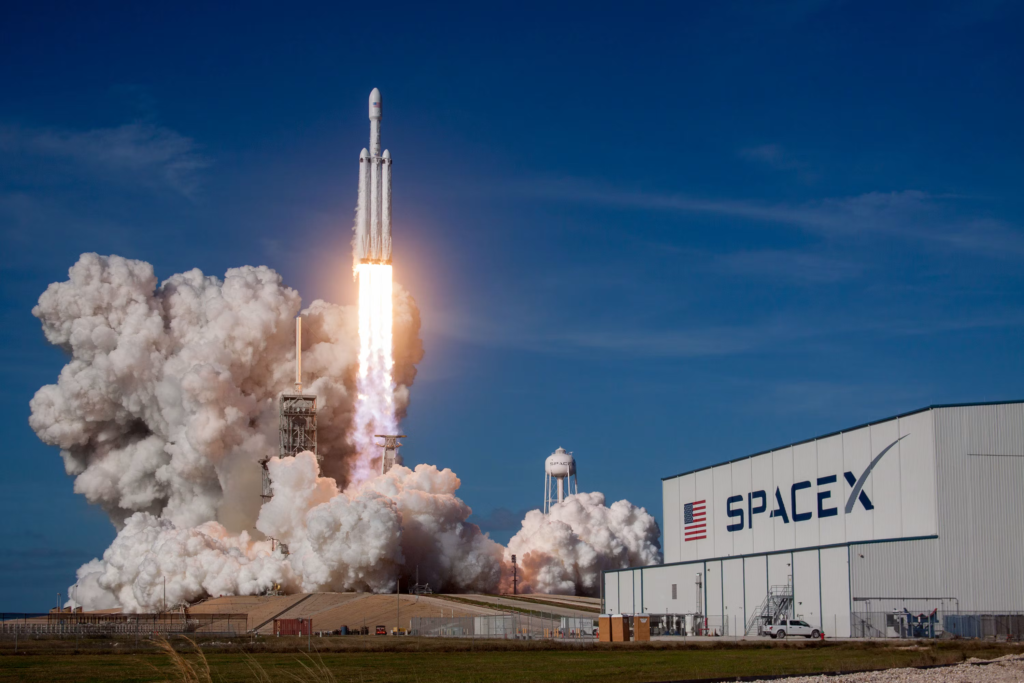
The deal signals that SpaceX intends to become a significant player in mobile connectivity, not merely a provider of satellite internet for remote locations. Morgan Stanley analysts captured the prevailing mood in a note to clients, writing, “We believe the Grain transaction is a clear sign that SpaceX is going to be a more aggressive acquirer of spectrum.” They added that any threat to established carriers is likely to materialize gradually, starting in rural markets. That assessment offers some comfort to incumbent operators, but it also implies that the competitive pressure will be persistent and will eventually extend beyond the margins of the market.
For years, telecom investors have viewed satellite services as a niche proposition, useful for maritime, aviation and remote enterprise customers but unlikely to threaten the core consumer mobile business. That assumption is now being tested. SpaceX’s combination of launch capability, satellite manufacturing and spectrum ownership gives it a vertically integrated position that few competitors can match. If it can deliver reliable voice and data service directly to standard smartphones, it could begin to erode the customer bases of carriers that have invested billions in terrestrial infrastructure.
The timing of the deal is significant. Telecom stocks had already been under pressure from slowing subscriber growth, heavy capital expenditure requirements and the costly rollout of 5G networks. The prospect of a new entrant with deep pockets and disruptive technology adds another layer of uncertainty. Investors are evidently unwilling to wait for the threat to become concrete before repricing the sector. The sell-off was not confined to any single market or company, which suggests that fund managers are treating satellite competition as an industry-wide risk rather than a company-specific concern.
It is worth noting that the path from spectrum ownership to commercial service is neither short nor straightforward. Building a satellite-to-cellular network requires launching hundreds of satellites, securing regulatory approvals in multiple jurisdictions and integrating with handset manufacturers. SpaceX has demonstrated remarkable speed in deploying its Starlink constellation, but replicating that success in the mobile market will require navigating a complex web of national regulators and incumbent interests. Carriers will also defend their territory aggressively, leveraging their existing customer relationships, spectrum holdings and network density.
From the perspective of consumers, the emergence of satellite-based mobile services could bring meaningful benefits. Rural communities that have long suffered from poor coverage may finally gain access to reliable connectivity. Competition could also pressure prices in markets where a handful of operators dominate. The same dynamic that is unsettling investors may prove advantageous for users who have felt underserved by traditional carriers. That tension between investor anxiety and consumer benefit is a recurring feature of technological disruption, and it rarely resolves quickly.
There is also a question of how regulators will respond. Spectrum is a scarce public resource, and governments have historically been careful about who controls it. SpaceX’s growing portfolio of spectrum assets and its dominant position in satellite launch may attract scrutiny from competition authorities. The deal with Grain Management is relatively small compared to the broader telecommunications market, but it is part of a pattern of consolidation that regulators will be watching closely. Any hint of market power concentration could trigger conditions or delays that slow SpaceX’s ambitions.
For the incumbent carriers, the immediate challenge is to articulate a credible response. Some have already partnered with satellite operators to extend their coverage, and others are investing in their own spectrum and network capabilities. The question is whether these efforts will be sufficient to counter a competitor that operates on a different cost structure and a different technological paradigm. History suggests that incumbents rarely adapt quickly enough when a new entrant rewrites the rules of the game, but it also shows that disruption is often slower and messier than initial reactions suggest.