From cancer immunotherapy to the Enhanced Games, Dr. Leo Nissola is writing the clinical rules for human enhancement.
A Public Test
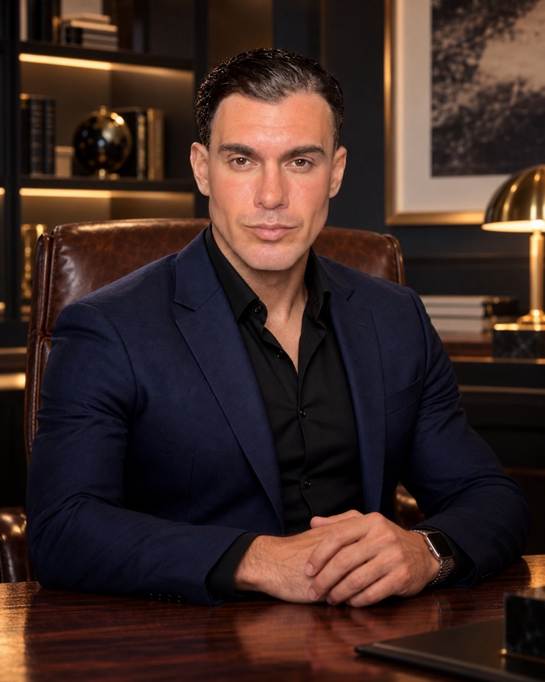
When the world’s first Enhanced Games arrived in Las Vegas in May 2026, it was more than a new chapter in elite sport. It was a public test of a question Dr. Leo Nissola has pursued his entire career: what happens when medicine stops merely treating disease and begins, deliberately, to expand human potential?
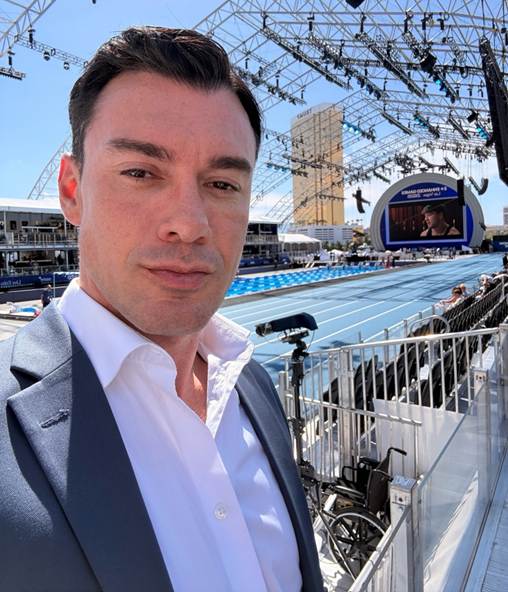
Nissola was there from the start. A Scientific Advisor during the Games’ early development, he later joined its Medical Commission and served as Medical Monitor for the Abu Dhabi clinical trial involving elite athletes, one of the most closely watched experiments in human enhancement. The Enhanced Games reached more than one billion people worldwide, dominating the conversation and challenging assumptions about sport and the future of medicine.
“Enhancement is not a free-for-all,” he says. “It is a clinical discipline. It demands evidence, supervision and an honest reckoning with risk. The true achievement was showing that applied science can be responsible, transparent and rigorously supervised. I’m proud of the work we’ve done.”
Forged in Cancer Immunology
His instincts were shaped at the frontier of cancer research. At the Parker Institute for Cancer Immunotherapy, Nissola worked alongside Nobel laureate Dr. James Allison, whose discovery of immune checkpoint blockade transformed cancer care; Dr. Fred Ramsdell, who shared the 2025 Nobel Prize in Physiology or Medicine for discoveries on peripheral immune tolerance; and Dr. Carl June, the CAR-T pioneer who reprogrammes patients’ own immune cells to hunt cancer.
Nissola authored and led early-phase studies, carrying novel immunotherapies through IND preparation, FDA authorisation, safety review, biomarker strategy and publication. The lesson stayed with him: powerful, inspiring mentors do not simply teach science. They shape the scientist, and set the standard he has held himself to ever since.
It is a standard he returns to often on stage. “Science operates on principles of empirical evidence and reproducibility; it doesn’t require belief,” he tells audiences. “Our understanding of science, however, is rooted in objective measurement and analysis of the variables we choose to examine, and, to our detriment, the ones we ignore, due to lack of intellectual capacity, data availability or bias.”
Medicine at Scale
A physician first, Nissola moved from private practice into drug development and became a unicorn: a clinical scientist fluent in both its art and science. At Johnson & Johnson / Janssen, he shaped medical and regulatory strategy for Zytiga® and Erleada®, therapies generating roughly $3.5 billion and $4.5 billion in annual sales. He turns complex ideas into clinical programmes, clinical programmes into medicines, and novel tools into practical medicine.
When COVID-19 struck, he answered the call. Nissola contributed to modelling and research strategy with COVID Act Now, work that culminated in its models being referenced in White House press briefings. He then distilled those lessons into The Immunity Solution (W. W. Norton), an international bestseller, and more than 500 media appearances have since made him a trusted public voice on medical science.
On air, on social media and on stage, he draws a line the field often blurs. “Enhancement and performance are not synonyms,” he says. “In physiology, everything is performance, and sustaining high performance is valuable. But human enhancement is about reaching thresholds we have yet to discover. It goes far beyond performance medicine.”
A Philosophy of Agency
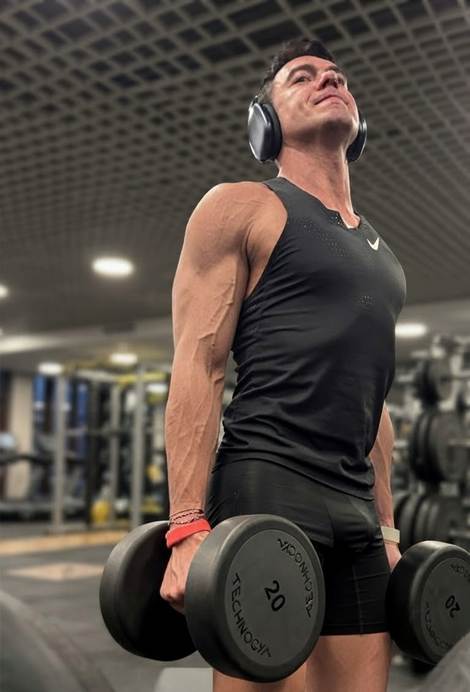
Nissola’s view of enhancement begins with the individual, and he makes no apology for it. Nor does he ask anyone to take his word for it: on his active Instagram account, @doctorleo, he shows that he lives by the protocols he prescribes.
“It’s not selfish to focus on yourself,” he says. “The more you pour into yourself, the more you can lift up others. Besides, everybody wants to stay younger for longer.”
He is candid about the stakes. “In old age, your kids might not take care of you. Your muscles should be able to.”
For Nissola, longevity is less a product than a practice. “You are who you train yourself to be, not who you hope to become,” he says. “Life becomes the process of shaping each day intentionally, with purpose.” He has little patience for delay: “The greatest skill you can develop is shortening the time between an idea and action. Tomorrow is nothing but a promise. Staying younger for longer requires you to start changing your habits now, and repeat what works for you each day.”
A Rare Kind of Doctor
Nissola’s authority in human enhancement is earned, not claimed. As Medical Monitor, he led the medical oversight of the Abu Dhabi clinical trial, a world first in elite athletes and one of the most scrutinised studies in history. He monitored the health data of Olympic medallists and world-class competitors at the very peak of human performance.
In private practice, he treats athletes, executives, celebrities and anyone determined to stay stronger for longer. “I build personalised clinical protocols and precision-medicine plans for people ready to transform their lives, one edit at a time,” he says.
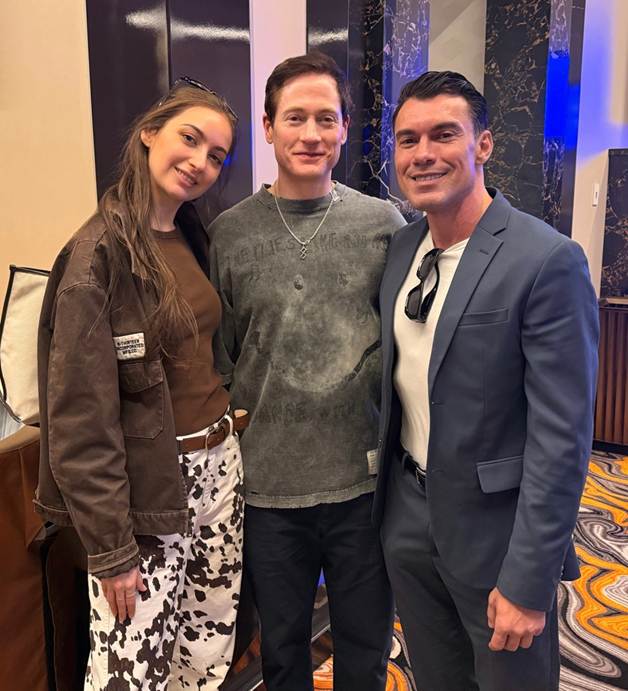
That blend of clinical rigour and personal conviction has made him a respected independent voice in the longevity movement, a conversation also shaped by figures such as Bryan Johnson and his co-founder Kate Tolo.
Cancer research taught him to intervene in biology, not accept its limits. Drug development taught him rigour. Human enhancement now asks the next question: if medicine can prevent disease and enhance performance, can it responsibly expand what healthy people can do?
That question remains open. Nissola is helping write the medical language in which it will be answered.
“The future of medicine,” he says, “will not be defined only by how well we treat what is broken, but by how wisely we understand what the human body can become, and how boldly we put practical science to good use.”