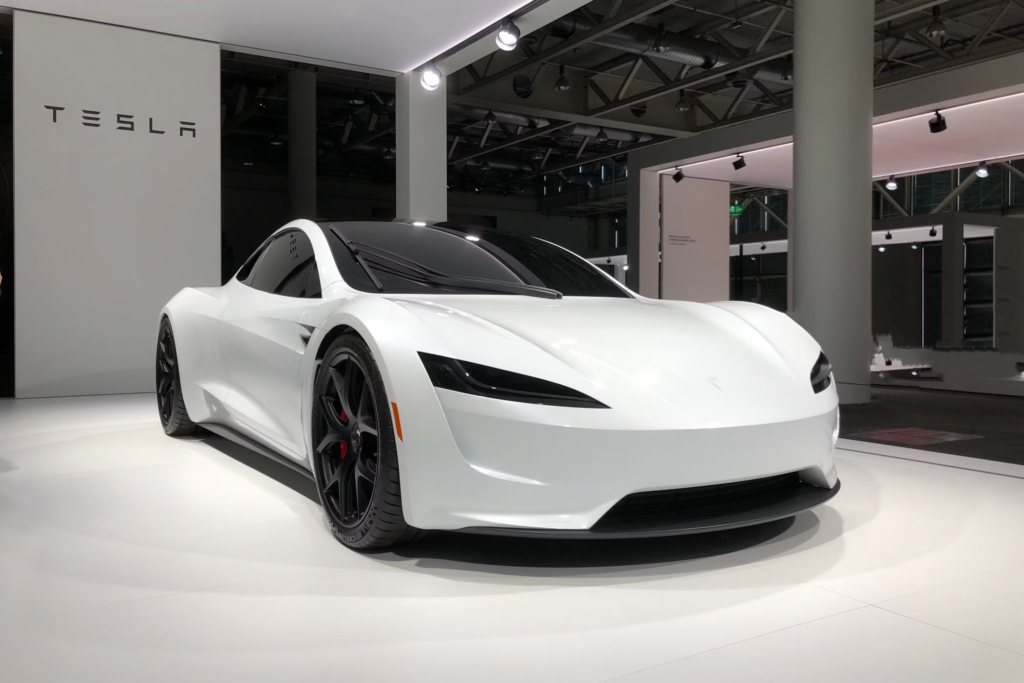
Tesla is preparing to showcase its Cybercab at a highly anticipated event in Texas, putting its ambitious plans for autonomous transportation back in the spotlight. The two-seat electric vehicle is designed without a steering wheel or pedals and is expected to become a central part of Tesla’s planned robotaxi network. While the company has revealed relatively few details about the upcoming event, the launch is being closely watched because autonomous driving has become an increasingly important part of Tesla’s long-term strategy.
The Cybercab is intended to take Tesla’s robotaxi ambitions beyond the company’s current fleet of modified Model Y vehicles. Tesla already operates a limited autonomous ride-hailing service, with some vehicles carrying human safety monitors while others operate without them. The company ultimately wants the purpose-built Cybercab to become the primary vehicle used for its driverless transportation network.
Tesla has described the event simply as the “Cybercab Launch Event,” leaving much of the program unclear ahead of the presentation. Cybercab engineer Eric Earley said on X that the event would begin at 5:45 pm ET on Thursday in downtown Austin, with additional information expected to be provided to invited attendees. The limited information has added to the curiosity surrounding the event, particularly because Tesla has previously used major presentations to outline its ambitions for autonomous driving and future vehicle technology.
The company’s push toward fully autonomous vehicles has been underway for years. CEO Elon Musk has repeatedly predicted that driverless Teslas would become a major part of the company’s future. The Cybercab was previously introduced at an event in October 2024 in the Los Angeles area, where Tesla presented the concept as an important step toward a future in which transportation could operate with little or no human involvement.
Since then, however, Tesla’s progress in expanding its robotaxi service has been slower than some of Musk’s earlier predictions suggested. Tesla began a small robotaxi pilot in Austin, Texas, in June 2025 and later expanded the service to several other locations in Texas and Florida. The company has generally concentrated its operations in areas that are easier for autonomous vehicles to navigate, rather than immediately attempting widespread deployment in dense and complicated urban environments.
That cautious expansion reflects one of the biggest challenges facing autonomous vehicle companies. Driving without a human behind the wheel requires vehicles to handle unpredictable traffic, pedestrians, cyclists, road construction, unusual intersections and countless other situations that can be difficult to anticipate. Even a system that performs well under normal conditions must be capable of responding safely when something unexpected happens.
Tesla’s approach has therefore attracted both enthusiasm and scrutiny. Musk has previously made ambitious predictions about how quickly the company’s robotaxi network would expand. In July 2025, he said the network would grow at a “hyper-exponential rate” and reach half of the U.S. population by the end of that year. That target was not achieved, and Tesla’s more recent messaging has been more cautious. Company executives have emphasized the importance of developing the technology carefully, particularly because mistakes involving autonomous vehicles can have serious consequences.
The performance of Tesla’s existing robotaxi service has also highlighted some of the practical difficulties involved. Testing of the service in Dallas and Houston found extended waiting periods, with vehicles sometimes unavailable when requested. On several occasions, rides did not take passengers directly to their requested destinations even when those locations were within the advertised service area. Instead, passengers were dropped off roughly a 15-minute walk from their destinations. Experiences such as these show that operating a robotaxi service involves more than simply making a vehicle drive without human control. Reliable routing, pickup and drop-off accuracy, availability and the ability to navigate different environments are equally important to customers.
The Cybercab could nevertheless represent a significant shift in Tesla’s strategy if the company can successfully produce it at scale. Musk has suggested that the vehicle could eventually become Tesla’s highest-volume model. The broader vision is for a network in which Cybercabs provide automated transportation while privately owned Tesla vehicles could also potentially join the company’s driverless ride-hailing fleet when their owners are not using them.
Tesla has said that production of the Cybercab began in April 2026, although Musk warned at the time that initial production would be “very slow.” The pace at which Tesla can increase manufacturing will be closely watched because the success of a robotaxi business depends on having enough vehicles available to serve customers. A technically capable vehicle would have limited commercial impact if production remained too low to support a meaningful transportation network.
Regulatory requirements present another obstacle. U.S. federal rules currently restrict the number of vehicles that manufacturers can sell without conventional steering wheels and pedals. Companies can use larger numbers of such vehicles for testing, but commercial deployment creates additional limitations. For Tesla, these rules could affect how quickly it can put Cybercabs into passenger service and generate revenue from them.
California is another important market where Tesla faces regulatory challenges. The company does not currently have the necessary permits to operate a robotaxi service there or to conduct fully driverless testing without a safety driver who can take control from the front seat. California is particularly significant because of its large technology industry, population density and importance to the broader autonomous vehicle market.
Tesla’s ambitions are also unfolding against growing competition. The company’s electric vehicle business faces increasing pressure from manufacturers around the world, particularly Chinese EV companies that have expanded their technology, product ranges and global presence. As competition in conventional electric vehicles intensifies, investors increasingly view autonomous driving as one of Tesla’s most important opportunities for future growth.
Tesla’s market value has reflected that expectation, with autonomy playing a major role in the company’s long-term investment story. The Cybercab therefore carries importance beyond the vehicle itself. Its launch could provide investors and customers with a clearer indication of whether Tesla is moving from ambitious promises toward a scalable autonomous transportation business.