Alphabet’s early investment in SpaceX has grown into one of the most striking examples of long-term technology investing, with the Google parent’s stake valued at roughly $94 billion as of June 30, 2026. Alphabet originally invested about $900 million in Elon Musk’s space company in 2015, meaning the value of that investment has increased more than 100-fold over the past decade. The scale of the gain highlights how dramatically investor expectations around SpaceX have changed as the company expanded from a privately held rocket startup into one of the world’s most valuable space businesses.
Alphabet’s investment has become particularly significant following SpaceX’s public-market debut in June, when the company reached an initial public offering valuation of approximately $86 billion. The move transformed SpaceX from a closely held private company into a publicly traded business and gave investors a clearer view of the value of stakes accumulated by some of its earliest and largest backers. Among those investors, Alphabet now stands out as the largest disclosed institutional holder based on available quarterly regulatory filings.
The journey from a $900 million investment to a holding worth $94 billion illustrates the extraordinary increase in SpaceX’s perceived value. When Alphabet invested in 2015, SpaceX was already attracting attention for challenging traditional approaches to rocket development and satellite launches, but its eventual scale was far from certain. Over the years, the company built a much larger commercial presence, expanded its launch operations and developed Starlink, its satellite internet business. Those developments helped transform SpaceX into a company with interests extending well beyond conventional rocket launches.
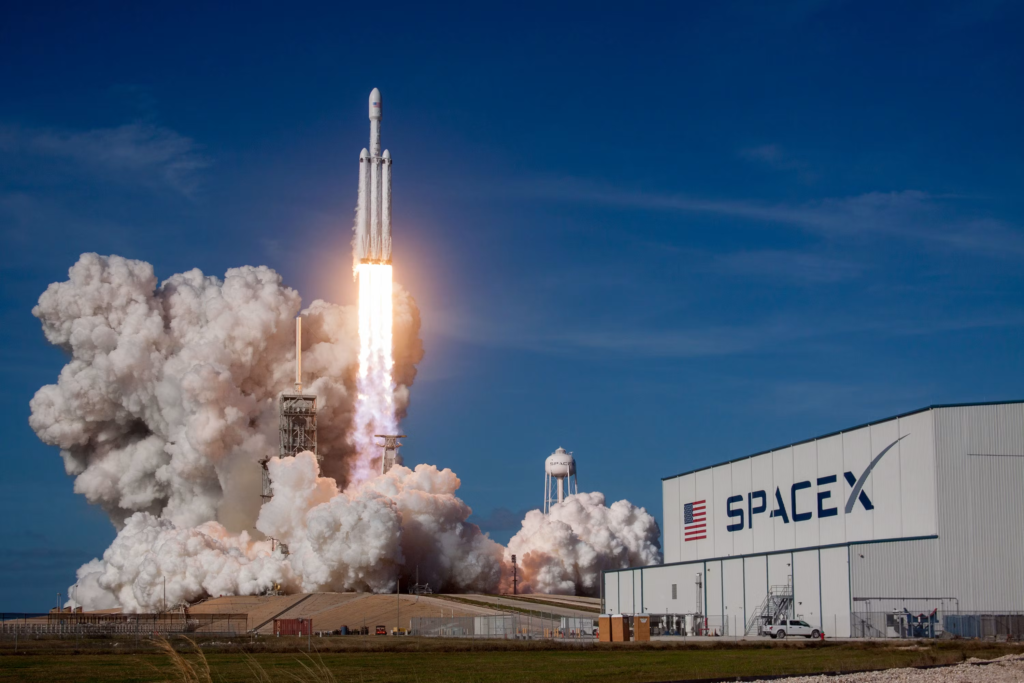
For Alphabet, the investment also demonstrates the potential rewards of entering emerging technology markets before they become mainstream. A decade ago, SpaceX was still a private company whose future depended heavily on its ability to develop reliable launch systems and secure enough commercial demand to support its ambitious plans. Today, its business is considerably broader, while its technological ambitions include increasingly powerful launch vehicles and a massive satellite network.
The disclosure of Alphabet’s current holding has also provided an unusual opportunity to measure the performance of an early SpaceX investment. Private-company investments are often difficult for the public to evaluate because there is no continuously quoted market price. Investors may know the original amount invested, but determining what that stake is worth years later can be complicated by subsequent funding rounds, share transfers, changes in ownership structures and private valuations.
Alphabet’s situation is different because the company had already disclosed its original $900 million investment in SpaceX. That historical figure creates a useful reference point for comparing the value of its position today. The comparison shows just how dramatically SpaceX’s valuation has changed since the investment was made.
The latest filings also reveal that Alphabet is not the only major investor to have benefited from SpaceX’s rise. Other institutions and financial groups have held stakes in the company, including Fidelity Investments, Saudi Arabia’s Public Investment Fund and Hancock Prospecting, the investment company controlled by Australian mining entrepreneur Gina Rinehart. As SpaceX entered public markets, the financial positions of these early supporters became increasingly visible.
The disclosures are important because they offer a rare glimpse into the ownership structure of a company that spent much of its existence operating outside public markets. Before its listing, SpaceX’s shares were not freely traded in the same way as shares of a conventional public company. Early investors therefore had to rely on private transactions and valuation events to understand how their holdings were changing in value.
However, the figures revealed in quarterly filings should not be treated as a real-time picture of institutional ownership. Regulatory filings are produced periodically, which means the information reflects positions held at the end of a particular reporting period rather than necessarily showing what investors own today. In this case, the disclosed figures relate to June 30, leaving room for significant changes in holdings after that date.
SpaceX’s share price has also declined since its market debut, adding another layer of uncertainty to the current value of investors’ positions. The $94 billion figure attached to Alphabet’s stake therefore represents a valuation based on the information available at the relevant reporting date rather than a guaranteed amount that Alphabet could necessarily receive by selling the entire position immediately.
There are additional complications surrounding the ownership of shares acquired before SpaceX became publicly traded. Some investors may face restrictions on when they can sell their holdings, while others may have different arrangements depending on how and when their shares were acquired. These restrictions can affect the practical value of an investment, particularly during the early stages of a major public listing.
Steve Sosnick, market strategist at Interactive Brokers, highlighted the difficulty of determining the history behind the positions disclosed in regulatory filings. “It’s very, very difficult to tease out which of these institutions were holding pre-IPO shares,” he said. The distinction matters because an investor that bought shares before the public listing may have a substantially different cost basis and potential return compared with one that acquired shares later.
The filings also do not necessarily reveal whether investors are free to sell their shares immediately or whether they remain subject to contractual lockup arrangements. They likewise do not indicate what individual institutions intend to do with their positions. An investor may choose to retain a valuable stake for years, sell part of it to secure profits or gradually reduce its exposure depending on its investment strategy and expectations for SpaceX’s future.
For Alphabet, the investment nevertheless represents a remarkable financial outcome on paper. A $900 million commitment made in 2015 has evolved into a stake valued at tens of billions of dollars, illustrating the potential impact of identifying a high-growth company at an early stage. It also reflects the broader transformation of the commercial space industry, where private companies have attracted enormous amounts of institutional capital as investors increasingly view space infrastructure, satellite communications and launch technology as major commercial markets.
SpaceX’s development has been closely tied to its ability to turn ambitious engineering projects into commercially valuable services. Its reusable rocket technology helped alter the economics of orbital launches, while Starlink created another major source of business by bringing satellite-based internet services to customers in different parts of the world. The company’s continued development of Starship and other technologies could further influence its long-term valuation, although ambitious space projects also involve substantial technical, financial and regulatory risks.
The sharp rise in Alphabet’s SpaceX stake is therefore both a remarkable investment story and a reminder of the uncertainty surrounding private and newly public technology companies. A valuation of $94 billion reflects what the market was willing to assign to the holding at a particular point in time, rather than a fixed measure of what the investment will ultimately be worth. SpaceX’s future growth, its ability to execute on costly technological projects and investor appetite for its shares will all play a role in determining whether early investors continue to see extraordinary gains.