Alibaba was hit hard Aug. 24 after the Chinese tech company announced a $10.2 billion sale of shares to fund its growing artificial intelligence initiatives. One of the company’s biggest equity offerings in recent years, the fundraising plan was priced at a hefty discount to its prior market valuation, raising immediate questions regarding shareholder dilution and how Alibaba is going to monetize its vast investment in AI.
Alibaba announced it will offer about 710 million new ordinary shares at HK$112.70 apiece, worth about HK$80 billion, or $10.2 billion. The placement price was an 8.4% discount from the company’s closing price the day before. The discount was significant for investors as it would dilute existing shareholders while the company was seeking new capital to fund the growing cost of an AI race.
The reaction in Hong Kong was swift. Alibaba’s stock plunged as far as 10.5% in the early part of the trading day, but pulled back some of those losses later in the day. By the afternoon, the stock was selling near the discount price it had been offered at. The steep early drop was a prima facie sign of an old concern in equity markets – investors may be willing to back a company’s long-term plans but when that plan involves issuing a lot of fresh shares at low prices, they get backlash.
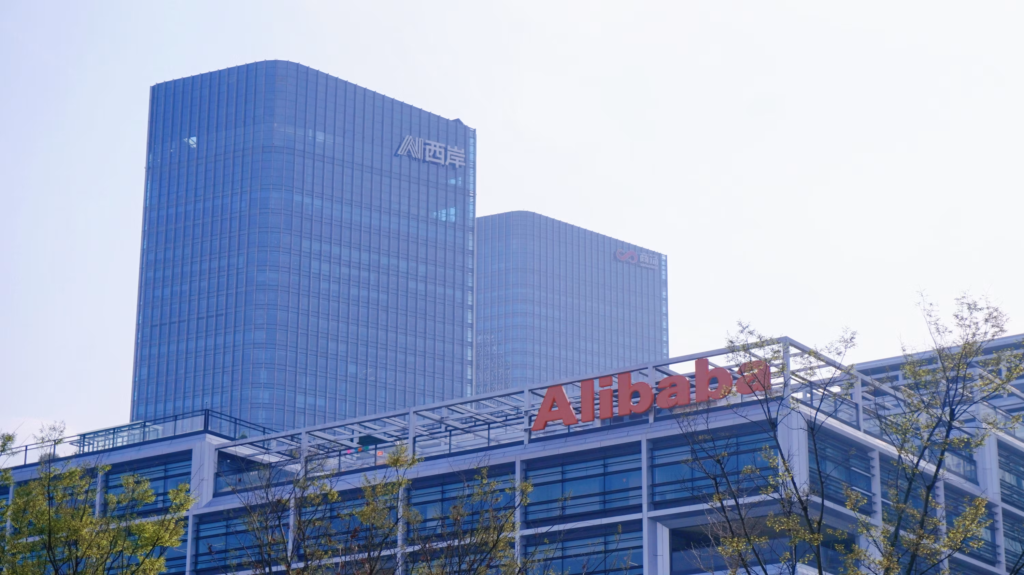
The money goes towards Alibaba’s investment in artificial intelligence hardware, computing power and AI models. In recent years, the company has been placing greater emphasis on the development of AI and cloud computing as key components of its future growth. As it expands its traditional e-commerce business, the expansion is becoming increasingly difficult.
Alibaba’s move into AI is a larger trend in China’s tech sector. As businesses strive to be a part of the world’s quickest growing tech sector, they are significantly increasing their spending on computing infrastructure and the deployment of large language models. Alibaba’s opportunity is even more compelling, as its cloud business provides the company with an existing foundation for AI development and commercialization.
It has been an important element of that plan: the company’s Qwen family of AI models. Alibaba has been aggressively building up its AI potential and marketing Qwen as a significant player in the rapidly expanding Chinese AI industry. The company considers AI to be more than just another product category; it is a technology that could impact demand for cloud, enterprise software, e-commerce and other segments of the business.
But investors aren’t necessarily sold on the idea that big expenditures will bring in big profits. There’s a huge capital investment needed to build AI infrastructure, and there’s a lot of competition and technology can make the old hardware and models obsolete rapidly. The financial risk is not just the amount of money that Alibaba invests, it’s how well the company turns that investment into revenue and better market positioning.
When evaluating Alibaba’s standing in the AI sector, Yang Tingwu, vice general manager of asset manager Tongheng Investment, pointed out this worry.
E-commerce is Alibaba’s DNA, not cutting-edge technology, said Yang Tingwu, vice general manager of asset manager Tongheng Investment.
Regardless of the amount of investment they make in AI hardware, they will most likely miss the mark when it comes to innovation in technology.
His words reflect one of the big mysteries about Alibaba’s strategy. They have tons of money, lots of customers, and a solid cloud computing business but in advanced AI, money’s not everything. It also requires engineering skills, research, computer systems and the ability to produce commercially viable products quicker than others.
There was a lot of interest in the share sale despite the discount. The order book reportedly swelled to nearly $28 billion, nearly three times the amount planned by Alibaba. This equated to approximately $6 billion from long-only institutional investors and sovereign investors, indicating that major investment institutions were willing to make substantial investments into Alibaba’s AI strategy.
It was estimated that between 40% and 45% of the offering would go to long-only and sovereign investors. Large institutional investors’ participation is noteworthy because these investors tend to engage in more long-term investments than in short-term trading opportunities. One way to look at their interest is that they have less immediate negative, but may have longer term positive, expectations of the value that Alibaba’s investment in AI might represent over time.
Investors that are known to have been involved include the Qatar Investment Authority, Norway’s Norges wealth fund and Hillhouse. They are an important part of the fundraising because sovereign wealth funds tend to have longer time horizons and are sensitive to the underlying growth prospects of companies.
Some of the pressure on Alibaba’s stock right now can also be attributed to the size of the share issuance. The 710 million new shares are approximately 3.6% of the company’s expanded total share count. Current shareholders will then have a slightly smaller stake in the company once the new shares are sold.