When thinking about buying a Tesla, people always have to ask themselves whether they will be able to retain the value of the car in the long run. The price of the vehicle is high, and is currently $36,490 for the Model Y and $71,090 for the Model S, which includes a number of incentives, including federal tax credits and estimated fuel savings. With the fast-changing landscape of EV technology, many car buyers are naturally concerned about whether they will be able to expect the value of their Tesla to be worth the upfront investment, especially if they plan to upgrade to newer models within a few years.
The resale value of Tesla is a complex and multifaceted issue that warrants careful consideration. Over 5 years, Tesla does a pretty good job compared to other luxury car makers, according to CarEdge data. Acura has a superb 86.29 % retained value, followed closely by Porsche at 82.33 % and Lexus at 79.82 % and that is the luxury segment leader for this metric. Tesla sits in the mix of the elite, with a residual value of 79.74%, just behind Lexus. The ranking is also significant because Tesla is an all-electric car company, not just a luxury brand that sells different types of engines.
There is a lot more to the resale value story, though, if you look at each individual Tesla model. The same carEdge analysis that found Tesla’s performance good for a luxury brand showed that there was a huge difference between the different models. The Tesla Model 3 ranked 51st out of 66 luxury cars assessed, and is expected to retain 71.88% of its value after five years. The Model X was considerably more successful, taking the 17th position with an 83.00% retention rate. Interestingly, the top-selling Model S proved to be the most successful car in this study — it is reported that it retained 84.33% of its original value over 5 years.
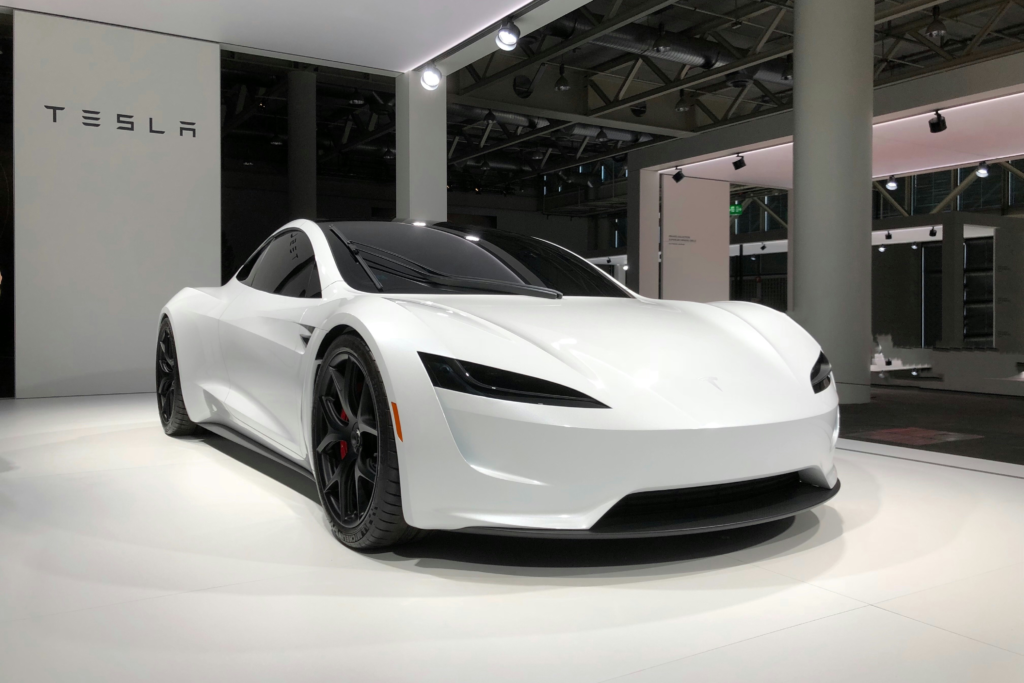
While these numbers are positive, the picture isn’t quite so bright. A study by iSeeCars in November of 2023 provided another set of numbers, showing that both the Model S and Model X depreciated more than the average EV over five years. The same study found the Model 3 depreciated at 42.9% compared to the industry average of 49.1% for EVs. The numbers were particularly worrying for the Model S as data revealed a loss of around $60,145 compared to the manufacturer’s suggested retail price.
Because of the following reasons, electric vehicle residual values are volatile in nature and very difficult to predict. In August 2023, Cox Automotive automotive industry analyst Philip Nothard stated that EV residuals will continue to be volatile in the short to medium term. A number of market dynamics are working against used EV prices, such as the fact that many of the cars that used to be in the EV fleet are now coming into the used car market, and restrictive leasing policies are putting downward pressure.
Tesla has been a pioneer in its history when it comes to resale value with the now defunct Resale Value Guarantee program, which ran until July 1, 2016. In this deal, Tesla guaranteed to buy back cars financed through the company at a set price. The warranty detailed that 50% of the base Vehicle purchase price at time of purchase plus 43% of the base Vehicle purchase price for all options (including battery pack upgrade) would be guaranteed. The end of this program, followed by other price reductions like that of the Model X, has compounded the resale value issue.
Tesla’s Model S versus Model X, as well as Model X versus Model T, is indicative of the industry as a whole. According to the iSeeCars 2024 data, the five-year-old Model S would be valued around $47,590, or 43% of its original value. The Model 3 is the most weathered vehicle, however, dropping to $30,986 after five years, with a 55.9% retention rate.
The differences are due to a number of reasons, such as the fact that battery technology is continually progressing, preferences among customers change, and Tesla’s own pricing policies. The company’s repeated changes in new vehicle pricing can have a significant effect on the used car market since a drop in the new vehicle price often means a drop in the used vehicle value. Also, newer models with new features and enhanced ranges can make older models look less attractive to the new owner.
The relative youth of the EV market makes it difficult to make accurate depreciation predictions given that they do not have as much historical data to help. This is further complicated by the speed at which technology is developing in the EV industry and the new technology features that only a few years ago were top-tier are now expected to be standard. Despite the often exaggerated perception of battery degradation, it remains a concern and shapes buyer sentiment and second-hand values.
The resale value question really comes down to the individual buyer’s model selection and ownership period for prospective Tesla owners. The numbers indicate that the Model 3 has the most attractive value retention curve in the current lineup, meaning it’s the best option for value-conscious buyers. The Model S, with its high-performance and luxury options, seems to suffer a higher rate of depreciation, which could be a disadvantage for those who are looking to own for a shorter time frame.
The luxury electric vehicle market is experiencing rapid growth, with established automakers entering the market and new players joining the game on a regular basis. This is going to impact Tesla’s resale value in the years to come, now that there is more competition for consumers looking to buy used EVs. But, Tesla’s brand name, widespread network of Supercharger stations, and over the air software update system remain a point of distinction for the cars in the secondary market.
While some Tesla owners have had a pleasant experience selling their vehicles, others have not, there is a mixed sentiment about the resale value of a Tesla in the public opinion. This confusion is made worse by the fact that depreciation data is not standardized and that different research firms employ different methods to calculate depreciation. Some buyers have been able to buy when prices have adjusted favourably, but others have been caught out when prices have dropped quickly.