SpaceX officially joins the Nasdaq 100 index, with the move scheduled to happen on July 7, the exchange operator announced on Friday. It’s an important step for Elon Musk’s aerospace and artificial intelligence company, which went public on June 12. Many passive investors are likely to follow the trend and buy shares after inclusion in this prestigious index of technology stocks, as exchange-traded funds (ETFs) and mutual funds that index the Nasdaq 100 will have to make additional acquisitions to get the right amount of shares to mirror the index’s performance. This mechanical buying pressure usually boosts the prices of stocks, and thus it becomes an honor for publicly traded companies to become part of the indexes.
This inclusion follows a nation-wide evolution in the requirements and standards used by major index providers for determining eligibility for inclusion of newly public companies. In a move that is part of a coordinated effort by Nasdaq and other major index providers such as FTSE Russell and MSCI, the index provider has opened up its entry requirements to be more flexible and to better include firms that want to list in the United States. These relaxed standards cover a number of important areas, profitability thresholds have been relaxed, the number of shares that must be offered to the public has been reduced and the period after an initial public offering where shares must be held by the company before being made public has been reduced. The joint action by index providers is a sign of a common understanding that existing indexes may not be sufficiently capturing the value proposition of some of the more high-growth technology-focused firms that have gone public recently.
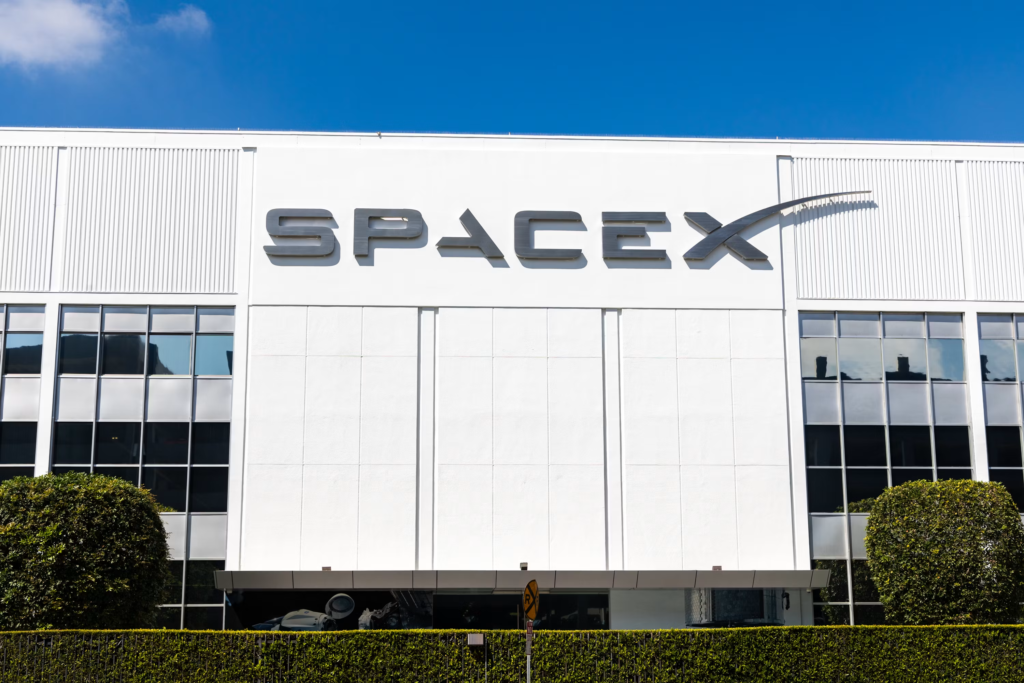
Since SpaceX went public, it has had its ups and downs, with dips of significantly high losses followed by modest gains over the last three years. The company had a net loss of $4.9 billion the previous fiscal year, which highlights the capital-intensive nature of the aerospace and satellite communications sector that SpaceX is in. Overall, despite these financial difficulties, the company’s revenue sources have not diminished, with the company reporting an increase in revenue from its launch services, satellite internet offerings, and its new developments in the field of artificial intelligence. The revenue expansion, combined with its presence in several promising technology industries, has fueled investor excitement which has pushed the company’s market value to some analysts’ levels of “stretched.”
The ramifications of SpaceX’s addition to the Nasdaq 100 go far beyond the company itself, and could serve as a template for other marquee tech firms aiming to go public in the coming months. The giants of artificial intelligence, such as OpenAI and Anthropic, are expected to go public this year or next, and according to market participants, they may aim for a valuation of more than $1 trillion. The smooth incorporation of SpaceX into the major indexes could set a precedent for others, and it may help ease the path for other technology companies with complicated and growing financials. This is part of a shifting balance between the financial and technology worlds, as traditional valuation of companies continues to compete with more potential and strategic forward-looking analysis of tech firms.
Financial institutions have already started to account for the possible ramifications from this inclusion on SpaceX stock. J.P. Morgan has projected that the inclusion would bring around $4.3 billion in passive inflows as funds chaining the Nasdaq 100 come to the decision to add the company. This is a large number, reflecting the size of assets being benchmarked to the index, and the mechanical impact that can arise when assets are included on the index, but unrelated to fundamental evaluations of the business or the asset’s valuation. The changes happen automatically to investors who own shares in the index-tracking funds, but are subject to questions from active fund managers regarding whether to make any adjustments in their funds to reflect the index change.
SpaceX’s market sentiment surrounding its inclusion and present value is quite split. Michael Field, Morningstar’s chief equity market strategist, was more restrained in his appraisal of the progress, noting that the company was clearly showing a strong demand that made it faster to incorporate into the index, but that he was “cautious about the price of the stock.” Many investors would like to see the inclusion, but some fund managers could have reservations, especially those, like Morningstar fund analysts, who believe the stock is overvalued at current prices. The disagreement stems from the wider questions of how to fairly value companies that are at the crossroads between traditional businesses and new technologies.The disagreement seems to arise from the larger issues of the valuation of companies where the traditional valuation approaches do not adequately reflect the risks and opportunities of their business models.