The global e-commerce and technology giant Alibaba is suing the U.S. government in a major legal battle over technology and national security. The complaint, filed in the U.S. Federal Court in San Jose, California on Tuesday, alleges that the Pentagon placed the company on its growing list of firms that are “engaged in activities of a military or defense nature,” which is part of the blacklist of companies linked to the Chinese military-industrial complex.
The lawsuit follows the June 8 DOD announcement that it had added another 188 “Chinese military companies” to its list, bringing the total to 375. Some of the new additions were among China’s leading corporate giants, such as Alibaba, search engine giant Baidu and electric vehicle company BYD. These companies are highly impacted by the designation in terms of their reputation and operations, especially in Western markets and how they can do business.
The Pentagon’s reasoning was that Alibaba was a “military-civil fusion contributor to the Chinese defense industrial base. The reason cited by the department was that the company is allegedly affiliated with China’s Ministry of Industry and Information Technology, and that the company also has an indirect connection with the China’s state asset regulator, which is called SASAC. The links, the Pentagon said, imply that Alibaba’s technology and resources might be used for military purposes.
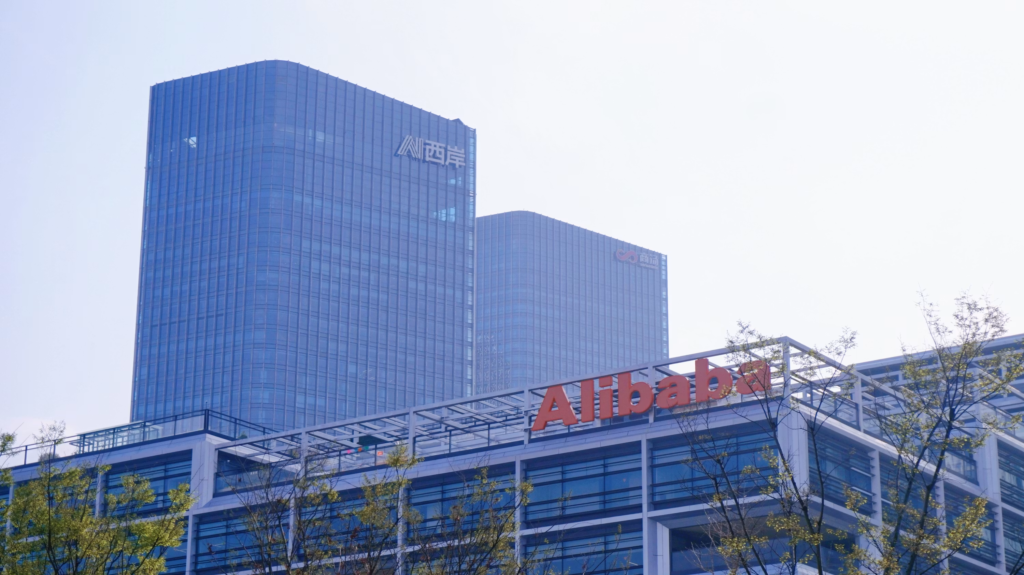
Alibaba has categorically rejected these claims, in a filing with the law that states the “determinations have no basis in fact or law. The company highlighted its corporate governance framework, which is “governed by an independent board, none of whom has any military affiliation. In its defense, Alibaba described its key business lines as “retail, logistics, and enterprise information technology” and went on to explicitly state that the products and services were not “for weapons, defense or intelligence.
The lawsuit is for the calculated risk of Alibaba, which has been operating in an ever more intricate geopolitical environment since its record-setting IPO in 2014. For years, the company has been working to establish good relationships with the international regulators and investors, keeping its lead in the Chinese market. The addition to the Pentagon’s blacklist could taint much of that goodwill, and affect various aspects including investor confidence and even the company’s ability to conduct cross-border technology transfers.
The context of this conflict is important for appreciation of the implications. The Pentagon’s growing blacklist is a change in the U.S. attitude towards China’s private sector. What once was seen as Chinese tech giants as business partners and business competitors is now being regarded as Chinese tech giants that are extensions of the strategic ambitions of Beijing. “Military-civil fusion” has become especially prominent in this new paradigm, with the U.S. government seeing China’s technological progress in terms of its national security rivalry.
Those who have criticized the Pentagon’s way of doing things have pointed out the criteria of evidence that has been employed to justify these designations. The concept of “military-civil fusion” itself is very wide and includes a variety of activities many of which are also shared by the developed countries. For example, the cloud computing infrastructure, optimization algorithms for logistics and enterprise data management systems are all commercial products that have military potential but are primarily made for civilian applications.
The Pentagon would not comment on the pending litigation, citing the agency’s policy of not discussing current litigation. That’s the norm in this situation; when the Department of Defense is involved in lawsuits, it doesn’t comment publicly. But the delay in the Pentagon’s response throws into doubt the agency’s belief in the basis for its determination.
Alibaba is suing for declaratory relief, asking DOD to lift its ban. Legal challenges may focus on procedural issues, such as whether the Pentagon adhered to all administrative procedures and whether the designation was arbitrary and capricious. This is a list of typical reasons to contest agency decisions in U.S. administrative proceedings.
It does raise interesting questions about the burden of proof in such a case. The Department of Defense has flexibility in making national security decisions, but it must show that the decisions are made in a rational manner and not merely for political reasons. Alibaba will likely respond by saying it has not been able to establish any evidence of military ties; it is more about “associations” that could be made with almost any large Chinese company.
For Alibaba, this lawsuit represents more than just a legal challenge; it is a public relations and strategic communications battle as well. It has always been a company that has tried to present itself as a commercially-driven entity, distinct from Beijing’s political and military interests. It’s an opportunity to reinforce that narrative, and to challenge what it feels is unfair targeting.
But whatever Alibaba could do to get its name off the list, the rift that required it to be there is not likely to fade away. The U.S. has been steady in its application of economic and administrative measures to squeeze Chinese technology firms, seeing them as part of Beijing’s wider strategy. Likewise, China has shown itself prepared to fight back against what it sees as ‘extraterritorial overreach’ towards its own corporate interests.
It is not lost on note that this is an action brought at the right time. It is in the wake of wider worries over “decoupling” between the world’s two biggest economies and after a slew of other moves against Chinese tech firms. The U.S. has imposed several restrictions on China’s technological progress, ranging from semiconductor export restrictions to investment screening mechanisms.
This case will be a major factor in the future of business relations between China and the United States, and will be keenly watched by observers of the U.S.-China relationship, not only for its outcome, but for what it means for the future. Should the verdict go Alibaba’s way, it could set a precedent that harsher punishments will be hard to impose against Chinese firms without clear evidence of wrongdoing. On the other hand, if the Pentagon wins, it may pave the way to even bolder measures against Chinese tech companies.