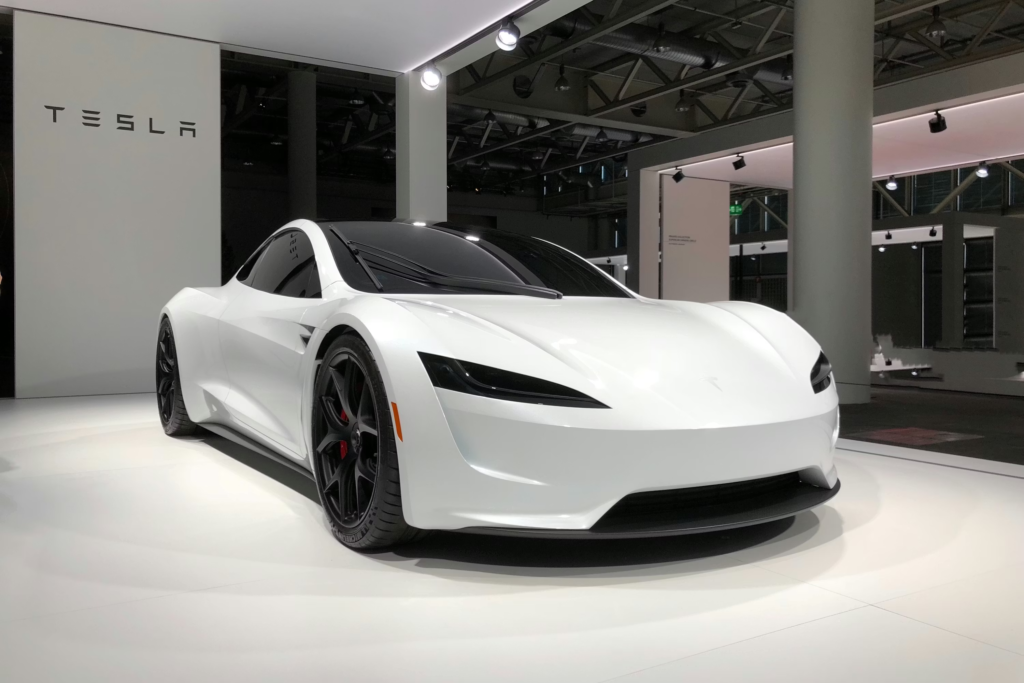
The international discussion of transportation is changing at a high rate, and Tesla is making sure that it is at the center of change. As the company announced a newly created two-seat robotaxi, it is making a bold move in the direction of the future that is founded on autonomous mobility. This is not simply a proposal to launch a new car, but to redefine the way people consider travelling, owning, and how technology plays its part in the daily lives of people.
Elon Musk is at the centre of this development, as he announced that Tesla has now started to produce a fully self-driving taxi, which did not have a steering wheel or pedals. The fact that these old controls are missing is an indication of utter dependence on the high-tech autonomous driving system of Tesla. It is a radical design decision that indicates the confidence in artificial intelligence and the long-term goal of the company to remove human factor in driving, completely. Musk also provided a preview of the car by posting a brief video on X, with the car traveling on a manufacturing line, which is a glimpse of an otherwise behind-the-scenes view of a project that has been talked about for years but is only now coming to reality.
There is a more profound change in Tesla that this robotaxi project brings to light. Throughout its history, the company has been known as an innovator of electric cars. The present change however, implies that Tesla is becoming much more expanded. Its identity is becoming centered around artificial intelligence, robotics, and automation. Tesla seems to be creating an infrastructure in which transportation is a service, rather than merely selling a car to individual customers. The robotaxi can be fitted into this model where cars will be used 24 hours a day, which means continuous revenue generation as opposed to selling cars as one time purchases.
Regulatory dimension is also of great importance. Tesla anticipates that its superior self-driving technology will be approved in the European Union in the near future. This would be a significant step, and access to one of the biggest and most dynamic automotive markets in the world will be available. Regulatory acceptance tends to be a filter to transportation innovation and success in Europe can have a fast-tracking effect in other regions. Nonetheless, the regulatory environment is not straightforward and the timelines of approvals can hardly be anticipated.
This announcement is also significant given that the traditional automotive business of Tesla has been experiencing a string of problems. The administration of Donald Trump has left lasting impacts on the global supply chains and pricing policies due to the introduction of trade policies. Changing trade relations and tariffs have already imposed a strain on manufacturers, including Tesla, and it has become harder to ensure the stable growth of the shipments of vehicles. The external factors have influenced the company to change, in terms of pricing as well as production strategy.
Through these pressures, the recent financial performance of Tesla has exhibited some resiliency. The company experienced a year-on-year growth in revenues of 16 percent in the first quarter to an amount of 22.39 billion. The net profit increased by 17 percent to $477 million, above analyst expectations at a time when the total revenue was marginally lower than projected. These statistics indicate that though there are still some problems, Tesla can still achieve good financial performance in a competitive and unpredictable environment.
There are also indications of recovery operationally. In the first quarter, global deliveries grew by 6.3 percent to reach 358,023 vehicles. This is a significant improvement on the negative 13 percent per cent change experienced in the same period last year. The upturn suggests that the market might be stabilizing demand, despite the increase in competition in the electric vehicle market. The electric and autonomous technologies are being heavily invested in by established automakers and new ones, allowing a saturated and fast-paced market.
Tesla has also launched less expensive models of its successes to sustain its competitive advantage, such as the Tesla Model 3 and the Tesla Model Y. With lower prices, these options are intended to be more acceptable to the masses, making electric cars more accessible to the average user. This plan is a sign of realizing that the automotive industry frequently relies on expanding to new sections of the market, rather than merely innovating at the upper-end.
Nonetheless, Musk has clarified that Tesla has a long-term vision that is well beyond the traditional car production. It is also becoming more concerned with robotaxis and even humanoid robots, which may rebrand the company in the global economy. This is a strategic shift which makes Tesla not only an automaker, but a technology company at the convergence of artificial intelligence and the real world. The implications of such a shift are enormous, with potential repercussions on such aspects as urban planning and labor markets.
The concept of robotaxi, in particular, can transform the economics of transportation. The Tesla will also be able to save a lot of money by cutting down operational expenses by eliminating human drivers. This may enable ride services to become more affordable in addition to enhancing efficiency since vehicles may run continuously with little downtime. In the case of cities, this could imply a decrease in privately owned vehicles, decreased congestion, and an alternative strategy towards infrastructure planning. Meanwhile, it casts doubts on the employment, particularly regarding the people who make a living by driving.
Nevertheless, the way ahead is not an easy one. In most areas, regulatory acceptance is yet to be achieved and the population is yet to trust in the full autonomy systems. It is likely that safety issues will continue to be a focal point particularly as these vehicles get nearer to mass usage. Autonomous technology incidents are likely to be widely publicized, and even individual incidents can impact social perception. Moreover, there is an increasing rivalry in autonomous driving space, as various companies are putting a lot of money into similar technologies.
The fact that Tesla has decided to proceed with the development of a fully autonomous, two-seat car shows that it has a great deal of hope in its own technological abilities. An explicit indication is that the company feels that the future of mobility is not only in electrification, but in autonomy. The robotaxi is not just a product, it embodies a wider picture of the way transportation may be transformed over the next few years.