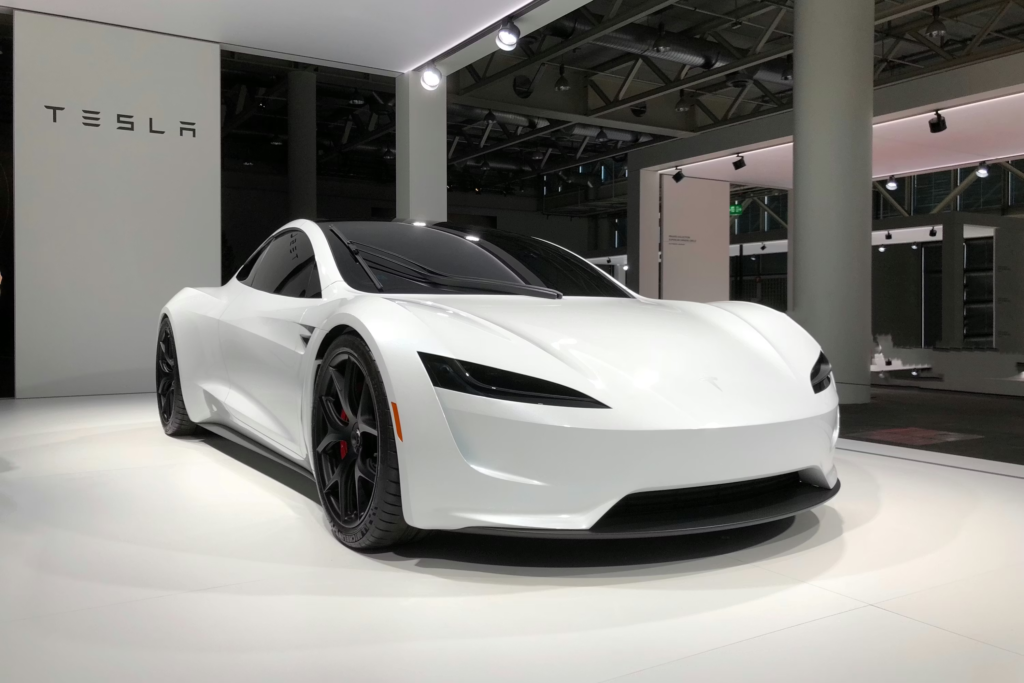
The development of more sophisticated artificial intelligence devices, which Tesla has ventured into, seems to be entering a decisive stage, where CEO Elon Musk suggests that Tesla could complete the design of its next generation AI6 chip by December. The statement shows that Tesla still seeks to extend its dominance over fundamental technologies driving self-driving systems and robotics, which supports the idea that it is not merely an electric car manufacturer.
Through his social media platform X, Musk implied that the development of the AI6 chip may gain traction as an engineer faster than foreseen, provided there are engineering momentum and strategic application of the artificial intelligence in the design process. He said with some luck and acceleration through AI, we could actually hope to tape out AI6 in December, which could be a very important step on the roadmap of Tesla semiconductor. When developing a chip, the point where a design is complete and passed on to manufacturing is referred to as tape out and the period between the conception stage and the physical creation phase.
This is not an isolated development taking place. Tesla has been working consistently on its own custom silicon to help it achieve its long-term vision of completely autonomous vehicles and intelligent humanoid robots. Tesla has also been pulling more important technologies in-house contrary to the conventional automakers that depend heavily on third-party suppliers. The strategy will enable the firm to maximize its performance, minimize reliance on third-party vendors, and customize hardware to its software ecosystem.
The AI6 chip will likely serve as the core of the future developments in Tesla, especially in Full Self-Driving (FSD) and robotics. The chips are meant to process huge quantities of real-time data and this allows vehicles and machines to read their environment more accurately and efficiently. In the case of autonomous driving systems, it is possible that the improvements associated with the processing efficiency are minuscule but will lead to safer and more dependable decisions made on the road.
This grand project has a strong partnership with Samsung Electronics behind it. The South Korean technology powerhouse gets a deal reportedly worth 16.5 billion to produce Tesla AI chips, which is a reflection of the magnitude and significance of the partnership. Samsung has a strong background in sophisticated semiconductor manufacturing and this fact makes it a major player in the realisation of the designs of Tesla especially at a time when the industry is shifting towards smaller and more powerful chip architecture.
As per previous assertions, Samsung will manufacture the AI6 chips of Tesla based on its advanced 2-nanometer technology. Such miniaturization is a significant breakthrough in chip design that enables the chip to perform more and consume less power. In the case of Tesla, it could be more efficient vehicles and robots that can stay longer and do more complicated work without the need of major energy consumption increases.
The production schedule of mass production, however, indicates that the mass design-deployment cycle will be a long one. One of the Samsung officials recently reported that it is scheduled to produce chips made by Tesla in the second half of 2027. This is common in the semiconductor market where the semi-department requires to undergo rigorous testing, validation, and optimization until it becomes possible to produce chips reliably in large quantities.
The move by Tesla to invest in custom AI hardware in such a substantial amount is not unique to the technological and automotive industries. With the increased focus on artificial intelligence as the core of product innovation, firms are looking to gain a better understanding of the underlying infrastructure. Custom chips have the benefit of being custom-designed, thus allowing companies to reach a degree of performance and efficiency hard to reach using an off-the-shelf solution.
Strategically speaking, the Tesla AI6 chip project is also an indication that the company does not only plan to rival car manufacturers, but key technology firms as well. Examples such as NVIDIA, Google and Apple have already proven the importance of proprietary silicon in innovation. Building its own chip is making Tesla a part of this exclusive club, and its goal is to build a closely connected ecosystem where both hardware and software cooperate with one another.
A wider story is also in play concerning changing identity of Tesla. Although the company is well known due to its electric cars, its involvement in artificial intelligence, robotics, and semiconductor design may indicate a far more widespread idea. The AI6 chip is not merely a part, it is a building block to the future which the technology of Tesla will stretch into not only cars but also automation, manufacturing and even day-to-day human assistance in the form of humanoid robots.
Meanwhile the way is not smooth. The industry of semiconductor development is known to be incredibly complicated and entails substantial amounts of money, knowledge, and coordination of various stakeholders. Late deliveries are not an exception and even the slightest inconvenience could expand across the production schedules. Musk is mindful of these uncertainties, but that does not mean he is pessimistic: he said in the bibliography that he was lucky that the tape-out would be completed in December.
Tesla has also received mixed views concerning its ambitious schedules in the eyes of the people. Although the company has been known to take technological risks, it has on a few occasions been accused of setting high goals that are hard to achieve. This relationship introduces a certain level of caution to Tesla-related announcements such as the AI6 timeline, where industry analysts balance the hopes of the company and the realities of chip development.
Nevertheless, the possible contribution of the successful introduction of the AI6 chip can hardly be overestimated. Provided that Tesla can fulfill its promises, the chip will be able to dramatically increase the functionality of its vehicles and robots and introduce new standards of performance and efficiency. It also may enhance the competitiveness of Tesla in a market that is rapidly becoming competitive, with the use of innovation in the field of artificial intelligence becoming a major differentiator.
To a great extent, such moment represents a more general change in the approaches of technology companies to innovation. Industry lines are increasingly becoming thin with automakers transforming into tech companies and the opposite. The Tesla AI6 chip project is at the crossroad of these trends, as it shows how the dominance of the fundamental technologies can determine the future of the whole industry.