Tesla has again changed the topic of autonomous driving. The company already made the decision to change its one-time Full Self-Driving purchase option to a monthly subscription of 99 dollars as an official sign of the final transition to a software-based revenue model. In case customers still feel ownership is better as opposed to subscription, Tesla has given them a period to transition, so even though the one-time purchase is now 8,000, it will remain till the 14th of February. Subsequently, the subscription plan will be the main route to the most advanced driver-assistance technology of the company.
It is not just a price adjustment. It is a symptom of a larger change in Tesla perception of the self-driving technology. The automotive industry has been increasingly shifting towards software-defined vehicles over the last couple of years. Functionality that previously was Brick and Mortar specific is now handled more as an online service, constantly being updated and enhanced. Tesla positions its Full Self-Driving capability at the same price as streaming service or cloud software subscription with its $99 monthly price point. To a large number of drivers, this reduces entry barrier to a considerable level. The initial expenditure of 8,000 may be a tough purchase, even to the purchaser who has already invested in a high-end electric car. A monthly cost of 99 dollars seems more comfortable and justifiable, however, to those who want to test the system first, rather than commit on a long-term basis.
Strategically, the move also enables Tesla to create recurrent revenue. Models based on subscriptions provide predictable cash flow and a greater involvement rate of customers in the long term. The company does not conduct a single transaction with the users, but rather has a continuous relationship with them, whereby it continuously provides software enhancements by sending over-the-air updates. The vehicle technology strategy at Tesla has never felt like that of an automobile firm, but rather a tech firm, and this action adds to that image.
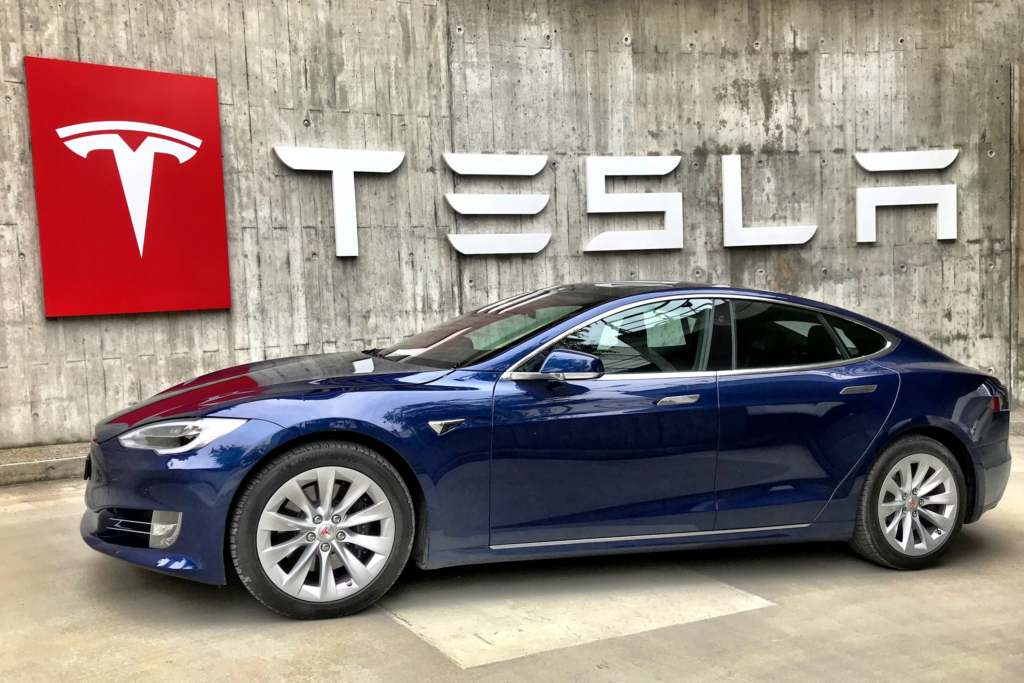
Nevertheless, the price adjustment coincides with the period when the questioning of autonomous driving systems is still burning. Regulators and other safety advocates as well as consumers keep arguing on the extent to which the existing technology is autonomous enough. Tesla has a Full Self-Driving system that, as the name suggests, has to be monitored by a driver. It works as a driver-assistance system and not a fully autonomous one. This difference is important, particularly when the company extends its objectives to personal vehicles.
In line with the introduction of the subscription, Tesla revealed that it will expand its AI-trained robo-taxi service to nine cities in the first half of the year. The service is currently under operation in Austin, Texas, and is being tested in San Francisco. This growth is a result of a long-term project of Tesla assuming cars in the future will exist as an autonomous mobility platform. Theoretically, robo-taxis would revolutionize the urban transportation system through decreasing traffic congestion, decreasing the cost of transportation, and improving the rate of vehicle use. A privately owned automobile is usually lying idle most of the day. By a comparison, robo-taxi can be used 24 hours and have multiple passengers, making it a source of revenue.
This concept has been experimented in Austin. It is a convenient place to start because the regulatory environment of the city is rather favorable, and the tech community is expanding. The environment in San Francisco is more challenging in terms of the conditions of roads and the traffic density, which makes it a more challenging place to conduct the tests and validation process. The move to nine cities implies that the system is mature enough but it will be faced with operational challenges. The infrastructure, traffic patterns and regulatory systems are different in every city. The autonomous services do not just need to be deployed with the help of software, but coordination with local authorities, robust safety oversight, and public trust are also crucial factors.
One of the most important variables is still the public perception. Although the interest in self-driving technology is high among the early adopters, not every driver is confident. Cases of autonomous systems of different manufacturers have influenced social discourse. To gain trust in AI-powered mobility, one cannot just rely on the technological performance, but transparency and accountability as well. The use of camera-based systems instead of adding sensor technologies, such as lidar, has also been a topic of discussion in the industry even though Tesla continues to use camera-based systems. The proponents claim that in vision-based systems the driving is more human-like and there are scalable levels of effectiveness. Critics doubt the multiple sensor types redundancy would lead to better safety.
The subscription model can also affect customer behavior differently, which is financially unforeseen. There are Tesla users who can subscribe on the road trip or on the days of the heavy commute and cancel the service in the months of silence. This flexibility may enhance the short-term adoption and decrease long-term engagement. Conversely, motorists who used to be reluctant in spending $8,000 initially may now be subscribers forever and they will be paying more in the long run. In the case of Tesla, this is a dynamic of opportunity and uncertainty.
The electric vehicle market at large is also keeping a close eye. Some of the competitors have also launched their advanced driver-assistance systems, but very few have collected the amount of data in the real-world the same level as Tesla. The vehicles of the company constantly take driving data which is inputted into machine learning models that optimize performance. With artificial intelligence, data is a winning factor. The introduction of robo-taxi will further shorten that data cycle, more real-world scenarios will be offered to test the capabilities of the systems.
However, mass autonomous movement will not happen at once. The constraints related to the infrastructure, differences in regulations and changing safety standards imply that the development may have to be gradual city by city. It is also important that consumers are educated. Most drivers still do not realize what is meant by self-driving. Communication regarding abilities and limitations should also be clear so as to avoid misuse and ensure credibility.
The fact that Tesla offers a self-driving subscription to its customers at a price of 99 dollars and is accelerating the growth of its robo-taxi service is a sign of a company that is reinforcing its long-term vision. It is placing its bets on the fact that software-based mobility would transform the economics and expectations of transportation. Simultaneously, the relocation highlights the thin line between responsibility and innovation. The higher features are more affordable due to subscription pricing, but accessibility exposes and subjects them to more scrutiny.
It remains to be seen whether this strategy was transformative or transitional or not, through implementation. With the further enhancement of the technology and the development of the trust, Tesla may secure the place on the top of autonomous mobility. At least the subscription model will provide the company and its customers with flexibility in case there are challenges.