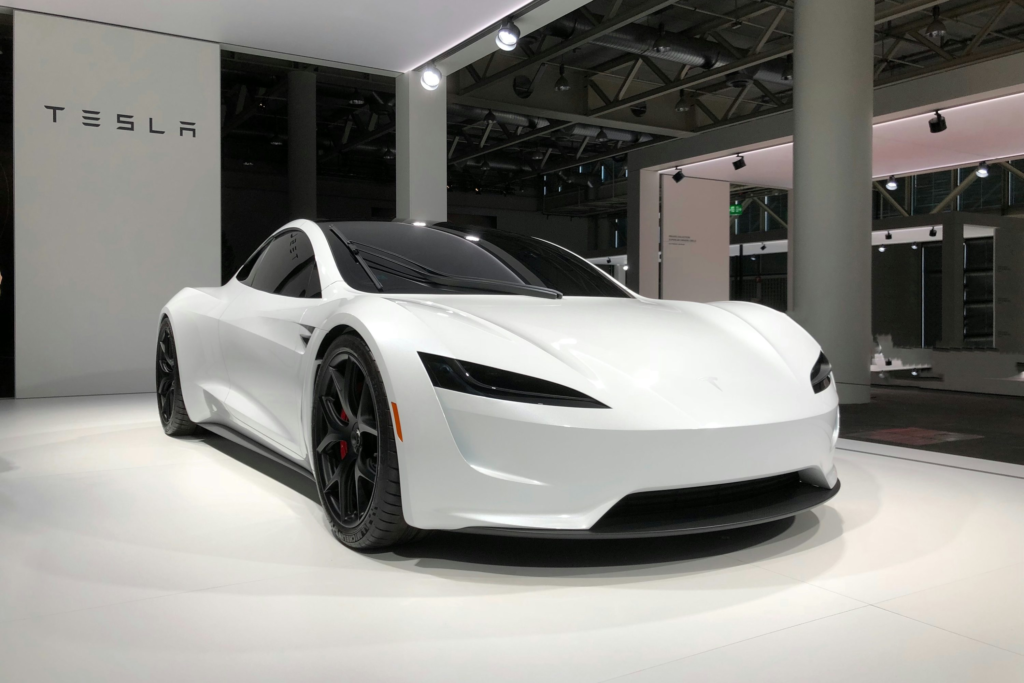
Tesla has once again altered the trajectory of the self-driving debate by announcing that its Full Self-Driving software will soon be available only through a monthly subscription. From February 14 onward, vehicle owners will no longer have the option to make a one-time purchase of the software, a move confirmed publicly by chief executive Elon Musk. The decision reflects a deeper shift in how Tesla views autonomy not as a static feature, but as a continuously evolving service tied to software updates, regulatory scrutiny, and real-world driving behavior.
Until now, Tesla customers in the United States had a choice. They could pay a substantial upfront cost to unlock Full Self-Driving, or opt for a comparatively modest monthly subscription. By removing the lifetime purchase option, Tesla is effectively redefining ownership in the age of software-driven vehicles. The car remains the buyer’s property, but its most advanced capabilities are now something closer to a digital utility, accessed and paid for on an ongoing basis.
Full Self-Driving, despite its ambitious name, has always been positioned as a driver-assistance system rather than a fully autonomous solution. Tesla has repeatedly emphasized that human supervision is required at all times, and drivers must be ready to take control whenever necessary. Over the past year, the company has been more explicit about this limitation, adding the word “Supervised” to describe the software used in passenger vehicles. This change in language was not merely cosmetic. It reflected growing pressure from regulators and safety advocates who argue that the branding of autonomous features can influence driver behavior in risky ways.
The subscription-only shift arrives at a moment when Tesla’s self-driving ambitions are under intense scrutiny. In the United States, federal safety regulators have been examining millions of Tesla vehicles equipped with the software following reports of traffic violations and crashes linked to its use. While investigations do not automatically imply wrongdoing, they underscore the complex environment in which advanced driver-assistance systems now operate. Tesla’s decision to maintain tighter control over how the software is distributed and updated may help the company respond more quickly to safety concerns as they arise.
From a business perspective, the move makes strategic sense. Software subscriptions provide predictable, recurring revenue, something increasingly attractive to automakers navigating volatile demand and rising production costs. Unlike hardware, which depreciates over time, software can be continuously refined, improved, and monetized long after the vehicle leaves the factory. For Tesla, which has long described itself as a technology company as much as a car manufacturer, the subscription model aligns neatly with its broader philosophy.
There is also a subtle psychological shift at play. When customers pay a large upfront fee for a feature, expectations tend to crystallize around what that feature should deliver immediately. With a subscription, the relationship becomes more fluid. Users may be more willing to tolerate imperfections if they perceive the service as improving month by month. This dynamic mirrors the way people relate to smartphone operating systems or cloud-based software platforms, where incremental updates are expected rather than guaranteed transformations.
At the same time, the change may not sit well with all Tesla owners. For some early adopters, the promise of Full Self-Driving was part of a long-term vision. They were willing to invest upfront in the belief that the technology would mature over time, eventually delivering near-autonomous capability. Removing the one-time purchase option could be seen as Tesla stepping away from that implicit contract, even if existing customers are not directly affected by the new policy.
The technology itself remains impressive, though imperfect. Tesla’s driver-assistance systems combine camera-based perception, neural networks, and real-time data collected from millions of miles of driving. Autopilot handles tasks such as lane-keeping, adaptive cruise control, and highway driving, while Full Self-Driving extends these capabilities to city streets, enabling lane changes, responses to traffic lights, and navigation through complex urban environments. In controlled settings, the system can feel remarkably confident. In unpredictable real-world scenarios, however, it still relies heavily on human judgment.
Interestingly, Tesla does deploy an unsupervised version of its self-driving software, but only in highly restricted environments. At some factories, vehicles use the system to move themselves from assembly lines to delivery areas without a driver inside. These controlled spaces eliminate many of the variables that make public roads so challenging, offering a glimpse of what autonomy looks like when the environment is tightly managed.
The broader industry is watching Tesla’s latest move closely. Other automakers are also experimenting with subscription-based features, from advanced driver assistance to heated seats and performance upgrades. Tesla’s scale and visibility mean its decisions often set the tone for what consumers are willing to accept. If customers embrace the subscription-only model for Full Self-Driving, it could accelerate a wider shift toward software-as-a-service in the automotive world.
Yet the question of trust remains central. Autonomous technology sits at the intersection of innovation and public safety, and confidence is earned slowly. High-profile crashes, regulatory investigations, and confusing terminology can all undermine public perception, even when overall safety metrics improve. Tesla’s emphasis on supervision and its move toward clearer labeling suggest an awareness of this delicate balance, but skepticism persists.
In everyday terms, the subscription model changes how drivers relate to their cars. Instead of viewing Full Self-Driving as a permanent upgrade, it becomes a feature you actively choose each month, depending on your needs, budget, and comfort level. For some, this flexibility will be appealing. For others, it may feel like a reminder that the future of driving is increasingly mediated by software licenses rather than mechanical ownership.