In its first earnings report since a record-breaking initial public offering, SpaceX has delivered a financial performance that underscores the rapidly evolving landscape of the private space industry. The company reported on Tuesday that its revenue for the April-to-June quarter surged by an impressive 92%, climbing to $7.8 billion. This marks a significant leap from the $4.1 billion reported during the same period the previous year, a figure that notably surpassed market expectations. Analysts had projected revenue closer to $6.93 billion, according to financial data, making the actual results a clear signal of robust underlying demand across the company’s diverse business segments. The numbers, while spectacular, also reveal a company in aggressive investment mode, as it continues to balance rapid growth with the substantial costs of pioneering next-generation technologies.
The core engine behind this exceptional revenue growth is undeniably the Starlink satellite-internet division. What began as an ambitious and often-criticized project to blanket the globe with high-speed internet has matured into SpaceX’s primary financial powerhouse. The company has not only expanded its global subscriber base at a rapid pace but has also diversified its offerings across various sectors, including consumer broadband, enterprise solutions, aviation, and maritime services. This expansion is supported by the constant launch of additional satellites, thickening the network and improving its capacity and coverage, particularly in underserved regions of the world. However, this extraordinary growth is not without its complexities. As the service has become more accessible in international markets and with the introduction of more competitively priced plans, the average revenue per user has experienced a decline. Investors and analysts are now closely monitoring how the company will navigate this trade-off between expanding its footprint and maintaining the economic viability of the network, especially as it invests heavily in developing direct-to-device mobile services to further increase its addressable market.
Beyond the connectivity business, the report highlights SpaceX’s aggressive pivot towards becoming an “AI-first” enterprise, a vision championed by CEO Elon Musk. The company’s artificial intelligence and data center operations have emerged as the largest area of investment, housing entities like xAI and the Grok chatbot, alongside the social media platform X and a rapidly expanding data center infrastructure. This branch of the business is already generating significant revenue through high-profile compute contracts with major players in the tech industry, including Anthropic, Alphabet’s Google, and Reflection AI. This strategic direction represents a fundamental ambition to transcend the role of a mere infrastructure provider. Musk is positioning SpaceX to not only build the computing power but also to develop the frontier models and consumer and enterprise software that run on it. However, this path to dominance is proving costly. The company has cautioned that operating losses in the AI sector are substantial and that it will require sustained and significant investment before it can be expected to generate consistent profits, a familiar reality for businesses attempting to scale such cutting-edge technology.
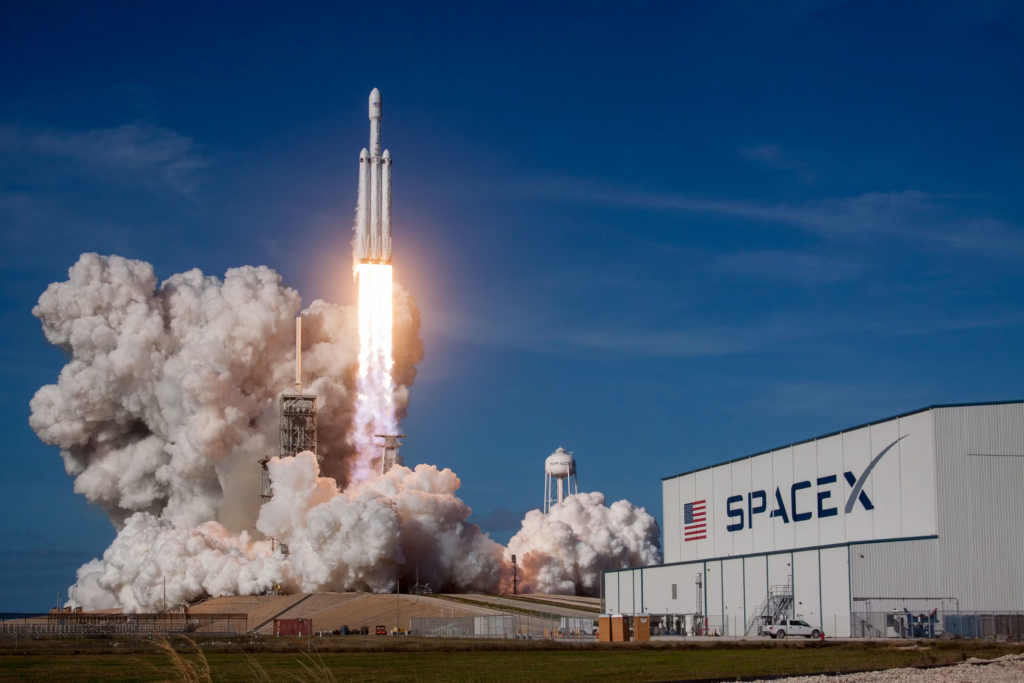
The financial report also brings into focus the delicate balance between SpaceX’s current operational success and its long-term, capital-intensive ambitions, primarily embodied by the Starship program. While the Falcon rocket remains a reliable workhorse, generating steady revenue from a mix of internal Starlink deployments, commercial customer missions, and lucrative government contracts, the company is increasingly prioritizing its own satellite network for launches. This internal demand provides a stable baseline but also means revenue from third-party payloads can fluctuate. The true linchpin of the company’s long-term strategy is Starship, the next-generation reusable rocket system. Although it has yet to enter commercial service, its potential is immense. It is expected to be the vehicle that enables the deployment of higher-bandwidth Starlink satellites and the eventual construction of orbital AI-computing infrastructure. For investors, the progress of Starship is a critical metric, with close attention being paid to testing updates, launch cadence, reusability milestones, and its satellite-deployment capabilities. The development of this system continues to be a significant source of costs and operational uncertainty, making it a central topic of discussion in the company’s strategic planning.
A particularly intriguing development in the quarter was the disclosure of a partnership with Nvidia, with SpaceX stating it will use the chipmaker’s semiconductors in its Starmind AI1 orbital compute satellites. This collaboration highlights the growing intersection of advanced computing and space-based infrastructure, suggesting a future where significant data processing is performed off-planet. The deal also reflects the broader market reality that access to high-performance chips is crucial for maintaining a competitive edge in the AI race.