For five decades, the New York Knicks’ absence from the top of the basketball world was not just a statistic but a slow, collective ache felt across the five boroughs. Generations of fans were born, grew up, and started families of their own without ever seeing their team hoist the Larry O’Brien Trophy. That long, painful wait finally ended on a Saturday night when the Knicks edged out the San Antonio Spurs 94-90 in Game 5 of the NBA Finals, capturing their first title since 1973. And amid the deafening cheers inside the arena and the spontaneous street celebrations spilling across Manhattan, one of the Bronx’s most famous daughters made sure her voice was heard loud and clear.
Jennifer Lopez, never one to forget her New York roots, took to Instagram shortly after the final buzzer with a message that was equal parts personal memory and civic pride. For anyone who has ever followed the Knicks through their heartbreaking playoff exits and rebuilding seasons, Lopez’s words felt less like a celebrity endorsement and more like a familiar friend exhaling after fifty-three years of held breath. She wrote about rushing home from work on game days during the nineties, desperate to catch a glimpse of Patrick Ewing’s fierce dominance, John Starks’ relentless energy, and Charles Oakley’s gritty defense. That specific, lived-in memory—racing back from a film set just in time for tip-off—captures exactly what it meant to be a Knicks fan during those electric but ultimately unfulfilled runs. It was a time when hope felt real, even if the championship never came.
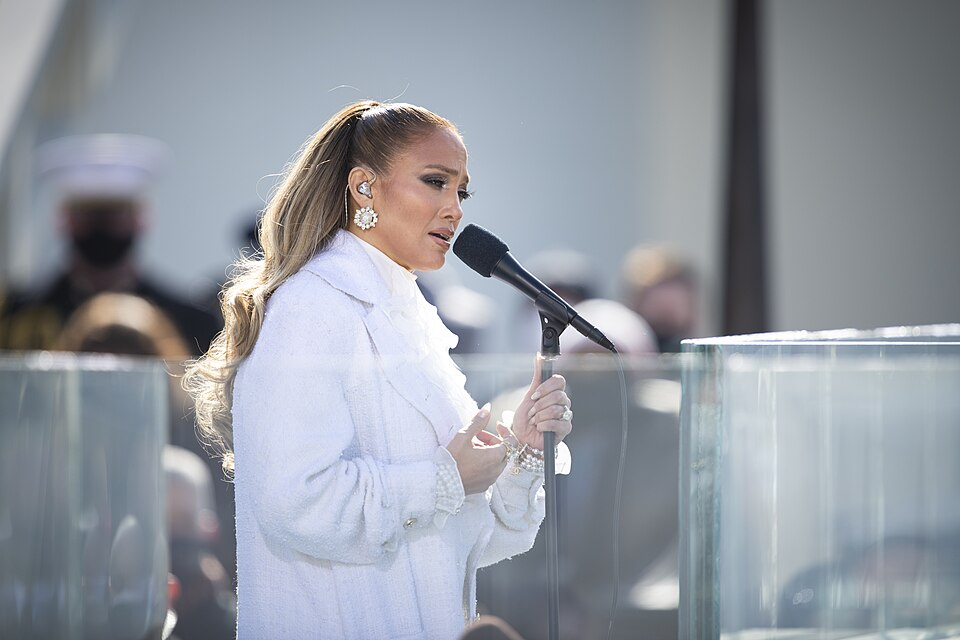
What makes Lopez’s reaction resonate so deeply isn’t just her fame but the authenticity of her connection. She didn’t parachute in for a photo op. She grew up in the Bronx, blocks away from the kind of asphalt courts where future playground legends are made. Her fandom was forged in an era when the Knicks fought tooth and nail against Michael Jordan’s Bulls and Hakeem Olajuwon’s Rockets, always close but never quite there. So when she typed out her tribute, it carried the weight of someone who had waited alongside every other diehard, not above them.
In her Instagram post, Lopez described the championship as something far larger than a sports statistic.
She signed off simply with “Love, Jenny,” a small but meaningful gesture that stripped away the superstar persona and left only a hometown fan. That kind of unpolished authenticity is rare in celebrity reactions, which often feel scripted or performative. Lopez’s message worked because it was specific, emotional, and grounded in real experience rather than generic praise.
From a basketball standpoint, this Knicks championship rewrites decades of narratives. The franchise had become synonymous with front-office dysfunction, lottery disappointments, and what-if seasons. For a team that plays in the world’s most famous arena, Madison Square Garden, the absence of a title since the Nixon administration had become an elephant in every room. Analysts loved to point out that the Knicks had missed the playoffs entirely for seven straight seasons between 2013 and 2020. To go from that level of irrelevance to beating a disciplined Spurs team in five games speaks to a complete organizational overhaul in scouting, player development, and culture.
What is particularly striking about this win is how it united not just New Yorkers but basketball fans around the globe. The Knicks’ brand has always traveled well—their blue and orange配色 is instantly recognizable from Tokyo to London—but winning brings a different kind of global energy. Lopez’s observation that the team united the world might sound hyperbolic, but anyone who watched international reaction clips on social media saw fans in Paris, Manila, and Melbourne celebrating alongside New York expats. A championship after fifty-three years stops being just a local event and becomes a shared human story about perseverance.
Of course, not everyone greeted the Knicks’ victory with pure joy. Rival fan bases, particularly in Boston, Miami, and Los Angeles, were quick to point out that fifty-three years between titles is an unusually long drought for a major market team. Some critics argued that the Knicks benefited from a favorable playoff bracket or that key injuries to opposing stars played a role. There is also a quieter, more pragmatic conversation happening among salary cap analysts about whether this championship roster can be sustained financially, or whether the front office will have to break up key pieces to stay under the luxury tax. Those are fair questions, and they will dominate the offseason headlines.