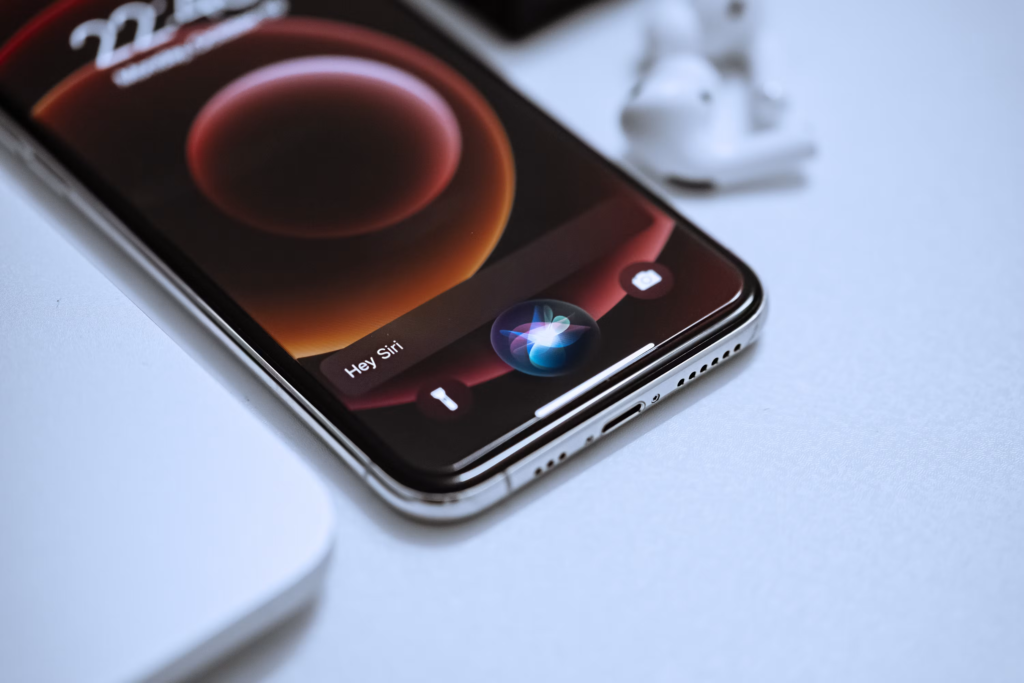
Apple has made its biggest move towards updating Siri yet, after almost two-years of dithering and intense pressure from rivals. The company announced a significant update at the Worldwide Developers Conference in Cupertino, California, which is known as Siri AI. This new version has been made more conversational, more context-aware and much more helpful in real life situations. The announcement comes at a crucial time because other AI firms such as OpenAI, Google and Anthropic have already penetrated what is being referred to as agentic artificial intelligence, where software can perform multi-step tasks on a user’s behalf.
I can still recall using Siri as soon as it arrived more than 15 years ago. It was like magic to ask a phone to remind me or to tell me the forecast then. However, with time, that magic was lost with the advent of other assistants who became smarter and intuitive. When I sat through this year’s keynote, I felt like a different energy was in the room. The time of ‘catching up’ was over for Apple. It was finally bringing something that seemed like the original promise of Siri—wisdom based on technology that actually understands what you’re doing on your screen and within your apps.
To sum up, the central theme of the new Siri is two capabilities: personal context understanding and on screen awareness. The assistant is now able to access any content on the user’s device, retrieve it from the Internet and link information that was never stored formally. If a friend includes the address in a message, for instance, Siri can find the address later even if it’s not been entered into a contact card. Users will also be able to revisit the past conversations with Siri, which has been absent from most voice assistants for years.
Apple has been careful not to market its products in this way like other tech companies do with fully independent agents, where they are pushing toward that. Rather, the company focuses on features that are easy to use, and respect privacy, included in our daily lives. At the keynote, Apple software chief Craig Federighi criticized the wider AI industry with a gentle, yet biting tone. Some of them seem to be running after AI, chasing AI for the sake of AI, without any care in the world for the people, all of us it is supposed to serve, he said. It seemed to strike a chord with a lot of developers I chatted with after the event, particularly those who have had enough of chatbots that are clever and not very helpful.
Reactions to the announcement have been mutedly positive. “So this is all AI for the masses; it’s not agentic,” said Bob O’Donnell, president and chief analyst at TECHnalysis Research. “For many people, this is the kind of smarts they’re looking for—the promise of Siri from 15 years ago.” This is what Apple apparently hopes to be doing with an assistant that performs completely independently. They require one that is context-aware, privacy-respecting and consistent across messages, emails, calendars, browsers, and so on.
However, not everybody is hoping the transformation will be immediate. Craig Moffett, an analyst at MoffettNathanson, weighed in more cautiously. The changes are not earth shattering, but nevertheless, “a reasonable chatbot and even a reasonable agent,” he said, of Siri. That’s especially relevant, since credibility has been Siri’s biggest hurdle over the past few years. I’m sure that many people, myself included, have habitually avoided asking Siri anything more than the most trivial of commands, out of fear that it might get the wrong answer, take too long, or simply not be able to provide it.
There are also some significant geographical restrictions at launch. Initially, Siri AI won’t be available on iOS and iPadOS in the European Union, or it won’t be available in China. Those are huge omissions in such large markets and when you consider the regulatory pressure Apple is under in other countries. Privacy is an integral part of Apple’s positioning here. Apple has built several Siri AI capabilities to operate on device, unless there’s a better way of processing user information elsewhere, as happens with competitors frequently using cloud-based servers. This does not necessarily increase functionality in certain areas but increases trust in privacy oriented users.
The market’s initial response was quite muted. On the day of the announcement, Apple stock closed 1.9 percent below its level at $301.54 on the Nasdaq. That dip could be due to investor disappointment that the updates are good but not as radical as they might have hoped, or that the new features may have been delayed. Conversely, Wall Street has been known to underestimate the Apple way of refining products. The company doesn’t always make the first to market play, but it does the second to market play.