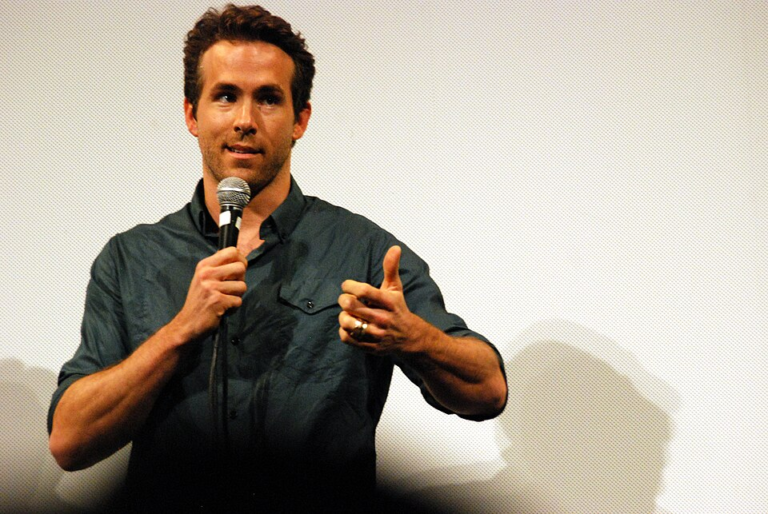
As SpaceX prepares for its long-anticipated initial public offering (IPO), Elon Musk took an active step to disclose one of the most ambitious long-term wagers the company has placed in order to prevent confusion.As SpaceX nears the highly anticipated initial public offering (IPO), the company’s founder and CEO Elon Musk has made a proactive move to clarify one of the firm’s most ambitious long-term bets: orbital artificial intelligence (AI) data centers. The CEO, in a recorded video conversation made public by the company on Monday, stated that constructing artificial intelligence infrastructure in space isn’t as much of an engineering feat as others think or investors believe. The fundamental technology, he said, is already used in today’s flying satellites and is being used on SpaceX’s Starlink V3. The quiet disclosure, as the company gears up for its IPO which could make SpaceX worth $1.75 trillion, seems meant to quell investor concerns that orbital computing is science fiction rather than a near-term reality.
Musk‘s demeanor was very matter-of-fact. “Part of what we want to convey here is that there is not some magic that is necessary, that doesn’t exist,” he said. Much of this is technology that we have already built with the Starlink V3 satellites, so we don’t consider this to be a path-breaking challenge when compared to the other things we build. That’s a deliberate framing. That’s the kind of message that resonates more with institutional investors that have seen Musk defy lofty deadlines in the past, as the industry continues to expand incrementally as opposed to the speculation surrounding the AI satellite program.
Musk was joined by SpaceX engineer Ian Dahl, who provided a more technical explanation on how these orbiting AI nodes would work. Each of the AI satellites would be a single computing node in low Earth orbit, using solar arrays to generate electricity and expelling excess heat by radiating it directly into the cold vacuum of space, Dahl said. One of the advantages of the orbital environment is that one of its passive cooling mechanisms is there. Prices are still the main concern for the ground-based data centers, but the ability to cool thousands of GPUs with lots of hot running components is just as large a challenge. Some aspects of heat management are easier in space, but the engineering compromises are different.
SpaceX already has a solid goal for the first of these AI satellites. The first spacecraft will produce around 150 kilowatts of peak power and 120 kilowatts of sustained compute power, the company’s presentation says. Musk likened it to land-based machinery, saying this is similar to one Nvidia GB300 AI server rack, which uses about 140 kilowatts at full load. That is quite a number for anyone following the AI hardware race. One of those classes can cost millions and be powered with special high-voltage lines. If power limitations on the ground become even more severe than they already are, it may begin to be cost-effective to put similar capability into orbit, albeit at a higher cost.
The reuse of existing subsystems makes the project seem less of a moonshot and more like a logical next step. SpaceX said that much of the technology the AI satellites would use would be the same as that being used on its next-generation Starlink V3 satellites, including solar arrays and thermal-management systems. The AI spacecraft would also be simpler than a Starlink satellite, which would need to be larger, Dahl added, as it would not need the big phased-array antennas to communicate with the internet. It’s a neat reverse, as normally, adding AI does make something more complicated. In this instance, the satellite is mechanically simpler to construct, because it is stripped of its communications load.
The company has also been realistic about production timelines. SpaceX said it’s anticipated to start meaningful production at a new artificial intelligence (AI) satellite factory in Texas by the end of next year. That calls into question the first orbital AI nodes could be in the air around 2027–2028, if Starship’s progress on development remains on schedule. SpaceX continued that the Starship’s fully reusable design would enable it to eventually produce the massive amounts of solar panels, radiators and computer hardware required to make orbital computing scalable. Large scale orbital AI would not be as economically viable without Starship’s mass-to-orbit capabilities. With it the mathematics changes.