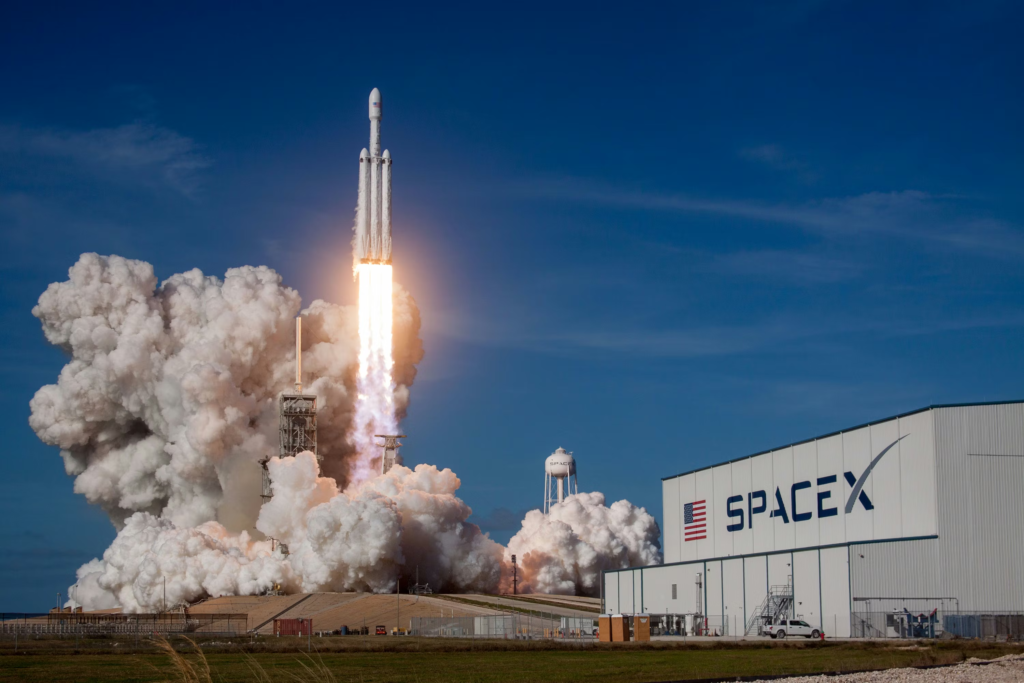
But as SpaceX nears its much-anticipated public debut, the company has attracted more attention than ever, not only because of its size, but because of the structure of power it will be establishing. Elon Musk is at the center of the discussion and will soon have the power in the company it has never had in the public markets. The forthcoming IPO is far from being merely a financial event, but a pivotal moment in the future of corporate control and shareholder rights.
Initial indications of the firm’s IPO documents indicate that it has a very different set of governance rules in place. SpaceX is implementing features that will allow Musk and a few insiders to retain control in the future even if the company goes public. With supervoting shares, Musk will have a strong voice in the company, meaning he can effectively keep his say in the decision-making process even if shares are widely distributed among investors.
This method works to change the leadership vision/investor oversight equation. Shareholders have voting rights, a legal remedy and can make proposals in most Public Companies. Each of these avenues seems to be restricted by SpaceX’s framework. Mandatory arbitration provisions may be included in the structure of the company, thereby limiting an investor’s ability to challenge a decision, propose changes to the company’s governance, or even sue the company in court.
“It closes the voting door, the courthouse door and the proposal door simultaneously. It’s unprecedented in terms of creating a total lack of accountability,” said Bruce Herbert, CEO of Seattle-based sustainability-focused wealth management firm Newground Social Investment.
The IPO is a harbinger for a growing worry among governance experts who would like to see it not set a precedent. The combination of ownership control that is being concentrated in these companies is not unheard of in the tech space, but it is noteworthy. SpaceX’s incorporation in Texas also enables the company to enjoy a more flexible legal environment in which to establish its corporate governance structure, which avoids certain protections that shareholders enjoy in other jurisdictions.
However, the story is not a one-sided one. This experience and remarkable career will shape investor understanding of these risks. Many feel the upside of being a part of SpaceX outweighs governance concerns. He has left a strong impression on the market, as early investors in Tesla have reaped outstanding returns from his leadership. From its humble beginnings as a small electric vehicle maker to a global powerhouse, the company’s success has instilled in many a faith in Musk’s ability to deliver big results with his unconventional approach.
SpaceX’s belief is linked to even more ambitious goals. The company isn’t only constructing rockets, it’s also making its way to bigger satellite networks, space-based infrastructure, and plans for the colonization of Mars. These milestones are closely tied to Musk’s compensation, further demonstrating that he is motivated to do what’s best for the company in line with its bold vision.
The IPO will be massive on its own terms, and it is estimated that it could bring up to $75 billion in capital and value the company at approximately $1.75 trillion. Those figures put SpaceX in a class all on its own, and it’s hard not to take notice of such big numbers by large institutional investors. The choice isn’t about ideals and governance for the portfolio managers, it’s about market realities.
“For most portfolio managers, I think it’s really hard to not purchase it because it’s going to be so much of the market for them,” said Ann Lipton, a professor of law at the University of Colorado Law School. “And if SpaceX soars, and you don’t have a piece of it, then you’re going to look like you’re underperforming the market by comparison.”
That’s the sentiment of the broader market as it views high-growth, founder-led businesses. A growing demand for ceding rights for exposure to transformative businesses. This is an unobtrusive reinterpretation of the meaning of “sharesholder.This is a subtle restatement of the concept of “sharesholder. With ownership no longer comes influence; it can be a financial stake that comes without the power.
Practically speaking, this poses some key questions. When investors are unable to hold leadership accountable through traditional means, what are their options? Right now, it probably boils down to a matter of faith in Musk’s leadership and the company’s execution. If SpaceX keeps on churning out innovations and profits, governance issues could be a secondary concern.
This situation, however, is precariously fragile. Structures that provide restraints on accountability could be more closely examined when times are uncertain or when structures are not performing as well as they should. These same forces that inhibit interference with leadership may also hinder a leader’s ability to respond to internal issues and strategic errors.
There are also some general implications for the public markets. Despite those governance limitations, if SpaceX’s IPO is a success, that may inspire other companies to try to do something similar. This would slowly change the perception of what shareholders have a right to: it will take more normal to have the control of the firm in the hands of the few.
Concurrently, it should be noted that innovative outcomes have been achieved in the past in quite unusual leadership arrangements. Many of today’s most prominent companies were created by entrepreneurs who defied the conventions, who looked at the big picture and chose to work toward long-term goals rather than short-term results. SpaceX seems to be living up to that mantra: centralized control will lead to accelerated and more definitive advances.
At the heart of all of this is the theme of trust, ambition and power as SpaceX’s story unfolds through the IPO. Investors are being urged to make a compromise: They will give up some influence in order to gain a stake in one of the biggest companies of the century. Not everyone is ready to take this chance and make the risk a calculated one. To others, it is too far removed from the principles of public ownership that have traditionally guided public ownership.