Emily Blunt has always been outspoken and her recent interview on The Tonight Show Starring Jimmy Fallon gave a delightfully honest insight into her fashion choices, particularly when it comes to the opposite sex. With the buzz beginning to build for her next movie The Devil Wears Prada 2, the actress reflected not just on the role of fashion in the world of film, but also its role in life, including in her relationship with her husband, John Krasinski.
Fashion discussions can be a delicate balance between playful criticism and personal taste, and Blunt nailed this. In the interview, she revealed that she has strong preferences when it comes to certain clothing items, one that she once found “off-putting”. She calls it a “full organ rejection” for men to wear turtlenecks. This is a statement that seems both hyperbole and true, as we sometimes have visceral reactions to clothing. After all, there are certain fashion choices many people just can’t get behind, regardless of popularity.
What is particular interesting about Blunt’s point of view is the way it has developed in a very personal way. When her husband of almost 16 years, Krasinski, proposed a black turtleneck with glasses for the Golden Globes earlier this year, it was not an instant hit. Her comment that she had to “compose her face” when he suggested this is telling of the subtle dynamics that often play out in relationships when it comes to matters of taste. It is a common situation: a partner suggests something out of the ordinary, which is initially met with doubt, if not outright rejection.
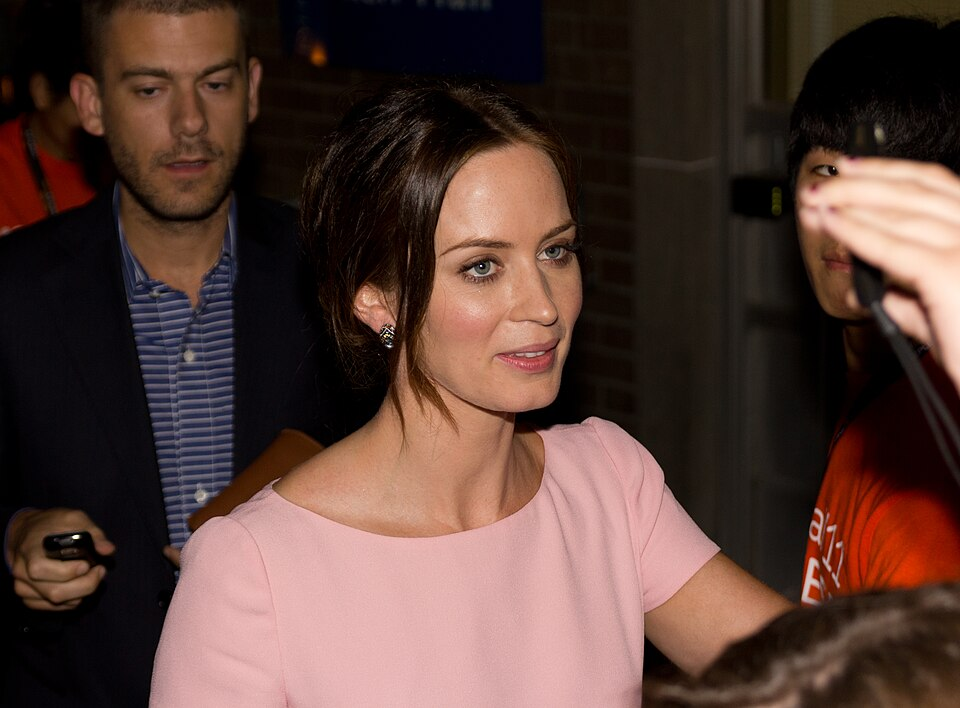
But then came the unexpected turnaround. But once she saw Krasinski in the ensemble, her perspective shifted. Instead of proving her suspicions, she was impressed. She commented that he was “so cool”, and even looked “like a young Michael Caine”. Her shift in attitude reveals a key lesson about fashion: it’s all about attitude and context. Something that may not look attractive in theory can look incredible in practice.
This exchange also tells us something about Blunt and Krasinski’s relationship. Their dynamic, which is often noted as being warm and funny, seems to include an effortless ability to not only express opinions but critique them. There is no judgement, just harmless fun and a level of openness to change. This is a reminder that, like relationships, fashion is about trying new things and revisiting initial judgements.
Blunt didn’t limit her dislike of fashion to turtlenecks. She also mentioned another type that she is not a fan of: “Dad leather jackets”, especially those that are shiny and cropped. The term itself evokes a particular image, one which many may associate with fashion trends that have not stood the test of time. While her comment is lighthearted, it resonates with a deeper sense of how some fashion choices can appear outdated or contrived, particularly when they are attempting to mimic a specific trend or time period.
Her statement, however, is not inflexible. Rather, they are an integral part of a broader dialogue about aesthetics, identity, and self-expression. In an ever-changing fashion landscape, these comments contribute to rather than silence the conversation. For instance, what some find ugly, others may find beautiful, and vice versa, and that makes fashion diverse.
The discussion inevitably turned to Blunt’s family, where fashion is a topic of interest for the young. Her daughters, Hazel and Violet, are now stepping into a world of their own and Blunt says they have their own taste. She referred to them as “very cool now”, which is a statement of pride but also one with a touch of exasperation. Every parent knows this stage where parental advice is often politely declined or outright rejected.
Blunt explained that while her daughters still love her (“still sweet”), and “still dig” her, they aren’t seeking her fashion advice. But when it comes to fashion, they would rather do it themselves. This aspect of her narrative adds a touch of realism, demonstrating that even someone associated with a fashion-driven blockbuster movie cannot dictate fashion choices to her own children. It serves as a subtle reminder that style is often learned through experimentation.
In fact, she provided a glimpse into their fashion styles, saying her older daughter’s style is similar to that of Avril Lavigne and her younger child is inspired by Jennifer Lopez. These references provide an interesting juxtaposition of styles, one with a more rebellious edge and the other more glamorous and polished. It shows how within families, the use of fashion can differ based on individual needs and tastes.
Blunt’s musings come at a time when the debate about fashion is increasingly inclusive and porous. Conventions are being challenged and diversity is being embraced. Her own confession of not liking turtlenecks, and subsequent change of heart, symbolises this trend. It implies that although taste is natural, it’s not immutable, and change can bring about new appreciation.