For decades, Nicole Kidman has been celebrated for her ability to portray deeply complex emotions on screen, moving effortlessly between vulnerability and strength. Now, in a decision that feels both surprising and deeply personal, she is stepping into an entirely different role, one that exists far from cameras and scripts. The acclaimed actor has begun training to become a death doula, a path inspired not by career ambition, but by lived experience and loss.
Kidman’s announcement reflects a shift that is less about leaving behind her legacy in cinema and more about expanding her understanding of care, connection, and human presence. Known for iconic performances in films and series like Moulin Rouge! and Big Little Lies, she has long explored the emotional depths of her characters. Yet, this new direction reveals a different kind of engagement with human emotion, one grounded in real-life experiences rather than fictional narratives.
The roots of this transition trace back to the final days of her mother, Janelle Ann Kidman, who passed away in September 2024 at the age of 84. Speaking candidly during a public appearance, Kidman acknowledged that her decision “may sound a little weird,” but emphasized that it came from a place of profound reflection and unmet needs she witnessed firsthand. As her mother approached the end of life, Kidman found herself navigating the emotional and logistical challenges that often accompany caregiving, even within a close-knit family.
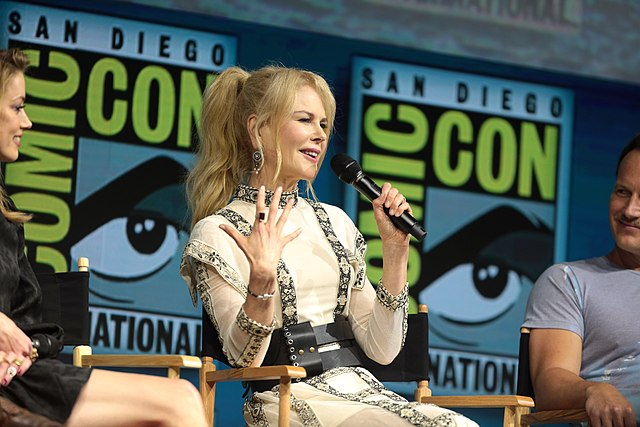
She described a reality that many families quietly face but rarely articulate. “As my mother was passing, she was lonely, and there was only so much the family could provide,” Kidman said. Despite the presence of loved ones, including her sister Antonia Kidman and their extended family, the demands of careers, responsibilities, and distance created gaps that emotional devotion alone could not fully bridge. “Between my sister and I, we have so many children and our careers and our work, and wanting to take care of her because my father wasn’t in the world anymore, and that’s when I went, ‘I wish there was these people in the world that were there to sit impartially and just provide solace and care,’” she shared.
This realization became a turning point. Rather than accepting the limitations of the situation, Kidman began to imagine a role dedicated to addressing exactly that kind of absence. “So that’s part of my expansion and one of the things I will be learning,” she added, signaling not just a new pursuit, but a deeply intentional one rooted in empathy and purpose.
The role of a death doula, while still unfamiliar to many, centers on providing non-medical support to individuals nearing the end of life and to their families. It is a form of care that exists alongside medical treatment but focuses on emotional, psychological, and spiritual well-being. A death doula helps individuals navigate their final days with dignity, offering companionship, guidance, and reassurance during what is often an overwhelming and isolating time. The presence of such a figure can transform the experience of dying from one marked by fear and uncertainty into one of acceptance and peace.
Kidman’s interest in this field also reflects a broader cultural shift, where conversations around death and dying are becoming more open and compassionate. In many ways, her decision brings visibility to a role that has long existed in quieter spaces, often overlooked despite its profound importance. Her platform allows her to highlight the emotional gaps that can exist even in loving families, particularly when modern life pulls people in multiple directions.
Her journey toward this new role cannot be separated from her own experiences with grief. The loss of her father, Antony Kidman, in 2014 marked an earlier chapter of personal sorrow, one that shaped her understanding of absence and memory. When her mother passed away years later, the emotional weight of losing both parents became deeply felt. Kidman has spoken about the lingering impact of that loss, describing moments when she would wake “crying and gasping,” overwhelmed by the permanence of their absence.
The timing of her mother’s passing added another layer of complexity. Kidman had traveled to the Venice Film Festival in September 2024 for the premiere of her film Babygirl when she received the news. She left immediately to return to her family, prioritizing personal loss over professional recognition. In what would have been her acceptance speech for Best Actress, her words were instead read aloud by director Halina Reijn. In that message, she wrote that she had arrived at the festival only to learn “shortly after that my beautiful, brave mother, Janelle Ann Kidman, has just passed.”
Moments like these reveal the intersection between public life and private grief, a balance that many public figures must navigate but few openly discuss. Kidman’s willingness to share her experience adds a layer of authenticity to her decision, grounding it not in novelty but in necessity. It is not a departure from her career as much as it is an extension of her lifelong engagement with emotion, storytelling, and human connection.
What makes this transition particularly compelling is its quiet defiance of expectations. In an industry often defined by reinvention, career shifts typically involve new genres, production roles, or creative ventures. Kidman’s choice, however, moves beyond the boundaries of entertainment altogether, entering a space that prioritizes presence over performance. It suggests a redefinition of purpose, one that values being there for others in their most vulnerable moments.
At the same time, this path raises thoughtful questions about the evolving nature of care in modern society. As families become more dispersed and professional demands increase, the need for compassionate, dedicated support at the end of life becomes more apparent. Death doulas, in this context, represent not just a service but a philosophy, one that emphasizes dignity, empathy, and human connection at a time when it is needed most.
Kidman’s decision may seem unconventional, even unexpected, but it resonates on a deeply human level. It reflects a recognition that success and fulfillment are not always found in the same places, and that personal loss can often illuminate new directions. While her legacy in film remains firmly established, this new chapter offers a different kind of impact, one measured not in awards or accolades, but in the comfort and care she may provide to others.