The internet has a history of making the most basic of concepts viral, yet not all trends sit well with the individuals they engage with. Recently, actor Jessica Biel was at the focus of one such trend as a parenting trend bearing her name unexpectedly spread across social media. Being popular due to her composed nature and considerate attitude towards the discussions with people, Biel did not want to pass over the occasion. Instead, she handled it in a straightforward manner with a touch of humor and a real issue which is not only indicative of her personal beliefs, but also her understanding of how online trends can influence real-life behavior.
The movement, which has since gained popularity in online parent circles, has been spreading like wildfire. It entails shouting the name of Jessica when a toddler has a tantrum and hoping that the child will be startled and distracted to get out of the tantrum. Although, parents attest that it works almost immediately, the approach has elicited mixed responses, particularly, when videos emerged of children responding with visible fear or confusion. In the case of Biel, what seemed like a harmless internet moment, turned out to have a darker side.
Biel went to her social media on April 10 to express her ideas in a video message that was very candid. After watching several videos of parents testing out the trend, she confessed that she had a mixed reaction to it. Guys, I am not so sure I like this Jessica trend with moms and toddlers and now dogs seem to be working on this and that is amazing, I will put it on my dogs. I think half the kids in these videos are terrified. She spoke of a sense of curiosity and unease, the two-sidedness of most viral trends, in which humor and unintended consequences can be mutually exclusive and opposing.
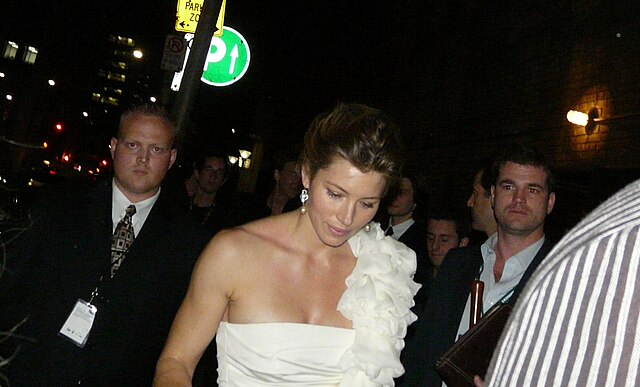
The interesting part about the response given by Biel is that she did not go directly to the situation with a criticizing mindset. Rather, she admitted the ingenuity and even the success which some parents had told her about. Simultaneously, she brought into focus the emotional aspect of the children concerned. The term petrified was not an exaggeration, but a sincere remark of someone who could see these clips being repeated over and over again. It implied that although the trick could prevent a tantrum in the here and now, it could be preventing it by generating fear instead of insight.
Interestingly, Biel also explained how she too was associated with the trend. She said she had earlier on joked that she would apply the idea in an entirely different setting, mainly on her pets. This difference is significant in that it brings out the speed with which the online audiences are able to pick on an innocent comment and turn it into something much more viral and influential. What may seem benign in one context can have a decidedly different connotation when used on children, particularly in emotionally charged contexts such as tantrums.
In addition to her video, Biel provided a caption, which was more humorous and lighthearted: “We are all Jessicas, nice people. The line resonated with quite a number of viewers not necessarily because it was a humorous one, but because it was a gentle reminder to audiences that names have human associations. Biel was able to cushion the criticism by framing her response this way and still convey her message effectively. She was not only protecting her name, but she was challenging the notion of fear as a behavioral weapon.
Biel shared this feeling of internal conflict that many people might be associated with as she went on with her message. On the one hand, it amused and even slightly flattered her that her name had become a means which parents thought could help them. Conversely, there was increasing unease on the manner in which the same tool was being applied. This appreciation and concern balance brought out an honest feeling of her response as opposed to a play acting response because this was a considered reaction to the issue and not a fast reaction.
She made this tension quite clear when she said, I really love, I really love, I can come into your house with my name that I share with so many other magnificent Jessica all over the world, I am sure, and will help you with your children tantrum, only I almost feel that these children are very much frightened. The situation is complex, which is reflected in the statement. It appreciates the mind behind the trend, which is to cope with challenging parenting situations, but also challenges the notion of whether the approach is consistent with the emotional health of a child.
The most straightforward of her message was found towards the end when humor was once again combined with an apparent appeal. And I do not want your toddler to become terrified of anybody you call Jessica, and we are good people, we are nice people, we want to help you get through the tantrum, but we do not want to scare the s–t out of your kid, please please please please please please please please pleasedonedontmakeyourtoddlerterrifiedofpeoplecalledJessica cause we are good people. Her trademark warmth, paired with a direct wording, made the message not only memorable but also effective, prompting the reader to think without making it sound overly judgmental.
The popularity of the so-called Jessica Tantrum trend also tells something bigger regarding the way parenting advice is being consumed nowadays. Social media tends to favor a quick fix and visually appealing outcome even when such a solution is not as thoughtful. When a child abruptly pulls out a tantrum, it might appear that success in a brief video, but this does not necessarily tell what the child is experiencing at that point or how that would impact them afterward. The reaction of Biel is also an indirect appeal to the parents to look beyond the result and see the emotional background, too.
It is a wider cultural aspect at work as well. Trends such as these frequently propagate since they are simple to copy and to explicate. One word said at the correct time turns into a common script that can be adhered to by millions of people. However, as Biel reacts, simplicity does not necessarily mean the correctness. Rarely, however, is parenting solved in a flash, and surprises and fear can have short-term benefits and not long-term insights.