Intel is making a decisive move to strengthen its global manufacturing footprint by reclaiming full ownership of its Ireland-based semiconductor facility, a deal valued at $14.2 billion. The company is buying back the 49 percent stake it had previously sold to Apollo Global Management, signaling renewed financial confidence and a sharper focus on long-term growth driven by artificial intelligence demand.
The facility, located in Leixlip near Dublin, has long been one of Intel’s most strategically important manufacturing hubs in Europe. When Intel first sold the stake in 2024, the decision reflected a period of financial strain and uncertainty. At the time, Apollo invested $11.2 billion into the joint venture, providing Intel with much-needed liquidity to continue expanding its manufacturing capabilities across both Europe and the United States. It was a pragmatic move, one that allowed the company to stay competitive during a challenging phase.
Now, the situation looks very different. Intel’s decision to buy back the stake suggests a company regaining its footing after a turbulent few years. There is a noticeable shift in tone and strategy. Under the leadership of Lip-Bu Tan, Intel has undertaken an aggressive restructuring plan aimed at stabilizing its finances and restoring investor confidence. This has included difficult but necessary steps such as workforce reductions and asset divestments, moves that often signal a company in transition but also one that is preparing for a more focused future.
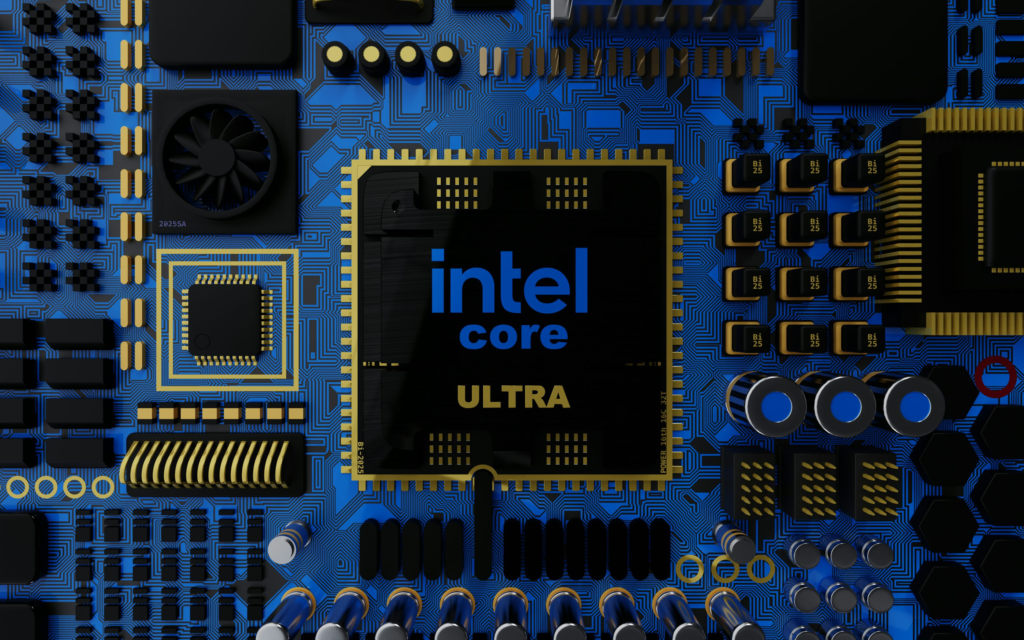
At the heart of this transformation lies the explosive growth of artificial intelligence. For a while, Intel found itself on the sidelines of the AI boom, watching competitors capitalize on the surge in demand for high-performance chips. However, the tide is beginning to turn. As AI applications become more widespread, there is increasing demand for central processing units, especially in data centers where inference workloads are critical. Inference, the process that allows AI systems to generate responses to user inputs, has become a key driver of computing demand. Tools like ChatGPT rely heavily on such processes, indirectly boosting the need for robust processor infrastructure.
This renewed demand is giving Intel an opportunity to reassert itself in a market it once dominated. From an industry perspective, this move feels less like a gamble and more like a calculated step toward reclaiming lost ground. Full ownership of the Ireland plant not only simplifies operational control but also allows Intel to capture the entire economic upside of its production output. In an industry where margins are closely tied to scale and efficiency, such control can make a meaningful difference.
Financially, the buyback will be funded through a combination of existing cash reserves and approximately $6.5 billion in new debt. While taking on additional debt always introduces a degree of risk, Intel appears confident that the long-term benefits will outweigh the short-term financial pressure. The company expects the transaction to boost its profitability and strengthen its credit profile starting in 2027, indicating that this is a forward-looking investment rather than a quick win.
David Zinsner, Intel’s Chief Financial Officer, captured this sense of renewed stability when he stated, “Today, we have a stronger balance sheet, improved financial discipline and an evolved business strategy.” His words reflect a broader narrative of recovery, one that is gradually reshaping how the market views Intel. Investors seem to be responding positively, with the company’s shares rising more than 10 percent following the announcement. Such a reaction suggests growing confidence that Intel’s turnaround strategy is gaining traction.
There is also a geopolitical dimension to consider. Semiconductor manufacturing has become a critical area of focus for governments around the world, particularly as supply chain vulnerabilities were exposed in recent years. Intel’s expansion efforts, supported in part by investments from Nvidia and the U.S. government, align with broader initiatives to strengthen domestic and allied chip production capabilities. In this context, regaining full control of a key European facility enhances Intel’s strategic positioning not just commercially, but also politically.
From a practical standpoint, owning 100 percent of the Ireland plant gives Intel greater flexibility in decision-making. Joint ventures often involve compromises, whether in terms of investment timelines, production priorities, or long-term strategy. By consolidating ownership, Intel can move more decisively, aligning the facility’s operations directly with its global goals. This is particularly important in a fast-evolving industry where speed and adaptability can determine market leadership.
Looking at the broader semiconductor landscape, Intel’s move reflects a growing recognition that control over manufacturing assets is becoming increasingly valuable. As demand for chips continues to rise across sectors ranging from cloud computing to autonomous vehicles, companies are reassessing how they structure their operations. In many cases, the trend is toward greater vertical integration, ensuring that critical components of the supply chain remain firmly under internal control.
There is also a subtle but important psychological aspect to this development. When a company buys back a stake it once sold under pressure, it sends a message. It suggests resilience, a willingness to revisit past decisions, and a belief that the future holds stronger prospects. For Intel, this buyback is not just about reclaiming an asset; it is about redefining its trajectory.
Still, the path ahead is not without challenges. The semiconductor industry remains intensely competitive, with rapid technological advancements and significant capital requirements. Intel will need to continue executing its strategy with precision, ensuring that its investments translate into tangible performance gains. The success of this buyback will ultimately depend on how effectively the company leverages its renewed control to drive innovation and efficiency.