Exploring the Interdisciplinary Vision of Lucas Mertehikian at the New York Botanical Garden and Beyond
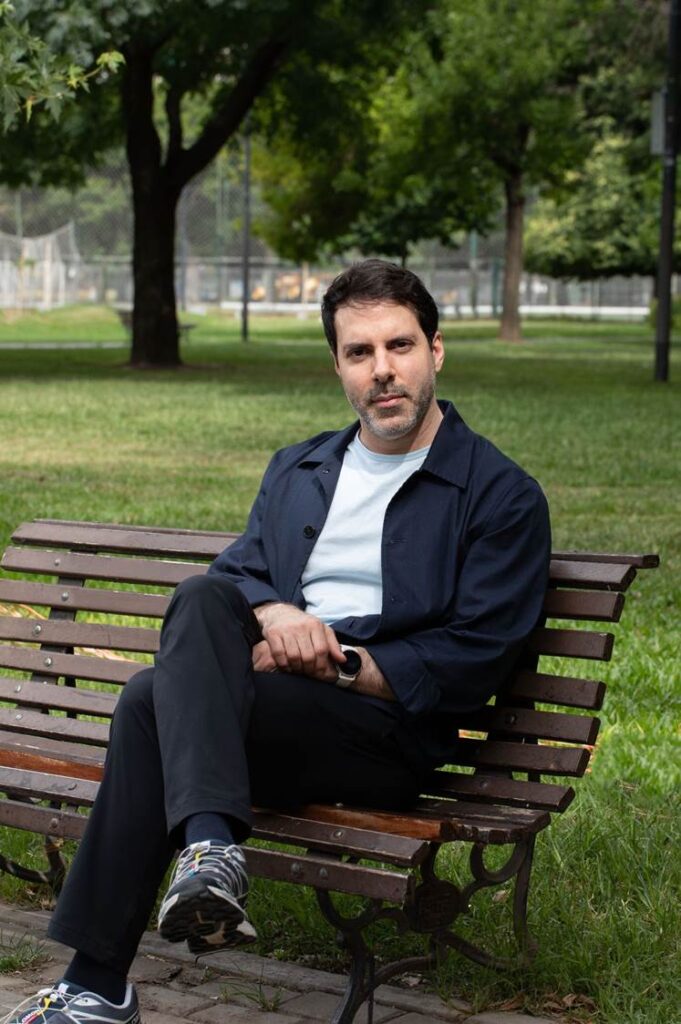
The modern botanical garden is far more than a repository of living plants or a sanctuary of aesthetic beauty. It is a complex, historically layered archive, a living museum where the legacies of exploration, colonialism, scientific inquiry, and cultural exchange converge. For centuries, the global botanical archive was curated through a predominantly Eurocentric, imperial lens, categorizing global flora while frequently omitting the indigenous and marginalized voices that first cultivated, understood, and utilized these species. Today, a profound shift is underway within the spheres of public horticulture and academia, a movement toward Plant Humanities that seeks to reframe our relationship with the natural world. At the vanguard of this interdisciplinary movement is Lucas Mertehikian, a scholar, curator, and educator whose work seamlessly bridges the humanities, the arts, and the natural sciences. Currently serving as a Researcher and Research Scholar at the New York Botanical Garden (NYBG), and having served as the former Director of the Humanities Institute from October 2023 through July 2025, alongside his role as a Visiting Assistant Professor in the Master of Landscape Architecture program at the Pratt Institute, Mertehikian has dedicated his career to interrogating the borders between nature and culture. Armed with a Ph.D. in Romance Languages and Literatures from Harvard University and a deeply cultivated expertise in Latin American literary studies, Mertehikian is uniquely positioned to deconstruct the narratives embedded in our landscapes. Through his academic writing, his ongoing coordination of the Larry Lederman Landscape Photography Fellowship, his orchestration of the African American Garden at NYBG, his continued external contributions to the Plant Humanities Initiative at Dumbarton Oaks where he provides insights into public programming and editorial content, and his extensive collaborations with contemporary artists, Mertehikian is actively exploring the stories of the botanical archive. He illustrates, with striking clarity, that cultivating resilience in our ecosystems requires an equally resilient cultivation of our cultural memory.
The Epiphany of the Archive: Where Nature Meets Art
To understand Mertehikian’s trajectory, one must look to a defining realization that shifted his focus toward the intersection of the humanities and the botanical world. Reflecting on his career, Mertehikian notes: “One thing that defined my passion and interest in plants and the arts was my encounter with botanical collections, pressed plants that have survived centuries in some cases, stored in botanical gardens and other institutions around the world. It made me think of how nature can also be art, and how the world is interconnected through a history of natural and human exchanges.”
This epiphany fundamentally reimagines the herbarium. To the traditional botanist, a pressed plant is a morphological specimen, a data point in the taxonomy of life. To a humanities scholar like Mertehikian, it is a historical document, a casualty of empire, a survivor of centuries, and an unintentional work of art. These specimens map the routes of colonial galleons, the transatlantic slave trade, and globalized commerce. They represent the human impulse to capture, categorize, and control the natural world. By recognizing these dried, fragile forms as both art and historical evidence, Mertehikian advocates for a reading of botany that prioritizes narrative, memory, and the aesthetic imagination alongside scientific classification.
This perspective was honed during his tenure as a Postdoctoral Fellow in Plant Humanities at the Dumbarton Oaks Research Library and Collection (Harvard University) from 2022 to 2023. Here, working alongside institutions like NYBG, Mertehikian began to synthesize his literary background with the historical study of plants, culminating in projects that highlight the agency of flora in shaping human societies.
Rooting History: The African American Garden at NYBG
One of the most consequential manifestations of Mertehikian’s commitment to exploring the stories of the botanical narrative was his oversight of the African American Garden at NYBG, a monumental project executed between 2023 and 2024. Curated by Dr. Jessica B. Harris, the preeminent scholar of African American foodways and culinary history in the United States, the garden was a living testament to the resilience, ingenuity, and horticultural mastery of African descendants in the Americas.
Under Mertehikian’s administrative and humanities-driven oversight, the African American Garden transcended the traditional bounds of a botanical exhibition. It became a space of historical reclamation. The project traced the lineage of plants brought across the Atlantic during the Middle Passage, such as okra, yams, and black eyed peas, and highlighted the agricultural knowledge enslaved African people contributed to shaping the American landscape. By foregrounding this narrative, the project actively dismantled the myth of the “unpeopled” natural landscape, illustrating how violence, survival, and profound botanical expertise are intricately woven into the soil of the Americas.
Mertehikian’s scholarly engagement with this topic extended beyond the garden’s physical footprint. In May 2024, alongside Rhonda Evans, Director of NYBG’s LuEsther T. Mertz Library, he presented “Remembrance and Resilience: Documenting the History of African Americans through Plants, from the Slave Trade to Present Day” at the Council of Botanical and Horticultural Libraries Conference at Michigan State University. Through this work, Mertehikian demonstrates that the archive of the marginalized is often written not in ink, but in seeds, roots, and cultivation practices passed down through generations.
Reframing the Landscape: The Larry Lederman Photography Fellowship
Mertehikian’s belief that landscape is a social and cultural construct shaped by history, use, and perception is perhaps best exemplified by his stewardship of the Larry Lederman Photography Fellowship at NYBG. For three years, Mertehikian has continued to serve as the Fellowship Coordinator, running an initiative that annually awards a $20,000 grant to an outstanding landscape photographer.
The fellowship explicitly challenges traditional botanical photography. Rather than seeking purely botanical studies or isolated macro close ups of petals and stems, the program invites applicants whose work explores the landscape as an evolving relationship between people and the natural world. Under Mertehikian’s guidance, the fellowship champions traditional and experimental approaches that capture the aesthetic character, seasonality, and ephemeral quality of vibrant plant life in an urban setting.
The most recent application cycle, which just concluded on February 15, 2026, reinforces the fellowship’s rigorous standards. The selected Fellow, to be announced in mid March, will spend a nine-month term (March 15 through December 15, 2026) pursuing their personal vision within NYBG’s 250-acre National Historic Landmark site and the surrounding Bronx area. The culmination of this fellowship is a portfolio of at least 20 signed prints presented to the LuEsther T. Mertz Library, ensuring that contemporary artistic interpretations of the landscape are continually integrated into the institution’s historical archive.
Working with an esteemed advisory committee, which includes Todd Forrest (NYBG’s Arthur Ross Vice President for Horticulture and Living Collections), Jay A. Levenson (Director of the International Program at MoMA), Rhonda Evans, Bryan Whitney (International Center of Photography), and photographer John Maggiotto, Mertehikian ensures that the fellowship fosters a two way exchange. The process involves multiple critique and onboarding sessions, providing the artist with institutional support while allowing the committee to learn from the photographer’s creative process. By collaborating with renowned past fellows such as Benjamin Swett and Daniel Willner, Mertehikian has helped cement NYBG as a vital incubator for contemporary landscape photography, demonstrating that the camera is a crucial tool for analyzing human ecology.
Plant Extinction, AI, and the Contemporary Artist
If the Larry Lederman Fellowship captures the landscape of the present, Mertehikian’s collaborations with contemporary artists confront the ecological anxieties of the future. He has stated, “The most important works in my recent years have been working with artists and people from the garden world… who have a deep passion for both the arts and nature.”
Nowhere is this more evident than in his ongoing collaboration with the acclaimed artist Debora Hirsch. Mertehikian contributed crucial texts to Hirsch’s current, highly anticipated exhibition, Vanishing Trees, which is running at the Palazzo Citterio in Milan from January 15th to April 15th, 2026. The exhibition has garnered significant attention from major European arts publications, including Rivista Arte Mondadori, Il Giornale dell’ Arte, ARTUU, Il Giorno, Il Giornale, Dentro Casa, Ansa, and Chiasmo Magazine. Hirsch’s work delves into the fragile existence of endangered flora, utilizing an array of visual techniques and AI trained models to represent the tragic erasure of botanical life. Mertehikian’s textual contributions provide the necessary humanistic and historical scaffolding for Hirsch’s visual explorations, bridging the gap between ecological data and emotional resonance.
This intersection of art, technology, and plant extinction was also the focal point of the 2025 Plant Humanities Conversations, a widely acclaimed series co-organized by Mertehikian and Dr. Yota Batsaki (Dumbarton Oaks). Recognizing the grim reality that 45% of all flowering plants are currently threatened with extinction, the series sought to explore the wonder, fragility, and resilience of plant life.
On May 14, 2025, Mertehikian helped facilitate a profound virtual dialogue featuring Debora Hirsch and award winning artist Alexandra Daisy Ginsberg, moderated by Matthew Battles, Editor in Chief of Arnoldia at the Arnold Arboretum. The session explored how art installations and AI models can be used to investigate plant extinction and conceptualize “plant resurrection.” Through these dialogues, Mertehikian champions the idea that art is not merely a reaction to scientific realities but a vital methodological partner in the fight to foster and protect biodiversity.
Academic Interventions: Literature as an Ecological Lens
Mertehikian’s curatorial and administrative achievements are deeply rooted in his prolific academic scholarship. His research output is vast, interrogating how nature, economy, and identity are represented in Latin American culture and beyond.
As of January 2026, his co edited volume, The Boom of Natural History in Latin American Culture (co edited with Nicolás Campisi), has just been published by the University of Florida Press. This foundational text arrives at a critical juncture in the environmental humanities, examining how the varied ecosystems of Latin America have been categorized, commodified, and narrativized from the colonial era through the contemporary moment. Mertehikian’s ongoing book projects further cement his status as a leading voice in ecocriticism. Unpredictable Architectures: The Politics and Aesthetics of Gardening in Latin America (under contract with Brill) promises to deconstruct the garden not as a benign space of leisure, but as a highly contested political arena where national identity, indigenous erasure, and aesthetic philosophies violently intersect. Concurrently, Fake Originals: Collecting Latin America (under review, University of Florida Press) turns his critical eye toward the archive itself, interrogating the hegemonic practices of collecting, preserving, and displaying Latin American artifacts, a process inextricably linked to the region’s botanical and biological exploitation.
His peer reviewed articles serve as precise, targeted interventions that challenge traditional boundaries in both literary and scientific fields. A recurring subject in his recent scholarship is the Argentine master Jorge Luis Borges. In “The Quiet Science? Borges’ Anti Botany” (forthcoming in the Plant Humanities Handbook, Harvard University Press) and his January 2024 Modern Language Association presentation, “A Home among Weeds: Madreselvas and Other Invasives in Borges’s Buenos Aires,” Mertehikian offers a radical re reading of Borges. He demonstrates how Borges utilized the concept of invasive plant species specifically the honeysuckle (madreselva) to reflect the shifting, cosmopolitan, and often chaotic urban ecology of Buenos Aires. For Mertehikian, literature becomes an active landscape in which invasive species represent anxieties about borders, immigration, and national purity.
Mertehikian applies a similarly subversive lens to other canonical figures. At the 2023 Association for the Study of Literature and the Environment Conference in Portland, his presentation “Queering Trees: Silvina Ocampo’s Sensuous Arboretum” explored how the Argentine author challenged the rigid, heteronormative classifications of classical botany, infusing the botanical world with fluid, non binary sensuality. His earlier foundational research, ranging from analyses of race in Flávio de Carvalho’s works to the interplay of money and fiction in late 19th century Brazil, and extensive studies on the queer Argentine writer Tulio Carella, demonstrates a career long dedication to uncovering marginalized narratives. Whether exploring the botanical archive or the literary canon, Mertehikian’s methodology remains consistent: he seeks the voices, bodies, and ecologies that have been systematically excluded from the official record.
Translating the Archive: Public Humanities and the Global Ethnobotany
A hallmark of Mertehikian’s work as the former Director of the Humanities Institute at NYBG was his commitment to making complex archival research accessible to the broader public. The “Plant Humanities” movement relies on the democratization of knowledge, moving vital histories out of the ivory tower and into the public sphere.
Mertehikian has been a prolific contributor to JSTOR Daily, where he authors deeply researched essays on the global circulation of foundational plants. In “Guaraná: Stimulation from the Amazon to the World” (September 2023) and “Yerba Mate” (January 2023), he traces the transformation of these culturally significant South American plants from indigenous, sacred medicines into globally commodified stimulants. By centering the original indigenous knowledge systems surrounding these plants, he highlights the mechanisms of colonial bioprospecting. Similarly, his work on the “Sunflower” (with Kristan Hanson, 2022) and the enigmatic Dracaena draco (“The Mystery of Dragon’s Blood,” co authored for the Plant Humanities Lab at Dumbarton Oaks, 2021) reveals the deep mythological and economic roots of plants that are frequently taken for granted in modern horticulture.
This public facing pedagogy extends to his robust schedule of invited lectures. Over the past year, Mertehikian has served as a vital emissary for the Plant Humanities discipline, widely sharing his insights by exploring the stories of the botanical archive across various international and local platforms. He has lectured and given talks extensively about this subject in New York, presenting at prestigious venues such as NYBG, NYU, Columbia University, Hutchinson Modern and Contemporary, and Residency Unlimited. His academic outreach also extends to Argentina, where he has delivered compelling lectures. Looking ahead, he has been invited to lecture at the Museo Kalusz in Mexico City in May, providing context for their current exhibition. Furthermore, he will be in Milan in June 2026, lecturing about Plant Humanities at the Politecnico di Milano, invited by the School of Design.
These recent and upcoming appearances build upon his established record. In late 2024, he delivered a masterclass at The Institute/NYU titled “Experimenting with Plant Humanities: Case Studies from the New York Botanical Garden,” which directly addressed exploring the stories of botany. He has also brought his insights to Georgetown University’s Department of Spanish and Portuguese, Columbia University’s Climate School Earth Networks Program, and the Arnold Arboretum, where he co-presented “Entangled Imaginations: Bringing Public and Plant Humanities into Our Gardens” alongside Matthew Battles in June 2024. Through these engagements, Mertehikian actively cultivates a new generation of scholars and landscape architects who view horticulture through an ethical, historical, and humanistic framework.
Borders, Biomes, and Passports: The Ecology of Human Movement
To fully grasp the breadth of Mertehikian’s intellectual project, one must understand that his interest in borders, taxonomy, and collection extends beyond the botanical world to the realm of human movement. The categorization of a plant in a herbarium and the categorization of a human being at a national border are both exercises in state power, classification, and control.
This conceptual parallel is brilliantly realized in Mertehikian’s acclaimed 2025 book, Vidas en tránsito. Historia íntima del pasaporte (Mardulce Editora, Buenos Aires). The book, which explores the passport’s emotional, legal, and historical evolution, has become a cultural touchstone. It has received widespread critical acclaim and extensive media coverage across Latin America, including glowing reviews and in depth interviews in Clarín (both its cultural magazine Revista Ñ and the main paper), Perfil, El diletante, Otra Parte, and La lectora provisoria, alongside featured spots on podcasts like Preferiría no hacerlo and radio programs such as Finjamos demencia.
Vidas en tránsito is the culmination of years of research that began during his doctoral studies at Harvard. In the summer of 2018, Mertehikian curated the highly successful exhibition Passports. Lives in Transit at Harvard University. The exhibition, which garnered coverage from Harvard Magazine, the Boston Globe, the Harvard Gazette, and The Armenian Mirror Spectator, utilized Harvard’s extensive library collections to tell the harrowing, hopeful, and deeply bureaucratic stories of migration. Through visual artifacts, Mertehikian exposed how the modern nation-state uses the passport as an instrument of inclusion and exclusion, a literal paper border that determines who has the right to mobility.
The leap from the history of the passport to the history of the botanical garden is remarkably fluid in Mertehikian’s worldview. Both fields of study, human migration and plant humanities, grapple with the legacy of colonialism, the artificial construction of boundaries, and the profound resilience of living things forced to adapt to new soils. The diaspora of African seeds during the transatlantic slave trade, the invasive spread of the madreselva in Borges’s Buenos Aires, and the Armenian refugee navigating a border crossing in the early 20th century are all interconnected facets of “lives in transit.”
The Scholar-Educator: Language, Empathy, and Landscape Architecture
Mertehikian’s multidimensional career is anchored by an exceptional academic pedigree. After earning his Licenciado en Letras from the University of Buenos Aires (2006 to 2010) and an M.A. in Latin American Literary Studies from the National University of Tres de Febrero (2014 to 2016) in Argentina, he transitioned to the United States to complete his Ph.D. in Romance Languages and Literatures at Harvard University (2016 to 2022). His linguistic dexterity, as a native Spanish speaker, gives him near native fluency in English, fluency in Portuguese, advanced proficiency in French, and reading proficiency in Latin, allowing him to navigate global archives seamlessly and bypass the translated filters that often dilute original historical context.
However, Mertehikian is not a scholar confined to the theoretical. His work is characterized by a deep, pragmatic empathy. This is perhaps best exemplified by his volunteer work at the Cambridge Public Library from 2021 to 2022, where he taught English as a Second Language to vulnerable immigrant populations. In the classroom, the theoretical concepts of “lives in transit” and the bureaucratic hurdles of the passport were grounded in the lived, everyday realities of the people he served.
Today, Mertehikian translates this commitment to human and environmental ecology into his role as a Visiting Assistant Professor in the Master in Landscape Architecture program at the Pratt Institute’s School of Architecture, a position he has held since 2024. At Pratt, he is tasked with shaping the minds of the individuals who will physically design the urban and natural environments of tomorrow. By integrating the humanities into a design curriculum, Mertehikian ensures that future landscape architects understand that planting a garden is never a neutral act. They learn that landscape architecture is an exercise in cultural memory, spatial justice, and ecological stewardship.