Three-quarters of a century ago, the concept of expanding human infrastructure into outer space was squarely in the science fiction. science fiction authors such as Arthur C. Clarke envisioned satellites defining the world wide communication and Isaac Asimov wondered about humans spreading their machines out into the world. That hypothetical future is no longer very far away today. As Elon Musk chooses to combine SpaceX and his artificial intelligence startup xAI, the discourse of space has stopped being centered on rockets and discovery. It now encompasses much more of what can be found in the routine of daily life: information, processing power, and the tremendous power requirements that are implied by both.
SpaceX is also known to have revolutionized the way mankind takes a journey to orbit. Reusable rockets, quick turnover launch cycles and extensive satellite constellations have made the company the busiest launch service in the world. The latest move is not only the merger, but the fact that it indicates something. Musk seems to be trying to make SpaceX a key participant in a future where the computing infrastructure might not necessarily be on Earth by integrating an AI firm with a spaceflight powerhouse.
Over the last twenty years, it has been a low-profile debate of whether or not it is possible to move energy-intensive computing systems out of the planet by NASA engineers and researchers. The rationale is simple. The current data centers are guzzlers of electricity and water, to cool them, and they stretch the power grids and increase the environmental cost. Space on the other hand, conserves continuous solar energy and vacuum where the heat dissipation is governed by other physical principles. Theoretically, with the orbital data centers, Earth would be relieved at least part of the load on the environment and the collected sunlight would be nearly constant.
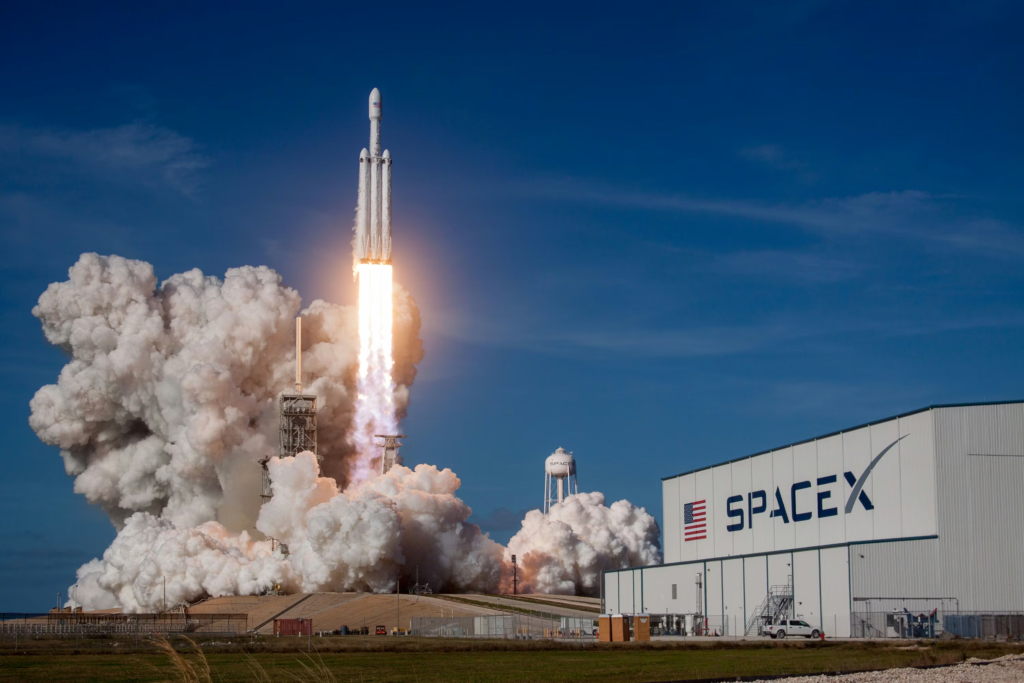
Until not so long time ago, that theory seemed to be impractical. Startup fees were prohibitive, the reliability of hardware in space was unclear, and the legal environment was obscure. The economics was not always sensible even to governments. What has changed is scale. The constant launches of SpaceX and the decreasing price per kilogram to launch into space have changed the fundamental arithmetic. Starlink has already put thousands of satellites in low Earth orbit by itself, demonstrating that large distributed systems can be implemented and maintained in space.
An additional level of criticism is the merger with xAI. The artificial intelligence models are very heavy in terms of computing power, and these requirements are growing faster. Even the energy used in training large-scale models is as large as small cities. The strain on the earth infrastructure will only increase as the AI systems get more complex. The combination of AI development with launches capability and orbital systems provides SpaceX with an additional structural edge, which can hardly be matched by any of its competitors.
This notion has not been lost throughout the industry. Both Alphabet and Blue Origin by Jeff Bezos have been experimenting with ideas of computing and AI infrastructure in space. Their focus highlights a more general understanding of the fact that ground-based data facilities might not be a sustainable strategy to address the explosive growth of digital data. Once again, however, interest is not execution. The speed with which SpaceX is able to design, test and deploy hardware, along with the ability to scale operations, places it in a unique place in defining what an orbital computing market might be like.
Elon Musk has never been backward in making cosmic bets on technology. His remarks about the long-term vision of space-based AI this week were, “In the long term, space-based AI is clearly the only way to scale. Even to get a millionth portion of our Sun we should consume much more energy than our civilization is presently consuming! The most rational answer to this then is to move such resource-intensive activities to a place with much power and space. It is ambitious and in a traditional Musk motif: find a physical boundary on Earth and exceed it.
But the way to do it is by no means easy. Data centers in the space have serious technical challenges. The radiation exposure, the risk of micro-meteoroids, and the challenge of fixing systems with complex systems in orbit are all challenges that are not present on earth. Latency is another concern. Although the low Earth orbit enhances speed on signal transmission compared to deep space, transmission of such huge data volumes between earth and orbit necessitates strong and safe communication networks.
Another question that is open is whether it is economically viable. Large computing structures in space are costly to place and maintain even with low costs of launch. The benefits should not only be in terms of construction and deployment costs, but also in terms of the long term operational risks. There is the uncertainty in regulation, which is another complexity. The issues of orbital clutter, orbital debris, spectrum, and international regulation will no doubt come to bear on how the pace of these endeavors can be accelerated.
In a bigger picture, the merger puts a clue of an eventuality where SpaceX would transform into a complete spectrum space infrastructure provider instead of a launch company. Rockets will not be the end, but the means. The satellites are nodes in a much bigger system which incorporates communications, navigation and possibly computation. In that respect, the concept of orbital data centers is rather not science fiction but logical extrapolation.
The cultural aspect should also be taken into consideration. The idea of floating data centers in space above the Earth may be frightening, even dystopian to certain viewers. The idea of corporate control of space, environmental effects outside of the planet and unfair allocation of orbital resources is also likely to grow as these concepts become real. The perception of the general population will be an issue, particularly, as governments will be balancing regulation and innovation.
Simultaneously, the moment has some historical symmetry. What seemed a wasteful technology nowadays turns out to be a commonplace. Even satellites in themselves were initially controversial and costly experiments. They form the basis of GPS, weather forecasting, world communications and financial systems today. Should space computing proceed along the same path, what seems radical today might become part of the infrastructure in the future.
In the case of SpaceX, xAI merger is not necessarily about the product per se but long-term positioning. It combines the ability to launch, satellite networks with AI development to one strategic umbrella. However, with or without orbital data centers becoming a viable possibility in the upcoming decade or a more distant objective, the move helps to solidify the position of SpaceX as a business that is ready to go beyond the traditional boundaries.