The 2026 Grammy Awards was as grand a stage as expected of the largest night in music history, yet what was being talked about long after the applause had stopped was not the performance or the trophies. It is the unquestionable ethical position of a number of artists, most noticeably by Billie Eilish, who made the ceremony a silent but impactful piece of protest against Immigration and Customs Enforcement. Within a year when the unease in the American people regarding immigration policies and enforcement activity was even higher, Eilish and her timbre were heard well beyond the confines of the arena.
It seemed that the night, since the very beginning, was going to be traditional. Trevor Noah delivered a balanced monologue, the red carpet shone with stars of all generations, the collaboration of Rosé with Bruno Mars and Tyler, the creator provided the viewers with the performances they yearn to see each year. But underneath the polish there was a weightier throb in the room. Not only had many artists come dressed to be on camera, but they were also ready to talk, quietly and even openly, of the human price of the existing immigration enforcement measures.
Billie Eilish was the key figure in this change of tone. She is known to approach her platform with a measured balance of weakness and assurance and never diluted her message to make everyone feel better. She said in no uncertain terms, we just have to continue fighting and speaking up and protesting, and our voices do matter, and people do matter. I want to say sorry, all I want to say is, F**k Ice. The declaration was crude, crude and could not be overlooked. To a lot of the observers, it represented the fatigue and neediness of those communities who had been impacted by deportations and enforcement raids, and a generational rejection of remaining quiet during times of injustice.
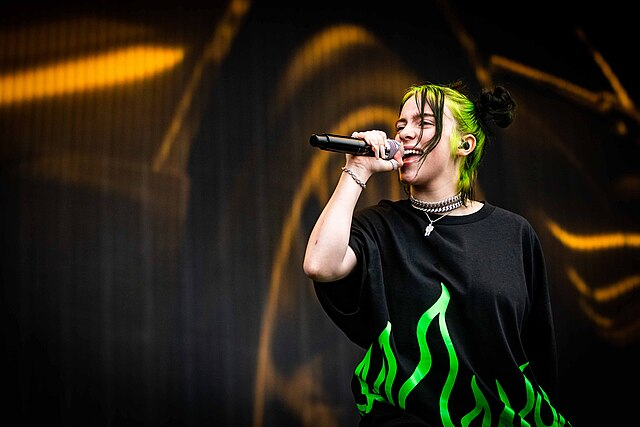
The visual reinforcement of the symbolism of the evening was made on the red carpet. The ICE OUT pin became one of the most remarkable and coherent messages of the evening. The small accessory was often worn against black outfits that were stark, but which had an oversized meaning. The fact it was repeated in interviews and photo backgrounds formed a visual chorus of protest. More than 25 artists wore the pin, including Kehlani, Finneas O’Connell, Amy Allen, Carole King, Brandi Carlile, Jason Isbell, and Joni Mitchell, indicating that they were not alone in their stance.
The restraint of the gesture was what made it very effective. No banners, no shouts heard in the hall, no part in the ceremony itself disturbed. Rather, the protest was embedded in the language of the situation, in the fashion selections, in brief but meaningful utterances. This strategy was in keeping with the cultural amplifier concept of the Grammy stage, as opposed to a battleground. The message conveyed was received in the same way since it did not overwhelm the music but accompanied it.
There was also a mourning note in the protest. Other artists were spotted with Be Good pins, which is a reference to Good, the 37-year-old mother who was shot and killed by an ICE agent in Minneapolis on January 7. It was a type of allusion, and would have been overlooked without context by many viewers, yet those who were familiar with the event found it an extra dose of sorrow in the evening. It kept the viewers in mind that the discussion was not abstract or ideological but rather based on the real-life lost and families changed forever.
Jazz singer Samara Joy described this part of being grieved and resolved when she said why she decided to put on the pin of ICE Out. She told me that this was not the time to become hyper dejected or morose about what was occurring, but to be outspoken and outcry on behalf of the people who cannot at present. It’s the least I could do.” Her words were repeating the feeling many artists had that might have been whispers that night, that silence in situations like this makes one feel complicit.
Often, critics suggest that celebrity activism does not have any concrete effect since they would compare it to the effect of public endorsements in election seasons, which would soon be forgotten. However, events such as the 2026 Grammys challenge that fact. When artists such as Billie Eilish sing, they are addressing a generation gap, a generational audience that cuts across the globe. These statements are potentially a gateway to political consciousness, prompting questions and dialogues and additional interactions with political context with younger fans in particular, instead of an effort to provide shrilly simple answers.
Things can also be said about timing. This has been the case in the last year where the immigration enforcement has been scrutinized more than ever with graphic stories and videos that have been shared on social platforms. It is on this surface that the Grammy Awards were no longer a one-off protest but an extension of a mass confrontation. Through the introduction of a mainstream and celebratory site, artists undermined the notion that entertainment could not be linked to political reality.
Meanwhile, there were also complications to the protest. The Grammy is still a very commercialized show that is sponsored by big sponsors and networks. The contrast of affluence and disaffiliating to some observers, the extent to which such utterances can be pushed in corporate environments was brought into question. Some of them were unsure of whether the message would result in a lasting advocacy or just a transitory show of solidarity.
Nevertheless, one cannot ignore the importance of the role played by Billie Eilish. The fact that she was ready to talk directly, without using prepared words and perfect phrases gave a real nature to the situation. It was part of a wider trend in the way younger artists approach activism, where emotional sincerity is given more importance than a thoughtfully considered neutrality. This is regardless of whether or not one agrees with her position, it is hard to disagree with the sincerity in her position or not.