Hollywood had always been selling the illusion of the danger without any consequences. Bombs go off when it is expected, vehicles fly into the air, bodies go into the glass, and the actors just stroll away dusting off their coats and ready to resume the action. However, behind that glossy show is another more mundane reality: occasionally the risk is real, the suffering is permanent and the repercussions pursuant to actors well beyond the cessation of filming. There are not many faces that can describe this reality better than Tom Cruise whose fidelity to the authenticity has on several occasions put his own life in the line. His story is not unique, however. It reverberates a larger culture in Hollywood where realism, ambition, and physical risk usually run into conflict.
The fact that Tom Cruise does his own stunts is not a new thing anymore it has become part of his cinematic identity. Hanging off airplanes to climbing the tallest of tall buildings he has never been cautious of crossing a boundary that most actors would never dare do. In the case of the production of the movie, Mission: Impossible- Fallout, this desire of realism was very expensive. Cruise also miscalculated the landing in a series of jumps where he had to jump out of one building to another. His foot came solidly against the wall and with a bang broke his ankle as he jumped. The wound was instant and unquestionable. Cruise later explained that he immediately knew that it was broken, but he had to do the shot, dragging his wounded body on top of the roof and walking through the frame to avoid doing the same stunt again. The video did find its way into the finished version, although at the price of a shutdown of production and months of recuperation.
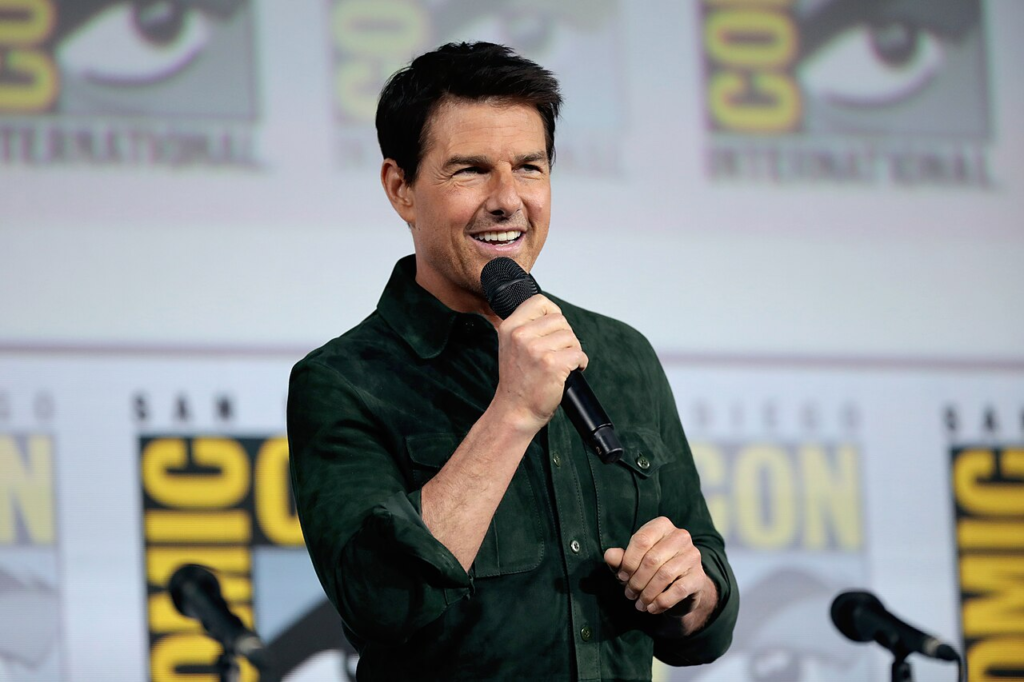
The current incident is notable not only due to the injury, but the attitude to it as well. The fact that Cruise chose to proceed despite apparent pain is a message to a larger culture of action film, in which endurance is habitually regarded as professionalism. Although viewers were flattered by his commitment, the event also raised some debates on whether such risks are worth applause or not. At a time when computer-generated imagery can recreate virtually any situation, the aspect of Cruise insisting on physical realism makes it hard to judge the extent of artistic dedication and how much it costs the actors.
This contradiction between reality and safety is not unique to blockbusters of recent times. However, Ellen Burstyn suffered a much more tragic blow 40 years ago when the film The Exorcist was filmed in 1973. Already enveloped in the tales of disaster and discomfort, the movie left Burstyn with an irreversible injury to the spine. Her character is violently knocked down to the floor by her possessed daughter in one of the clearest scenes. In order to attain realism, Burstyn had to be put in a harness, and hooked to wires, which would pull her back. The pull, during the filming, was much greater than expected. She was hit so hard by the force smashing her on the ground that her spine had been permanently damaged.
However, unlike the injury that Cruise sustained, which was eventually cured, the pain that Burstyn suffered became her life long companion. The accident changed her bodily functions and serves as a sharp indicator that not everything that happens on set disappears over time. Her experience also points to how the standards of safety in previous decades were not very strict and often based on the trust and improvisation. Realism involved came at the cost of the long-term health, which would be unacceptable by modern standards but was at one time shockingly widespread.
Cruise and Burstyn have been apart by generations, genres and technology of film making but something binds them together. Both were harmed in the quest to be authentic and there was a belief in the audience that they could feel something was real. This belief has informed many performances and careers, where it has made films iconic, and in other cases, it has left behind traces that they never really recover.
The uncontrolled stunt work has since been long gone and Hollywood has advanced significantly. In the present day, major sets have coordinators, medical personnel, and risk analysis. Despite this, injuries still do happen, especially where productions take the practical effects to their extremes. Stars such as Jason Statham, who have a history of roles that require them to act physically, have also encountered severe accidents in the course of their work, which goes to serve the point that action cinema continues to approach spectacle and danger. Such incidents seldom feature in the headlines unless there is a major star involved but these are a reminder of the physical effort that lies in entertainment.
These injuries have also a psychological aspect that is never discussed. To the actors whose identities are associated with the physical performance, injury may seem like a menace to their existence. It is not necessarily a matter of ego or bravado as Cruise did, but at other times it is about the way of maintaining momentum, defending a production or just fulfilling the image that has been developed over decades. In the industry, this act is silently rewarded in terms of admiration, box office hits, and legacy despite the fact that it is publicly focusing on safety.
Meanwhile, audiences contribute to the maintenance of this culture. The audience glorifies realism, applauds performers who perform their stunts, or post behind-the-scenes videos, but emphasize danger over warning. The boundary between respect and expectation is not clear. Risk is usually an accompaniment of realism.
However, there is a rising consciousness that authenticity does not necessarily need to be enjoyed at the expense of bodily damage. The expectations are starting to change because technology has advanced, and discussions on workplace safety have changed. Other directors today are less concerned with stamina than with illusion, preferring intelligent choreography and computer-generated effects to more perilous repetition. The change is gradual, yet it is an indication of a greater knowledge that commitment does not need enduring harm.
The injured ankle of Tom Cruise and the damaged spine of Ellen Burstyn are on two extremes of the healing process yet both narratives reveal the same truth. Film is containing real bodies and working under pressure, even though it is glamorous. These are not melodramatic footnotes of the injuries that people get on set; they are the secret parts of the infrastructure of filmmaking. The appreciation of commitment should not be extended at the expense of being responsible to both the film makers and the film consumers.