Some factual stories seem too big until you realise they really happened the way they say they did. The person who made Marty Supreme fits perfectly into that group. Even though Timothée Chalamet’s persona is made up, the heart of the movie is based on the amazing life of Marty Reisman, a table tennis prodigy, hustler, provocateur, and tireless self-believer whose existence often seemed like a myth.
Reisman was never merely an athlete. He was a person who wouldn’t let rules, referees, or polite standards hold him back. His name was like a legend in New York City table tennis circles for decades. Matthew Broderick famously called him “this legendary ping pong player,” remembering rumours about Reisman’s claimed world champion status and his talent for theatrical gimmicks. He was a world champion and could reputedly execute a trick where he put a cigarette on the table and whacked it with a ping pong ball, which would break it in half. That one line is enough to show why Reisman’s life is perfect for the movies.
Marty Supreme does not try to copy Reisman exactly. Chalamet plays Marty Mauser, a hustler and talented athlete who is more like Reisman’s spirit than his specific life story. Mauser is portrayed as a charming person who is both talented and trouble. He survives as much on nerve as on skill. It is a picture based on Reisman’s true life, where table tennis was more than just a sport; it was a way to survive, fight back, and find out who he was.
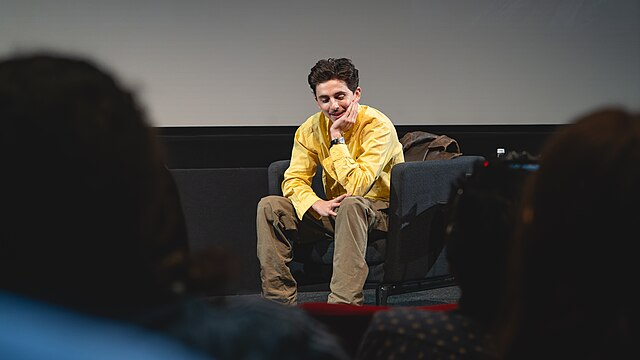
Director Josh Safdie found out about Reisman practically by accident. Safdie has said that he found out about Reisman after his wife, Sara Rossein, found Reisman’s memoir The Money Player: The Confessions of America’s Greatest Table Tennis Champion and Hustler in a thrift store. That book showed a man who strongly believed in his own grandeur at a time when the public didn’t care much about the sport he loved. Safdie said that Reisman was someone who “believed in this thing” and had “a dream that no one respected.” That subtle sense of hopelessness, along with a strong desire to succeed, is what makes Marty Supreme’s emotional core.
Reisman started playing table tennis early on and out of need. He was just ten years old and had a lot of worry, but he found comfort at a public table in Seward Park on Manhattan’s Lower East Side. The game became both a safe place and an addiction. At the age of twelve, he was already hustling older players at Lawrence’s Broadway Table Tennis Club, where he learned not only how to play but also how to read people. Reisman later remarked, “When I first got to Lawrence’s, there were a lot of players who could beat me.” “I was able to beat them all soon.” It sounds like bragging, but history shows that it was only true.
Reisman used the money he made hustling late at night to pay for his entry into professional tournaments. His confidence often turned into carelessness. At the age of 15, he tried to stake $500 on himself during a national tournament in Detroit. Instead of giving the money to a bookie, he gave it to the chairman of the U.S. Table Tennis Association, who called the police right away. The story became a symbol of Reisman’s life, which was full of ambition, mistakes, and boldness.
Reisman’s style was not limited to the table. He put a lot of thought into what he wore, choosing bright sneakers, bold shirts, tinted spectacles, and a fedora or Panama hat that he always wore. His looks were never by chance. He knew how to use spectacle to his advantage, especially when dealing with people in power. One such performance was measuring table netts with $100 bills. When asked years later why he didn’t use $1 bills instead, he had a typical forthright answer: “Why be cheap about it?”
These kinds of things didn’t sit well with officials too often. Larry Hodges, a historian and member of the Table Tennis Hall of Fame, once said, “Tournament directors, referees, and umpires—they hated Reisman.” But Reisman seemed to enjoy the stress. Hodges said, “If the guy says, ‘You can’t wear your hat,’ it’s a double win for him because not only does he get to keep the hat, everyone gets to see him stand up to the ref.” For Reisman, defiance was both a strategy and a statement.
People sometimes forget how talented Reisman really was because of all the showmanship. He wasn’t a novelty act claiming to be amazing. He had already won the city junior championship by the time he was thirteen. He won twenty-two major finals between 1946 and 2002, including two U.S. Open titles and one British Open title. No matter how strange his route may have seemed, his accomplishments put him firmly among the best players of his time.
Marty Supreme takes place in 1952, which was an important year for Reisman. He then set his sights on the World Table Tennis Championship in Mumbai, sure that he would win. It was also the year he saw a change in the sport that made him quite upset. He ultimately lost to Hiroji Satoh of Japan, whose foam rubber paddle was a technological change Reisman hated. The loss meant more than just losing; it was the point at which the game itself started to shift in ways that Reisman couldn’t control.